

Angle Steel Lattice Transposition Tower Solutions: How China is Shaping the Future of Power Grids
2026-06-29
As global power demands soar, the humble transmission tower becomes a critical piece of the puzzle. Among the most innovative yet understated advancements are angle steel lattice transposition towers, which are quietly revolutionizing how electricity flows across continents. China, a powerhouse in grid modernization, is at the forefront of this shift, and companies like Anbang are delivering the robust, precision-engineered solutions that make it all possible. But what exactly makes these lattice structures so transformative, and why are they suddenly the talk of utility engineers worldwide? Read on to discover the engineering marvels behind this quiet grid revolution.
Redefining Transmission: The Rise of Angle Steel Lattice Towers
The steady hum of overhead lines often goes unnoticed until a structure catches the eye—not the standard monopole, but an open network of crisscrossing steel. Angle steel lattice towers have quietly reshaped how we think about transmission infrastructure, moving beyond mere function to embody a kind of industrial elegance. Born from the need to span vast distances with minimal material, these towers rely on bolted angles and diagonal bracing to distribute loads with unexpected efficiency. Their silhouettes, once confined to alpine passes and river crossings, now stitch across plains and urban fringes alike, a testament to an idea that refused to stay marginal.
What sets angle steel lattices apart is a blend of practicality and forgotten craft. Each member is punched, cut, and galvanized off-site, then hauled to often remote locations where crews assemble them piece by piece—a puzzle solved in the air. This modularity means they can climb steep slopes or straddle marshland where monolithic alternatives would require enormous foundations. Unlike tubular poles that demand precise bending and costly transport, the angle steel approach forgives rough roads and local fabrication, lowering both budget and logistical headaches. It’s not just about saving money; it’s about making transmission possible where it was previously unimaginable.
In recent years, a quiet reinvention has taken hold, driven not by breakthroughs but by incremental refinement. Engineers now pair traditional hot-rolled angles with high-strength alloys and refined connection designs, shaving weight without sacrificing resilience. At the same time, a growing emphasis on visual impact has led to tapered legs and less cluttered bracing, softening the tower’s presence in scenic corridors. The result isn’t a futuristic gadget but a mature technology that keeps proving its relevance—adapting to higher voltages, tighter corridors, and a world that demands reliability without excess. The lattice tower, once a default choice, has become a deliberate strategy for a grid that has to do more with less.
Beyond the Wires: How Transposition Towers Balance Power Flows
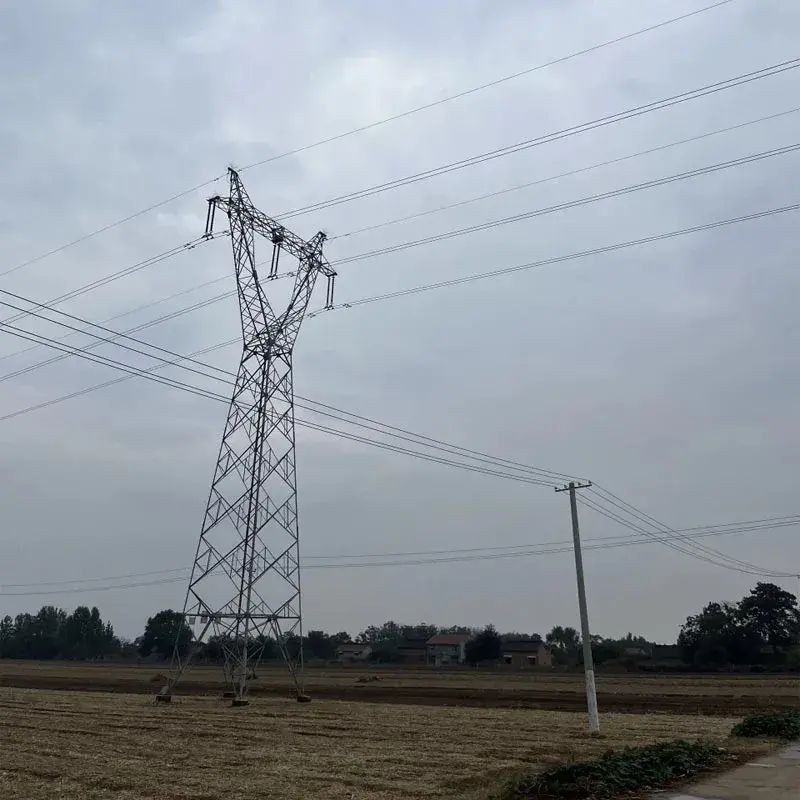
Picture a long stretch of high-voltage lines cutting across the countryside. As electricity surges through these cables, something subtle but critical happens: the phases start to develop mismatched impedances. This imbalance creates uneven voltage drops and stray electromagnetic fields that can interfere with nearby communication lines and waste energy. Transposition towers step in as the unsung architects of symmetry, physically rotating the positions of the conductors at intervals along the line. By swapping phase A, B, and C in a calculated sequence, they effectively average out the electrical differences that build up over distance.
The need for this balancing act grows with the length of the transmission route. On a short link, the natural asymmetry might be negligible, but over tens or hundreds of kilometers, the cumulative effect can sap efficiency and even lead to equipment stress. A transposition tower doesn't just shuffle wires arbitrarily—it follows a deliberate barrel-type or roll-type configuration depending on the terrain and voltage level. Each rotation cancels out a portion of the mutual inductance and capacitance disparities, restoring the line's electrical equilibrium. Without these periodic phase swaps, you'd see hotter spots on certain conductors, louder corona discharge, and a noticeable drop in power quality.
What's fascinating is the visual clue these towers leave on the landscape. Unlike standard suspension towers, transposition structures often have a more complex geometry, with arms extending at different heights or angles to accommodate the crossing conductors. They serve as a quiet reminder that power transmission isn't just about brute force delivery—it's a constant dance of physics where geometry, magnetics, and clever engineering converge. In modern grids, the placement of these towers is modeled with precision, ensuring that the flow of electrons stays as smooth at the receiving end as it was at the generator, all while keeping the surrounding environment free from excessive electromagnetic footprints.
China’s Grid Revolution: Engineering for the Next Century
China’s grid isn’t just expanding—it’s being rewired from the ground up. Across the country, engineers are stitching together a patchwork of ultra-high-voltage lines that leap across provinces, carrying clean power from remote deserts to coastal megacities with minimal loss. This backbone alone is redefining what’s physically possible, pushing voltage levels and transmission distances far beyond conventional limits. But the real ingenuity lies underground and in the substations, where digital twins and self-healing networks are turning a once-dumb web of wires into a living, breathing organism that can anticipate faults before they cascade.
What sets this effort apart is its sheer pragmatism. While others debate the future, China is grafting renewables onto the grid at a pace that forces constant reinvention. Solar farms in Qinghai and offshore wind arrays near Fujian pump unpredictable surges into the system, demanding new kinds of buffer—think massive flow batteries and flywheel storage arrays tucked into forgotten industrial plots. At the same time, local distribution networks are being rewired for bidirectional flow, letting rooftop solar and neighborhood microgrids feed back in without crashing the delicate frequency balance. It’s messy, iterative, and often invisible to the outside world.
The next century’s grid won’t just move electrons; it will negotiate them. In pilot zones, algorithms already barter between factories, EV fleets, and household batteries in real time, trading surplus energy like a stock market while keeping the whole machine stable. That kind of distributed intelligence demands a cultural shift too—away from top-down control toward a mesh of autonomous decision-making. If it works, the result won’t just be a bigger grid. It’ll be a platform for an entirely different way of living with energy, one where power flows as fluidly as data, and outages become a relic of the past.
Forged in Steel: The Structural Advantages Redrawing Global Standards
The relentless pursuit of structural integrity has pushed steel to the forefront of modern engineering, where its inherent properties are not merely utilized but actively shape the benchmarks by which all other materials are judged. From the soaring arcs of contemporary bridges to the seismic resilience embedded in high-rise cores, steel’s capacity to withstand extreme loads while maintaining slender, elegant profiles has redefined what is architecturally possible. This metal’s high strength-to-weight ratio allows for designs that were once deemed unattainable, enabling longer spans, taller structures, and more open, flexible interiors without the bulk that traditional materials demand.
Beyond raw strength, it is the predictability of steel that sets it apart on a global scale. Engineers can rely on its consistent performance under stress, fatigue, and fire when fabricated with precision—a uniformity that codes and standards around the world increasingly prioritize. As international construction norms evolve, they increasingly reflect a steel-first mentality; weldability, ductility, and the ability to undergo rigorous testing without compromise are no longer optional luxuries but expected baselines. This cultural shift in design philosophy means that steel is not just a material choice but a strategic advantage, directly influencing the safety margins and lifecycle costs that define tomorrow’s infrastructure.
From Blueprint to Powerline: The Modular Design Driving Faster Deployment
The traditional approach to building power infrastructure often involves custom engineering for each project, leading to lengthy design phases and on-site construction that can stretch timelines by months or even years. In contrast, a modular design philosophy breaks down complex systems into standardized, pre-engineered components that can be manufactured in parallel, tested off-site, and then rapidly assembled in the field. This shift from bespoke to building-block thinking allows teams to overlap activities that were once sequential, slashing the gap between blueprint approval and energized powerlines.
What makes modularity so effective is its ability to accommodate future expansion without requiring a complete redesign. By using common interfaces and scalable architectures, utilities can add capacity or reconfigure networks simply by plugging in new modules—whether that means integrating a battery storage unit, a solar array, or an additional transformer. This agility turns powerline projects from rigid, one-off installations into living systems that can evolve alongside demand, reducing the need for disruptive and costly overhauls down the line.
Moreover, the modular concept streamlines regulatory and logistical hurdles. Pre-certified modules arrive on site with much of the paperwork already cleared, and because components are designed for easy transport and handling, crews spend less time navigating complex assembly procedures. The result is a deployment process where the bulk of the work shifts from the unpredictable outdoors to controlled factory environments, dramatically cutting weather-related delays and improving both safety and quality consistency. In essence, modular design turns the drawn-out drama of infrastructure rollout into a fast, repeatable performance.
Future-Proofing Energy: Smart Adaptations for a Renewable Era
The shift toward renewables isn't just about swapping coal for solar—it demands a rethinking of how energy systems anticipate and react to volatility. Modern grids are being rewired with predictive analytics that learn from weather patterns, demand surges, and equipment stress, adjusting flows before instability takes hold. This kind of embedded intelligence turns traditional passive infrastructure into something more akin to a living organism, capable of self-correction in real time.
Storage technologies have stepped out of the shadows of lithium-ion monoculture. Flow batteries, liquid air systems, and even gravity-based storage are being deployed in configurations that match local geography and industrial needs rather than a one-size-fits-all model. Meanwhile, vehicle-to-grid integration is transforming electric fleets into roving battery banks, allowing excess energy to shuttle between homes, businesses, and the grid without the friction of centralized control.
Perhaps the subtlest adaptation is happening at the regulatory and behavioral layer. Dynamic pricing algorithms encourage consumption when supply is abundant, flattening demand peaks without requiring users to micromanage their appliances. Communities are negotiating direct power purchase agreements, bypassing conventional utility structures, and in some cases trading energy peer-to-peer using decentralized ledgers. These shifts don't merely buffer the transition—they rewire the economic logic of energy itself, making resilience an emergent property rather than an expensive afterthought.
FAQ
It's a specialized transmission tower made from angle steel assembled into a lattice framework. The transposition feature rearranges the phase conductors at specific intervals to balance electrical parameters across all three phases.
Over long distances, imbalances in inductance and capacitance between phases can cause voltage asymmetry and power losses. Transposition rotates conductor positions so that each phase occupies every geometric position over the line length, equalizing impedance and improving system stability.
Chinese solutions often integrate modular construction, higher-strength steel grades, and optimized geometry to reduce weight and wind load while maintaining reliability. They also focus on rapid assembly in challenging terrains, a key advantage given the country's vast and varied geography.
In UHV lines—particularly 800 kV DC and 1000 kV AC—precise phase balancing becomes critical. Angle steel lattice transposition towers are deployed at calculated intervals to mitigate the heightened electromagnetic imbalances that come with such high voltages and long transmission distances.
Yes. By using optimized angle steel profiles and simplified lattice connections, material tonnage can be cut by 10–15% compared to older designs. Faster erection times and less foundation concrete also trim overall construction expenses.
They’re especially effective in mountainous regions, earthquake zones, and areas with heavy ice or wind loads. The open lattice structure sheds wind and ice, while the bolted joints provide ductility that welded tubular towers lack.
Many developing nations are studying China’s UHV corridors and the tower designs that support them. As cross-border interconnections grow, angle steel lattice transposition towers are likely to become a standard export, especially where cost, speed, and terrain adaptability are priorities.
Conclusion
The shift toward angle steel lattice transposition towers marks a quiet but profound re-engineering of power transmission. These structures depart from conventional designs by pairing the inherent strength of angular steel profiles with a lattice framework that slashes material weight while preserving resilience against wind, ice, and seismic loads. China has been at the forefront, refining modular kits that turn months-long construction projects into weeks of onsite assembly. Prefabricated segments, tested in factory conditions, arrive ready to bolt into place, minimizing human error and allowing crews to work faster across remote or rugged terrain. The result isn’t just a quicker build; it’s a rethinking of what a tower should be—lighter, easier to transport, and built to last with minimal upkeep. International observers are taking note, as these practices quietly redraw the benchmarks for transmission infrastructure worldwide.
Beneath the steel, the real innovation lies in how these towers handle electricity itself. Transposition is an old idea—twisting phase conductors to balance impedance—but modern grids demand far more precision. China’s engineers have integrated transposition directly into the tower design, smoothing current imbalances that cause losses and voltage instability over long distances. This becomes critical as renewable sources like wind and solar flood the network with variable output. Smart sensors embedded in the lattice monitor load, temperature, and sag, feeding data back to control centers that adjust flows in real time. It’s a grid architecture that thinks ahead, ready to accommodate the next wave of clean energy without sacrificing reliability. Instead of patching problems as they arise, these towers bake resilience into the backbone of the power system, showing how a century-old concept can meet tomorrow’s demands.
Contact Us
Contact Person: antor khan
Email: [email protected]
Tel/WhatsApp: 8613863903569
Website: https://www.qdabtower.com/