

Best Carrying Idler Roller Options for Smooth Material Handling
2026-11-16
When material handling lines start shaking or belts drift off-track, the culprit is rarely the belt itself—it’s often the carrying idler rollers quietly doing the heavy lifting. With so many options on the market, choosing the right one isn’t about picking the cheapest or the shiniest; it’s about matching load, speed, and environment to a roller that holds up shift after shift. In this guide, we cut through the noise and look at what actually separates a smooth-running roller from a maintenance headache. Among the brands worth a closer look is YUFENG, a name that keeps showing up in real-world conveyor setups. Read on to see which carrying idler roller options deserve your attention—and your budget.
Steel vs. Polymer Carrying Idlers: Matching Material to Load
Choosing between steel and polymer carrying idlers often comes down to how well the material matches the everyday demands of the conveyor line. Steel idlers have long been the default in mining and aggregate operations where impact loads, abrasive fines, and heavy tonnage are constant. They shrug off gouges from sharp rocks and handle sustained heat that would soften most plastics. Yet steel brings real drawbacks: corrosion in wet or chemical environments, higher rotational mass that demands more energy, and noise that builds up over hundreds of rollers.
Polymer idlers, by contrast, carve out a clear advantage in lighter-duty and corrosive settings. Food processing, fertilizer plants, salt handling, and port facilities often turn to polymer because it resists rust, sheds sticky material more easily, and cuts belt wear when a roller stalls. The trade-off sits in impact resistance and load capacity. A sudden drop of heavy lump material can crack a polymer shell, while a steel shell will dent but keep rolling. Smart engineers match the material to the specific load profile rather than defaulting to one option.
A useful approach is to map the conveyor's worst-case scenario before specifying idlers. If the line sees intermittent surges of large rock or runs near high-temperature equipment, steel remains the safer bet. If the main threats are moisture, chemical spillage, or lightweight product buildup, polymer often lowers maintenance and extends belt life. Some operations even blend both: steel frames with polymer rolls in wet zones, or steel impact idlers at loading points with polymer idlers along the return side. The goal isn't to pick a winner but to align material properties with the reality of the load, speed, and environment each idler will face.
Troughing Angles That Stop Spillage Before It Starts
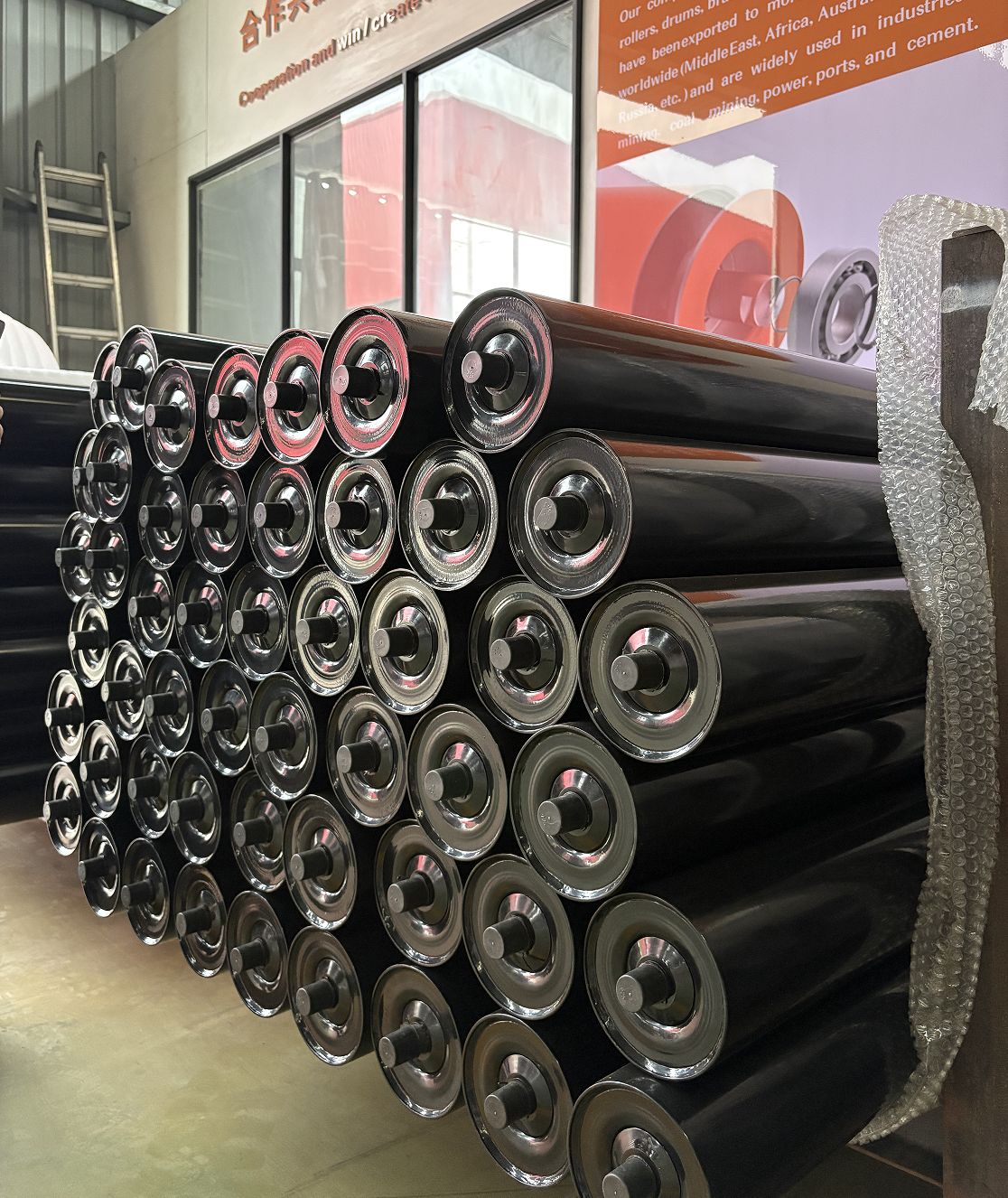
Most conveyor spillage isn't caused by a single dramatic failure—it starts with a belt that never quite forms the right pocket. When troughing angles sit too flat, material rides close to the belt edges, and every slight mistracking or surge sends fines over the side. A steeper angle, typically 35° or 45°, pulls the belt into a deeper U-shape, which keeps the load centered and gives it room to settle during travel. This shape doesn't just catch stray particles; it changes how the material behaves under vibration, reducing the constant dribble that accumulates along walkways.
The right troughing angle depends on what you're moving and how the belt flexes. Dry, free-flowing materials like sand or grain often respond well to 35° idlers, which provide a solid balance between capacity and belt life. Wet or sticky loads, however, may need a 45° setup to create enough depth to contain slumping material. Belt width also matters—a narrow belt with very steep angles can pinch at the center, causing premature wear and even tracking problems. Field adjustments often reveal that a few degrees of change reduces spillage more than any skirtboard upgrade.
Even with the correct angle on paper, real-world performance hinges on installation consistency. One idler frame that's slightly twisted or a bracket that's been knocked out of line can flatten a section of the belt, creating a low spot where material escapes. Regular checks with a straightedge across the troughing rolls help spot these misalignments before they become chronic spillage points. And when replacing worn idlers, matching the original angle and roll length keeps the belt's cross-section stable—otherwise you end up with a patchwork profile that works against the very design meant to stop spillage.
Sealed Bearings That Keep Dust and Moisture Out
The sealing system on these bearings does the heavy lifting before contamination ever reaches the rolling elements. A rubber lip rides against a precision-ground inner ring, while a secondary metal shield deflects larger particles. This dual-stage approach keeps fine grit and splashing water from working their way into the grease cavity.
Out in the field, that difference shows up quickly. Bearings fitted with these seals stay quieter and spin with less drag after months of exposure to rain, mud, or dusty trails. You also get fewer regreasing intervals and a noticeable drop in early wear, especially on wheels, pedals, and bottom brackets where clearance is tight.
Impact Carrying Rollers for Drop Zones and Transfers
When material lands hard on a belt at a transfer point or drop zone, standard idlers rarely survive the repeated pounding. Impact carrying rollers change that by swapping rigid steel tubes for thick rubber discs or rings mounted along a solid shaft. These resilient discs flex under load, absorbing the shock that would otherwise tear covers, snap splices, or bend steel frames. Belt life climbs fast once the landing area stops acting like an anvil.
Placement matters as much as the roller itself. A typical setup uses a closely spaced bank of impact rollers directly under the load zone, often with a reinforced frame and adjustable troughing angle to match the belt profile. The rubber rings should be firm enough to keep the belt line stable, yet soft enough to spread impact energy over several discs instead of concentrating it on one. This keeps material from bouncing backward and reduces spillage at the skirtboards.
On high-capacity conveyors or when dropping heavy, abrasive rock, upgrading to impact rings with higher durometer ratings, deeper cushioning, or steel-backed reinforcements prevents premature ring tear-out. Some designs feature tapered disc edges to shed fines and reduce material build-up between rings. Checking ring wear regularly and replacing them before they bottom out against the shaft is the cheapest downtime insurance a transfer point can get.
Shell Thickness and Diameter: Balancing Strength and Weight
Finding the right shell thickness and diameter isn't a simple trade-off. A larger diameter gives more internal room and can improve certain load distributions, but it also demands proportionally more material to keep the shell from buckling or flexing under pressure. Meanwhile, thinning the walls to save weight quickly reaches a point where stiffness drops faster than mass, leaving the structure prone to denting, vibration, or fatigue cracks.
In practice, the sweet spot often lies in a nonlinear relationship: strength scales with cross-sectional properties, while weight tracks material volume. Doubling a shell's diameter rarely means simply doubling its wall thickness. You have to account for how hoop stress, bending stiffness, and local buckling modes shift as the geometry grows. A thicker wall on a smaller diameter might waste material, whereas a thin wall on a wide shell can create a stiff but fragile shell that fails suddenly.
Designers often start from the intended load case and reverse-engineer the ratio. If impact resistance or internal pressure dominates, wall thickness should rise faster than diameter. If stiffness under bending or axial loads is the main concern, increasing diameter buys more structural efficiency than adding wall thickness. The end goal is the same: avoid both overbuilt dead weight and underbuilt weakness.
Replacing Worn Idlers Before They Cause Belt Drift
Worn idlers don't fail overnight—they degrade gradually, and the warning signs are often subtle. A slight wobble, a faint squeak at certain belt speeds, or a polished spot on the roller surface can all indicate that the bearing is starting to seize or the shell is no longer round. Ignoring these cues means the belt will eventually track off-center, causing edge fraying, material spillage, and accelerated wear on adjacent components. The trick is to inspect idlers regularly with a simple hand spin: a healthy roller should rotate freely and coast for a second or two. If it stops abruptly or feels gritty, it's time to swap it out before drift becomes a bigger headache.
Swapping a worn idler isn't just about bolting in a new part—it's about matching the replacement to the belt's actual operating conditions. Too many maintenance crews grab whatever roller is on the shelf without checking the shell diameter, bearing type, or seal rating. A heavier-duty idler with triple-labyrinth seals might cost a bit more, but in a dusty or wet environment it will outlast three standard rollers and keep the belt running straight far longer. During installation, pay attention to the mounting frame: bent or misaligned brackets will force even a new idler to sit at an angle, immediately recreating the drift problem. Use a straightedge across the idler faces to confirm they're parallel to each other and perpendicular to the belt path.
Proactive idler replacement is one of the cheapest ways to extend belt life and avoid unplanned downtime. Tracking down a single seized roller before it chews through the belt cover can save thousands in replacement materials and labor. Keep a log of idler failures by location—recurring issues in one spot often point to a loading impact zone or a transfer point that needs more robust idler spacing. By addressing wear early, you maintain consistent belt tracking, reduce power draw from friction, and keep the system running smoothly without rushing to fix a wandering belt in the middle of a shift.
FAQ
In crushed stone or ore handling, shell thickness and end disc design matter more than brand names. Look for a minimum 0.25-inch wall thickness on the tube, continuous welded end discs, and a labyrinth seal packed with polymer grease that resists washout. If rollers flex under load, the belt tracks unevenly and edge wear accelerates.
A 35-degree trough is standard for most bulk belts, but moving to 45 degrees allows 20 to 30 percent more cross-sectional area without increasing belt width. Roll diameter should be at least 5 inches for belt speeds under 600 feet per minute; above that, 6-inch or larger rolls reduce bearing RPM and heat buildup, which extends service life.
Use impact idlers at any loading point where drop height exceeds 3 feet or material size is above 4 inches. The rubber disc construction absorbs shock and prevents punctures in the belt carcass. Space them at 12 to 18 inch centers in the impact zone instead of the usual 4 to 5 feet.
Triple labyrinth seals with a grease-filled cavity outperform single lip seals in cement plants and coal yards. The labyrinth path keeps dust out while the grease chamber blocks moisture. Avoid felt seals in wet conditions; they wick water straight to the bearing.
Composite rolls make sense in corrosive environments like salt, fertilizer, or chemical handling. They weigh about 40 percent less than steel, which cuts installation strain and belt drag. But in high-temperature applications above 200 degrees Fahrenheit, stick with steel because polymers soften and lose dimensional stability.
CEMA recommends carrying idler spacing of 4 to 5 feet for belts up to 36 inches wide and material under 100 pounds per cubic foot. Wider spacing increases belt sag between idlers, which pumps material and drives dust. For belts over 48 inches or material above 150 pounds per cubic foot, drop spacing to 3 feet to keep sag under 2 percent.
A high-pitched squeal from a stationary roll often means bearing lubrication is gone; if the shell has flat spots or doesn't spin freely when the belt is stopped, replace it immediately. A seized idler can wear a groove through the belt cover in under a shift, so monthly walk-downs with an infrared gun catch hot bearings before they lock up.
Conclusion
Choosing the best carrying idler starts with matching the roller material and geometry to actual load conditions. Steel rolls handle heavy, abrasive materials but add weight and can corrode, while polymer rolls resist buildup and moisture in lighter or chemical environments. Troughing angle is equally critical: a 35° or 45° trough holds the belt profile tightly so fines and lumps don't spill over the edges, especially on inclined sections. For drop zones and transfer points, impact carrying rollers with thick rubber discs absorb the shock that would otherwise tear belts or crack standard shells. The right combination here prevents most material loss and belt edge damage before it becomes visible.
Behind the shell, sealed bearings are the real workhorses. Labyrinth or contact seals keep dust and moisture out of the bearing cavity, which is the main reason idlers fail early. Shell thickness and diameter need a practical balance: a larger diameter reduces bearing RPM and belt wear, but a thicker wall adds rotating mass and energy cost. Finally, don't wait for a seized idler to force belt drift. Replacing worn or stiff rollers before they develop flat spots is cheaper than repairing mistracking damage, and a quick vibration check during regular walks of the conveyor line will catch most problems early. That keeps material handling smooth over the long haul without unnecessary downtime.
Contact Us
Contact Person: Jayce
Email: [email protected]
Tel/WhatsApp: 8615318787602
Website: https://www.yuphengbelt.com/