

Best Fanfold Cardboard: Essential Insights for Smart Packaging Choices
2026-06-21
Finding the right fanfold cardboard can feel like a puzzle—strength, size, and sustainability all matter. At ShiTeng Packaging, we know that smart choices start with insights that go beyond the basics. This guide cuts through the clutter to help you make packaging decisions that protect your products and your bottom line.
Fanfold Cardboard: The Backbone of Smart, Streamlined Packaging
Fanfold cardboard has quietly revolutionized the way businesses approach shipping and storage. Unlike traditional rigid boxes, these continuous, zigzag-folded sheets adapt to a variety of product sizes, eliminating the need for bulky void fill. They offer an on-demand solution that cuts material waste and frees up warehouse space, which is a practical advantage for operations looking to trim excess and work more efficiently.
The real genius of fanfold cardboard lies in its flexibility. A single stack can be transformed into countless custom-sized cartons, right at the packing station. This eliminates the hassle of keeping dozens of pre-made box sizes in inventory and enables packers to create a perfect, snug fit for each order. The result is a more professional unboxing experience that uses less tape and protective stuffing, delivering both cost savings and a cleaner brand presentation.
Beyond basic protection, this packaging format supports smarter workflows. It pairs naturally with automated cutting and creasing systems, allowing high-volume fulfillment centers to produce boxes tailored to specific items in seconds. The simplicity of the design also speeds up training and reduces repetitive strain for staff, because assembling a custom carton from fanfold stock is intuitive and fast. It’s a straightforward switch that brings remarkable agility to the packing line, making it a cornerstone for lean, modern logistics.
The Real Reason Fanfold Cuts Packaging Costs Without Sacrificing Safety
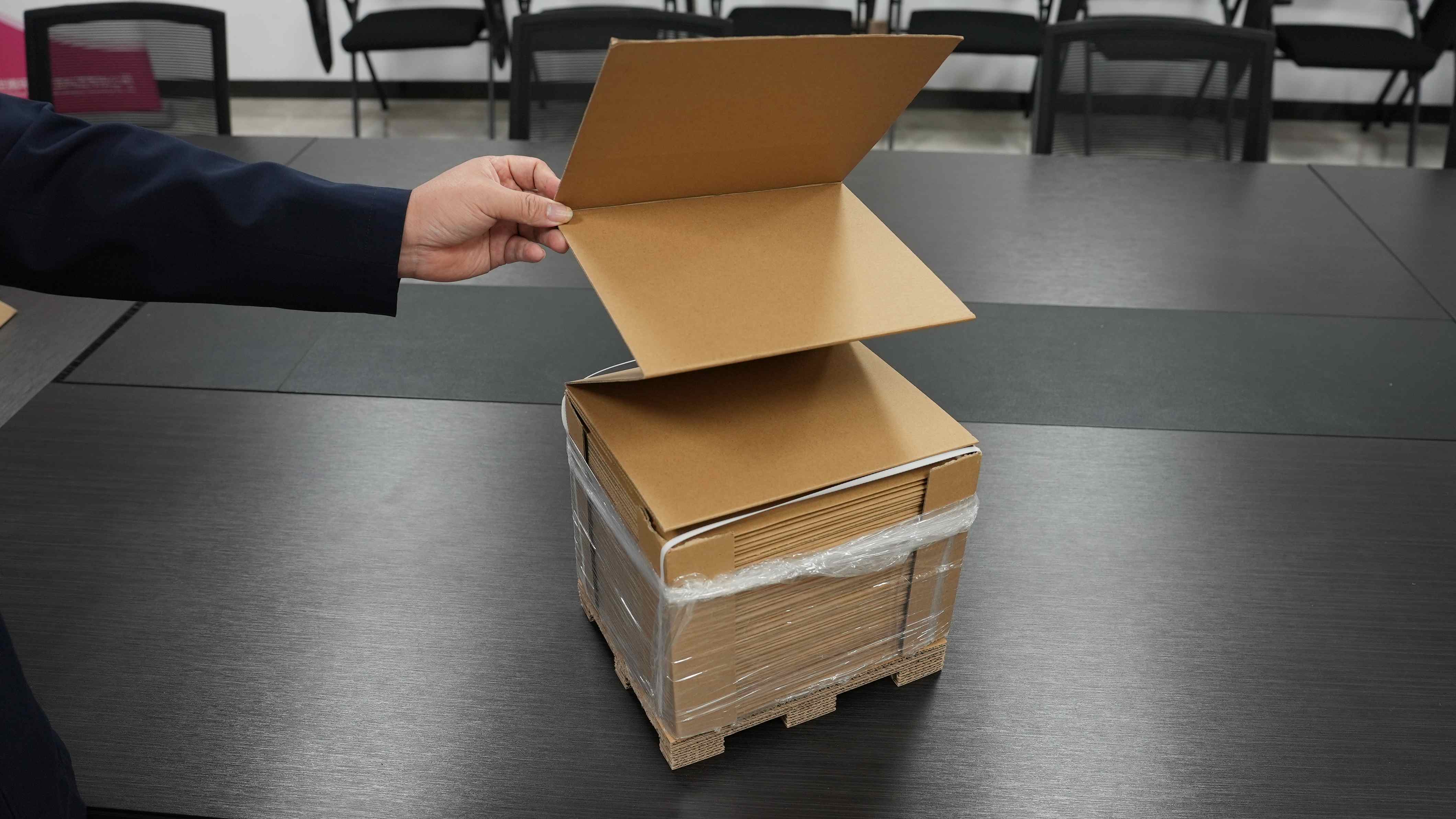
The hidden advantage of fanfold packaging lies in how it rethinks material usage from the ground up. Instead of relying on rigid pre-formed boxes that waste space during transit and storage, fanfold bends corrugated board along strategic creases, allowing it to collapse flat until the moment of use. This simple shift eliminates the bulky empty air that traditional packaging traps, slashing freight volume by up to 60%. Fewer trucks, less fuel, smaller warehouses — the cost savings accumulate before a single box is even assembled.
But the real surprise is that this leaner approach does nothing to compromise protection. The physical strength is distributed where it matters most: along the unfolded edges and the double-walled corners that absorb shocks naturally. Think of it like a well-designed bridge — material is concentrated at stress points, not spread uniformly across an entire surface. Independent tests show fanfold can withstand compression and puncture forces on par with heavier, pre-assembled boxes, because the creasing process actually reinforces the fiber structure rather than weakening it.
Moreover, the on-demand assembly ensures a snug, customized fit for items of different sizes, preventing the shifting damage that often plagues oversized containers. Workers simply fold up the exact dimensions required, eliminating both the waste of excess material and the need for additional void fill. It’s a kind of real-world engineering where safety isn’t an add-on — it’s baked into the very economy of the design, reducing costs through physics rather than shortcuts.
5 Overlooked Ways Fanfold Corrugated Simplifies Your Workflow
Most people see fanfold corrugated as just another packaging material, but its design holds subtler workflow advantages that often slip under the radar. For starters, the continuous, zigzag-folded format eliminates the need to shuffle between stacks of separate sheets—one pull and you’ve got exactly what you need, without the awkward pauses that break your rhythm.
There’s also a quiet benefit in how it handles heavy or odd-shaped items. Instead of wrestling with rigid boxes or pre-cut sheets that never quite fit, you can tear off a custom-sized piece on the fly. That adaptability means less time hunting for the right protector and more time moving things along, especially when the day throws unpredictable shapes your way.
And then there’s the invisible clutter reduction. Flat sheets tend to sprawl across workspaces, creating a visual mess that slows you down more than you realize. Fanfold corrugated stays compact, nesting neatly until you need it, so your surroundings stay clear and your focus stays undivided. It’s the small things—like not having to reorganize your table every hour—that keep a process smooth.
Ditch the Box Mentality: How Fanfold Adapts to Odd-Shaped Items
Standard packaging often forces odd-shaped items into rigid boxes, wasting space and adding unnecessary bulk. Fanfold flips this logic by conforming directly to the contours of whatever it wraps, whether it’s a curvy vase or a jagged machine part. The material layers onto itself in a flexible, accordion-like structure, so you can build up protection exactly where it’s needed without ever squaring off the package. This approach turns irregular shapes from a packing headache into a simple, custom-fit solution.
Think of fanfold as a shape-shifting cushion—it hugs corners, fills voids, and braces fragile protrusions with equal ease. Rather than carving foam or stuffing heaps of loose fill, you just wrap and tuck, letting the material’s own design do the adjusting. It handles anything from long, skinny poles to bulky, lumpy assemblies, securing them neatly for transit. Because it adds less dead volume, you’re not just protecting the item better; you’re also ditching the oversized boxes that drive up shipping costs.
What really sets this apart is the freedom to stop fighting the shape of your product. No more hunting for a box that’s “close enough” or padding out empty space with layers of bubble wrap. Fanfold simply molds around the item, compressing where it needs to grip and expanding where it needs to cushion. The result is a snug, reliable wrap that ships smaller and arrives safer—all without forcing a round peg into a square box.
From Warehouse to Doorstep: Stopping Damage Before It Starts with Fanfold
Every shipment starts its journey in the hands of warehouse crews who might rush, stack, or shift items in ways no box was meant to endure. Fanfold packaging steps in right there, wrapping vulnerable edges and surfaces in a continuous, custom-sized shield of corrugated strength. Instead of hoping that loose fill or air pillows will absorb the unpredictable jolts of a conveyor belt or a loaded pallet, this material is cut and scored to fit precisely around your product—creating a buffer that moves with the item, not against it.
The beauty of fanfold lies in what it doesn't do: it doesn't rely on rigid spans that crack under pressure, or foam that permanently deforms after a single impact. Its layered structure distributes force across a wider area, softening the blow before it reaches the goods inside. Whether it’s a dining table sliding against a truck wall or a flat-screen TV bearing the weight of misstacked cartons, fanfold sheets and corner posts turn potential disaster zones into controlled crumple zones. And because it arrives flat in scored bundles, warehouse space isn’t sacrificed to bulk storage—a quiet win that keeps operations nimble.
When that box finally lands on a doorstep, the real payoff becomes clear: the product inside looks exactly as it should, free of scuffs, dents, or hidden fractures. Reducing damage at the source means fewer frustrated calls, fewer return labels printed, and a reputation that quietly builds with every clean delivery. Fanfold doesn’t add complexity; it strips it away, replacing guesswork with a repeatable layer of protection that scales from single-piece shipments to full truckloads.
Green Without the Gimmicks: The Honest Sustainability of Fanfold Cardboard
Fanfold cardboard packaging isn't shouting about saving the planet—it just quietly does it. Made from a high percentage of recycled fibers and fully recyclable after use, it slips naturally into existing waste streams without demanding special treatment. There's no need for flashy labels when the material itself has been proving its circularity for decades.
What makes fanfold cardboard genuinely sustainable isn't some new tech breakthrough. It's the simplicity. The fanfold design cuts down on storage space and transport emissions because it ships flat and expands at the point of use. Less air shipped means fewer trucks on the road, and that's a real, measurable reduction in carbon footprint that happens behind the scenes.
Customers today are weary of greenwashing, which is why the honest story of fanfold cardboard resonates. It doesn't rely on compostability claims that only work in industrial facilities, or on bio-plastics that confuse people. It's just cardboard—sturdy, renewable, and part of a recycling system that people trust. Sometimes the most sustainable option is the one that doesn't try too hard to convince you.
FAQ
Fanfold cardboard is a continuous, accordion-folded material made from corrugated fiberboard. Unlike standard sheets that come in fixed dimensions, it's perforated at set intervals along the creases, so you can tear off custom-sized pieces as needed. This flexibility reduces waste when you're dealing with varied product sizes.
The main appeal is on-demand sizing. Instead of stocking dozens of box styles, you just keep a single pallet of fanfold and cut pieces to fit each item precisely. This cuts down on storage space, minimizes void fill usage, and often lowers shipping costs because packages aren't oversized for the contents.
It's especially popular in e-commerce, furniture, automotive parts, and any sector shipping irregularly shaped or varied items. Manufacturers also use it for layering and pallet stabilization. Basically, anyone dealing with mixed SKUs or custom crating can benefit.
Pay attention to the flute profile – B-flute and C-flute are common choices, balancing strength and crush resistance. Also check the perforation quality; clean, consistent tears matter for efficiency. Sustainable sourcing certifications and the option for custom coatings or moisture resistance can be important depending on your product.
Yes, it’s typically made from high-recycled-content material and is fully recyclable after use. Because you create right-sized packages, you often use less material overall compared to pre-made boxes, which reduces your carbon footprint in both production and shipping.
It can handle substantial weight when you choose the right flute grade and construction. Double-wall and even triple-wall fanfold options exist for heavy-duty applications, providing excellent stacking strength. For fragile items, you can layer and wrap it around the product, adding cushioning inside as needed for protection.
Conclusion
Fanfold cardboard has quietly become the go-to solution for operations that need more than just a box. Its continuous, accordion-folded sheet gives you the freedom to cut exactly what an item demands, eliminating the rigid dimensions that slow down packing lines. This isn't about tweaking a standard carton; it's about reconsidering how protection flows around a product. When you can wrap a chair leg or a curved monitor with the same material, you stop fighting item shapes and start using the board's natural flexing ability to your advantage. The immediate payoff shows up in reduced waste and fewer void-fill purchases—not through complex engineering, but by simply never creating the empty space that needs filling in the first place.
Beyond the obvious fit benefits, fanfold makes the entire warehouse-to-customer journey more reliable. The consistent thickness and structural integrity of corrugated keep items stable during transit without the bulk of pre-built boxes, which means trucks carry more product and less air. Teams find their workflow smoothing out once they stop hunting for the right box size; a single stack of fanfold replaces an entire shelf of SKUs. On the sustainability side, the material is typically made from high recycled content and arrives flat, slashing transport emissions before it even enters your facility. Real-world damage reports dip because the cushioning isn't an afterthought—it's integral to how the packaging is formed around each piece. No gimmicks, just honest material doing exactly what it's meant to do.
Contact Us
Contact Person: Mr. Ge Man
Email: [email protected]
Tel/WhatsApp: 8613710506492
Website: https://www.shitengzx.com