

Best Hook Type Shot Blasting Machine Supplier for Reliable Surface Preparation Solutions
2026-07-18
Achieving flawless surface preparation demands equipment that combines power, precision, and durability. For industries relying on hook type shot blasting machines, the choice of supplier directly impacts productivity and finish quality. Among the few manufacturers that truly understand these demands, PuHua has emerged as a go-to source for robust, reliable solutions. With a focus on engineering excellence and real-world performance, PuHua’s hook type blasters handle complex workloads while minimizing downtime—making them a smart investment for any operation serious about surface preparation. Discover what sets their technology apart and how it can transform your finishing process.
A Closer Look at Hook Type Shot Blasting Mechanics
The hook type shot blasting machine operates on a deceptively simple principle: a high-speed rotating wheel hurls abrasive media against the surface of suspended workpieces. However, the underlying mechanics involve precise control of media flow, wheel speed, and hook rotation. The hook, which supports the component, rotates continuously or indexes to ensure uniform exposure. This rotation is critical—without it, some areas would receive excessive peening while others remain untouched. The blast wheel, driven by a direct-drive motor, accelerates the shot to velocities often exceeding 70 meters per second, creating a kinetic scouring action that strips away rust, scale, and old coatings with remarkable efficiency.
Inside the blast chamber, the trajectory and density of the shot stream are shaped by a control cage and blades. The control cage, also called an impeller, regulates the release point of the abrasive, effectively directing the blast pattern onto the target. Meanwhile, the hook’s travel path—whether it passes through a single or multiple blast stations—determines the cycle time and finish uniformity. Gravity-fed or auger-based media recycling systems keep the shot clean and dry, recirculating it back to the wheel after separating out contaminants. This closed-loop process reduces waste and maintains consistent particle size, which is essential for repeatable surface profiles.
What truly sets hook type machines apart is their adaptability to complex geometries. By varying the hook’s rotation speed, the angle of the blast wheel, and even the mixture of abrasive sizes, operators can fine-tune the process for everything from delicate aluminum castings to heavy steel fabrications. The interplay between the centrifugal force of the throwing wheel and the gravitational pull on the descending shot creates a dynamic cleaning envelope that can be adjusted in real time. It’s this blend of brute force and fine control that makes the hook type design a workhorse in foundries and fabrication shops, balancing aggressive contaminant removal with careful preservation of the base material.
Achieving Perfect Surface Readiness Every Time
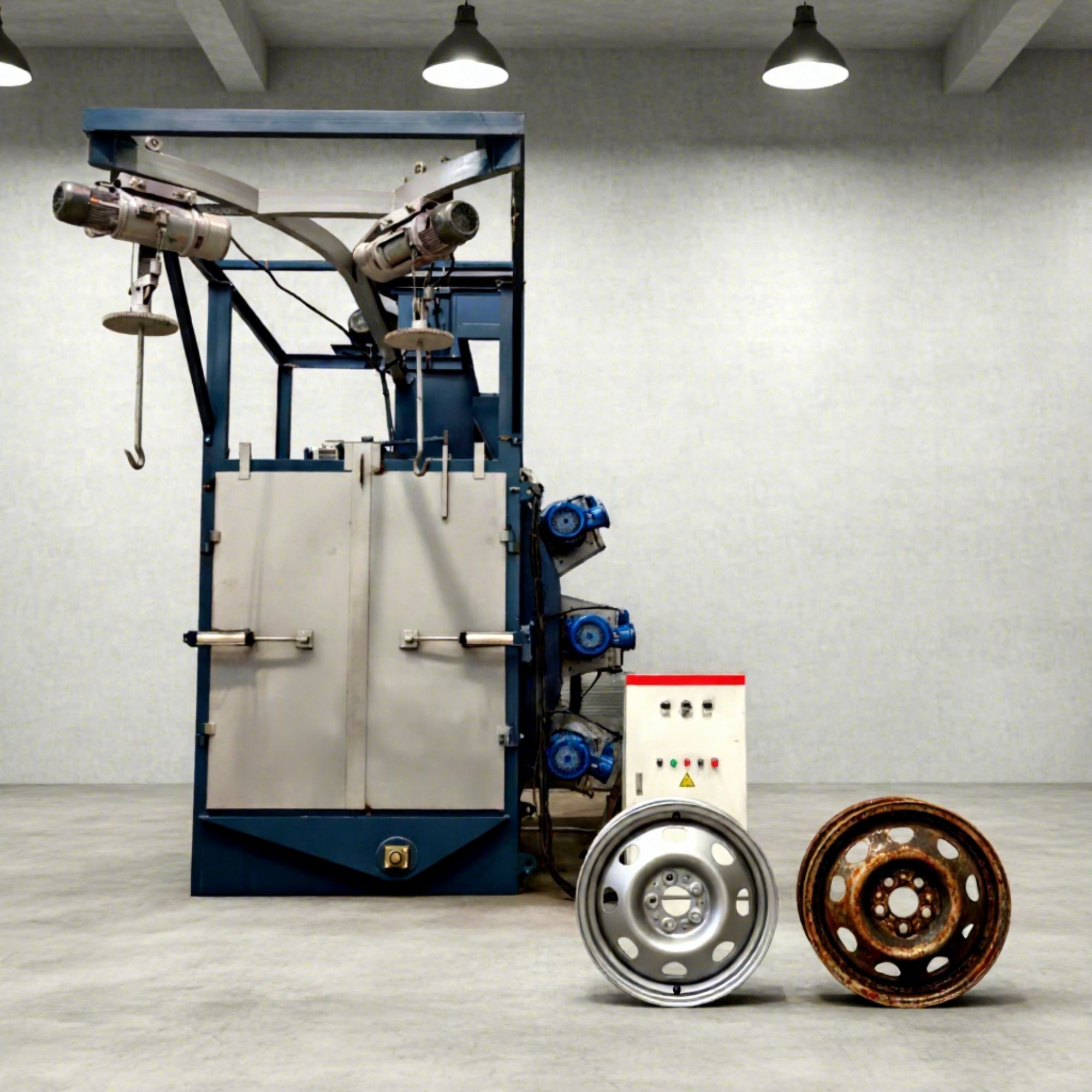
Surface preparation often determines whether a coating will last for years or fail prematurely. Contaminants invisible to the eye, like microscopic dust or residual oils, can undermine adhesion. The key lies in tailoring the process to the substrate—blast cleaning for steel demands a different approach than solvent wiping on composites. Skilled operators know that achieving the ideal anchor profile balances roughness with cleanliness, ensuring each layer bonds mechanically and chemically.
Environmental conditions during prep work are frequently underestimated. Humidity and temperature affect both the surface and the application. On a cold morning, condensation can form faster than it evaporates, trapping moisture beneath coatings. Using calibrated instruments to verify dew point and surface temperature prevents surprises later. Additionally, strict time windows between preparation and priming reduce the risk of flash rust or recontamination, which saves hours of rework down the line.
Beyond the technical steps, consistency relies on thorough inspection. A quick wipe with a white rag can expose hidden residues, while UV light reveals oil films that bypass ordinary checks. Surface profile replicating tapes and adhesion tests turn subjective judgement into objective data, giving teams the confidence to proceed without guessing. When these habits become second nature, flawless results become the norm rather than the exception.
Built to Last: Dependability in Heavy Use
When equipment is pushed to its limits day after day, reliability isn't just a nice attribute—it's the only thing standing between smooth operations and costly downtime. True dependability in heavy use comes from an engineering philosophy that refuses to cut corners, combining reinforced components with intelligent design that anticipates wear points before they become failures. This isn't about meeting baseline specs; it's about building in the headroom that keeps machines running long after lesser alternatives have called it quits.
The real test happens in the field, where dust, vibration, and continuous loads separate the merely functional from the genuinely rugged. A machine built to last reveals itself in the details: sealed bearings that keep contaminants out, oversized cooling systems that prevent thermal throttling during marathon shifts, and fasteners that stay put even when the oscillating forces try to rattle everything loose. These aren't glamorous features, but they create a quiet confidence that only grows with every cycle, every hour, every year of unrelenting use.
Users who depend on their equipment for critical tasks quickly learn that initial price tags fade into irrelevance compared to total lifecycle costs. A platform that holds its tolerances, maintains its power output, and requires minimal intervention under punishing conditions transforms from a tool into a trusted partner. That trust isn't built on marketing promises—it's forged in the demanding rhythm of real work, where breakdowns are not an option and dependability is measured in decades, not seasons.
Where Our Machines Make the Biggest Difference
It’s not the horsepower or the engineering specs that define our impact — it’s where the rubber meets real life. In dusty rural clinics with unstable power grids, our diagnostic machines don’t just work; they become a lifeline, detecting diseases early enough to change a child’s future. They slip into cramped fishing boats to monitor catch quality right on the water, and they stand up to the salt and spray like they were born there.
Look closer at the corners we serve: a mobile lab in a converted school bus parks outside underserved neighborhoods, bringing cancer screenings to doorsteps that never had a doctor. A lightweight analyzer sits in a forest clearing, helping scientists track soil health without disturbing the roots they’re studying. These aren’t showpieces — they’re tools that mold themselves to human need, no matter how uneven the terrain.
The biggest difference happens when a device doesn’t just perform a task but redefines what’s possible in that setting. When a blood test machine halves the wait time in a crowded urban clinic, it doesn’t just process samples; it returns afternoons to mothers and fathers. When a portable scanner flags mineral content in freshly dug ore under a blazing sun, it doesn’t just collect data; it prevents wasted effort. That’s the heartbeat of what we build — not for the spotlight, but for the stark, demanding places where everyday miracles need a little help.
Simple Upkeep Practices That Prevent Downtime
Downtime often starts with the small, overlooked details—loose connections, dust buildup, or equipment that isn’t properly aligned. One of the most effective practices is to schedule regular visual inspections, not just relying on automated alerts. Walking the floor daily, listening for unusual sounds, and checking for slight vibrations helps catch problems before they escalate. Train the team to treat these observations as part of their routine, not an extra task, so potential issues surface naturally.
Consistent cleaning and lubrication don’t just prolong equipment life; they actively prevent heat-related shutdowns and friction wear. Keep a simple log of which machines were cleaned and when, using a color-coded tag system that anyone can update. Assign these tasks to specific shifts and rotate ownership so fresh eyes catch things others might miss. Even swapping out air filters before they clog can mean the difference between a smooth workday and an unexpected halt.
Documentation doesn’t have to be a burden. Keep a shared digital board, accessible from the floor, where operators quickly note slight irregularities—like a clamp that feels off or a motor that takes longer to reach speed. Review these notes weekly, looking for patterns rather than isolated glitches. When maintenance follows real-time operator insights instead of rigid calendars, you sidestep failures that standard checklists often fail to predict.
What Sets Our Support and Service Apart
We believe true support goes beyond scripted replies. Every interaction starts with listening—really listening—to understand the nuance behind your question. Our team is trained to think on their feet, drawing from deep product knowledge and real-world experience, so you’re never left waiting while someone “checks with a supervisor.” That means faster resolutions, fewer frustrating back-and-forths, and the kind of help that feels less like a transaction and more like talking to a trusted colleague.
Consistency matters, but not at the expense of flexibility. While we have rigorous internal standards, we also empower our specialists to tailor solutions to your specific context. Whether you’re a small business owner juggling a dozen priorities or part of a large enterprise with complex workflows, we adapt our approach—no one-size-fits-all scripts or rigid tiers. This blend of structure and autonomy ensures you get personalized attention without sacrificing reliability.
Finally, we treat every support ticket as a learning opportunity. Behind the scenes, insights from your feedback directly shape product improvements, documentation updates, and even how we train new team members. It’s a continuous loop: your challenges fuel our evolution, which in turn makes your experience smoother over time. That’s the quiet difference you’ll notice after working with us—a service that gets sharper the more you use it.
FAQ
A hook type shot blasting machine uses a rotating hook to suspend and move parts through a blast chamber where high-speed abrasive particles clean, descale, or strengthen surfaces. It's particularly effective for oddly shaped or delicate components that can't be tumbled.
The suspended hook setup eliminates the need for part clamping or fixturing, allowing full 360-degree exposure. This ensures consistent coverage even on complex geometries, while the gentle handling prevents damage to fine threads or thin walls.
Proper cleaning and roughening remove mill scale, rust, and old coatings, creating an anchor profile that dramatically improves adhesion. Skipping this step often leads to premature coating failure, corrosion undercutting, and costly rework.
Look beyond the initial price and evaluate their track record for durable designs, readily available wear parts, and technical support. Visit their existing installations if possible, and talk to long-term users about uptime and service responsiveness.
Gearbox housings, welded frameworks, cylinder heads, forgings, and castings with pockets or recesses all respond well to hook blasting. The process reaches blind areas that wheel or tumble machines might miss, without risk of impingement damage.
Daily checks include inspecting the abrasive recirculation system and cleaning the separator screen, while weekly tasks cover the blast wheel blades and hook rotation bearings. A planned preventive maintenance schedule based on operating hours prevents sudden breakdowns.
Yes, it's all about abrasive selection and blast pressure adjustment. Coarse steel grit removes thick scale aggressively, while glass bead or aluminum oxide at lower air pressures creates a satin finish suitable for subsequent plating or adhesive bonding.
Conclusion
Understanding the mechanics behind hook type shot blasting reveals why it remains a cornerstone of surface preparation. The hook system rotates components through a high-velocity abrasive stream, ensuring every contour is evenly scoured free of rust, scale, and old coatings. This controlled aggression results in a consistent anchor profile that vastly improves coating adhesion. It’s not just about stripping away contaminants; it’s about engineering a surface that’s optimally receptive, eliminating the guesswork and rework that plague less precise methods. This reliability means that from heavy steel fabrications to delicate castings, you see the same high-quality finish batch after batch, without the frustration of uneven results.
Durability under continuous operation is what separates a sound investment from a recurring expense. Our machines are built with hardened wear parts and reinforced chambers that laugh off the daily punishment of abrasive blasting. But even the toughest equipment thrives on attention. Simple maintenance routines—checking seals, inspecting hoses, and pre-screening media—keep performance sharp and unplanned downtime at bay. Beyond the machinery, the real difference shows in the field: whether cleaning automotive components, structural beams, or forged parts, our systems adapt to the rhythm of your shop floor. And when something does need attention, a support team that actually understands shot blasting stands ready, not with scripts, but with hands-on solutions that get you back to work. That’s the kind of partnership that keeps surface preparation moving forward.
Contact Us
Contact Person: Bruce
Email: [email protected]
Tel/WhatsApp: +86 15166629468
Website: https://www.povalchina.com/