

Choosing a China Conveyor Roller Vendor That Delivers Quality and Durability
2026-09-08
Plenty of vendors in China sell conveyor rollers. Far fewer build them to last. If you're tired of replacing rollers that fail early or wobble under pressure, the problem usually isn't the spec sheet—it's the vendor behind it. XAN is one name that keeps showing up in durable installations for a reason. Before you choose, let's break down what separates a reliable supply partner from a costly gamble.
Material Selection Standards That Separate Durable Rollers from the Rest
A roller that survives 10,000 hours rarely starts with a vague callout like "hardened steel." It starts with a spec that names ASTM A295 or ISO 683-17 and then backs it with a mill cert showing oxygen and sulfur limits, not just a Rockwell number. Vacuum-degassed bearing steel with low inclusion content can double the fatigue life of commodity 52100 from an unvetted mill, and the standard that separates durable rollers is the traceable set of measurements behind the material name: hardness profile, case depth, retained austenite percentage, and grain size.
Corrosion and wear kill more rollers than impact. A roller in a washdown line or humid environment can fail from pitting even if the core is hard. Durable designs specify stainless or coated alloys where surface finish and passivation layer are treated as load-bearing properties, not cosmetic extras. Polyurethane and rubber-covered rollers have their own trap: cheap compounds rebound and tear. The standard that separates them combines rebound resilience with tear strength and abrasion index, so the cover does not chunk off under load.
The real separator is refusing to accept "equivalent" without a mill cert and an independent lab report. Suppliers with discipline list the full material standard on the drawing—ASTM, DIN, or JIS—plus the heat treatment batch number and hardness traverse. When a few points of Rockwell C or a missing stress-relief step can shift fatigue life by 30%, the purchasing decision needs to read like an engineering audit, not a commodity buy.
How to Verify a Chinese Factory’s Quality Control Without a Site Visit
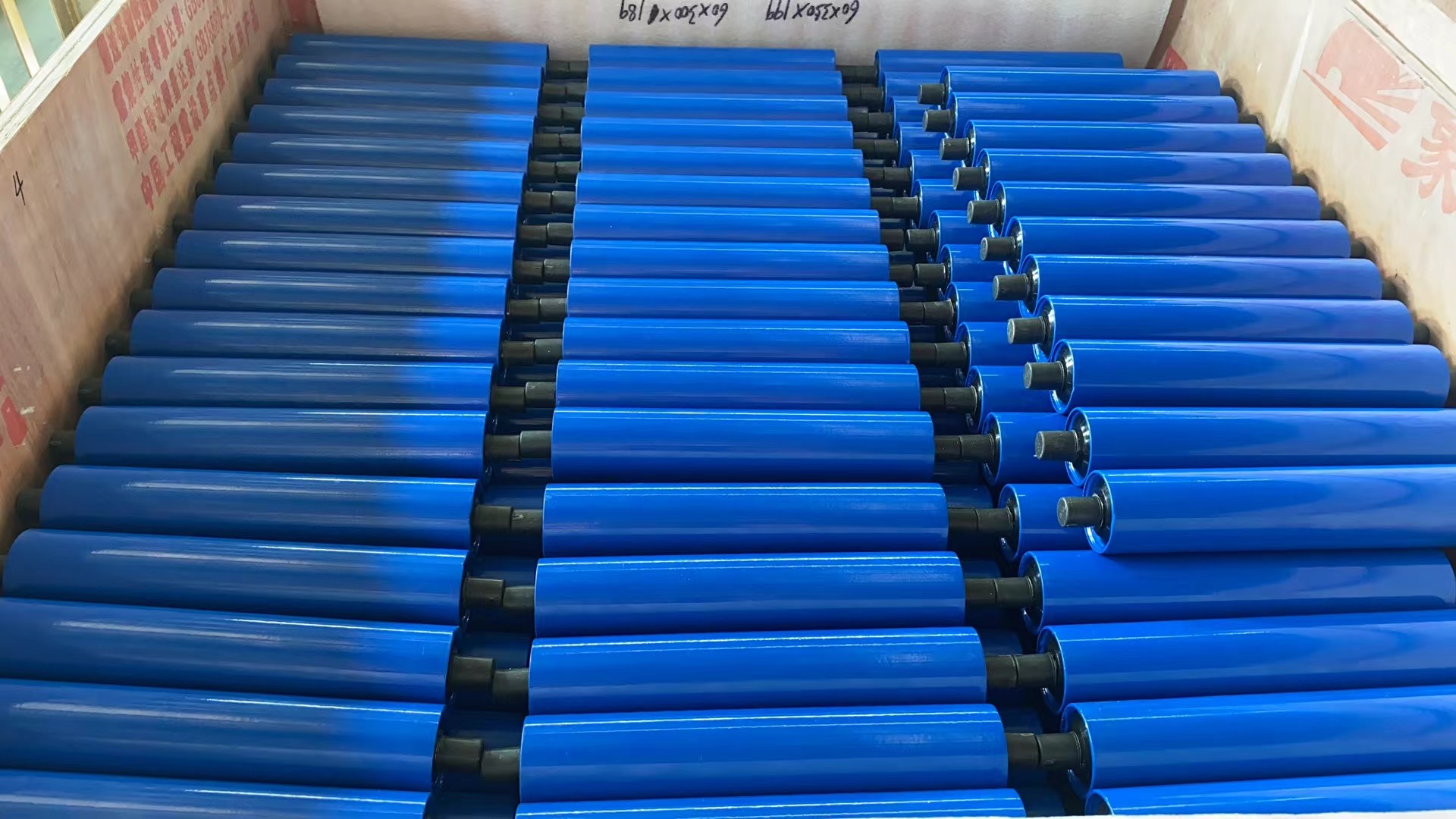
When you can't walk the production floor, start by asking for the factory's quality manual and recent inspection reports from third-party auditors. A legitimate operation will have no trouble sharing documents like ISO 9001 certificates, raw material test data, and real-time photos of production lines with date stamps. Pay attention to how quickly they respond and whether the paperwork aligns with the products you're sourcing—mismatched details or vague answers often signal a trading company posing as a manufacturer.
Next, request video calls that focus on specific areas: the incoming material inspection zone, the assembly line during active production, and the finished goods packing area. Ask to see the QC station's defect samples or rejection bins, not just the polished showroom. A factory with real quality control will proudly walk you through their process, explaining how they handle common flaws. If they insist on only showing you pre-recorded clips or avoid live walkthroughs, treat that as a red flag.
Finally, use independent verification tools without ever boarding a plane. Hire a local sourcing agent to do an unannounced check, or ask the factory to ship you a random production sample with a traceable batch number. You can also request that a small order be inspected by a third-party lab for material composition and safety compliance before mass production. The goal isn't perfect paperwork—it's consistent, verifiable evidence that the factory measures its own quality, not just tells you it does.
Custom Conveyor Roller Specifications That Prevent Premature Wear
Most premature roller failures aren't caused by the bearings or seals alone, but by a mismatch between the roller's dimensions and the actual operating environment. Customizing the shell wall thickness and using a harder steel grade—such as 1045 or 4140—reduces deflection under load and prevents the microscopic flexing that accelerates raceway wear. A CNC-machined crown or straight profile with a total indicated runout under 0.005 inches keeps the belt tracking true, which cuts edge loading on the bearing shoulders.
The bearing fit and seal combination deserve as much attention as the tube itself. Specifying a C3 clearance class with a light press fit on the shaft and a slip fit in the housing allows thermal expansion without preloading the bearing. Pair that with a non-contact labyrinth seal on the inboard side and a contact seal outboard, and you block the fine dust and moisture that destroy grease films. For washdown or abrasive environments, a nitrile or fluoroelastomer lip material will outlast standard seals by a wide margin.
Load rating is another place where off-the-shelf parts fall short. Instead of picking a roller that barely meets the static load, calculate the dynamic load with a service factor of at least 1.5 for surge loads and intermittent impacts. A slightly larger shaft diameter—say, stepping from 20 mm to 25 mm—adds stiffness without a big cost increase and dramatically extends the fatigue life of the bearing seats. For dirty or wet lines, a zinc-nickel or ceramic coating on the shell can prevent pitting corrosion that starts as a cosmetic blemish and ends as a premature wear path.
Comparing Bearing and Sealing Options for Long-Lasting Performance
When engineers weigh bearing choices, they often focus on load ratings and rotational speeds, but the real determinant of service life is how well the bearing and its sealing system work together. A high-quality bearing paired with an underspecified seal will fail prematurely, yet this pairing is frequently overlooked during initial design. Matching the seal to the operating environment—whether that means dealing with fine dust, high-pressure washdowns, or extreme temperature swings—can extend maintenance intervals by a factor of three or more in real-world applications.
Sealing options vary widely, from simple contact lip seals that provide excellent contaminant exclusion but add frictional drag, to non-contact labyrinth or V-ring designs that minimize torque but require more precise alignment and housing clearance. For applications where regreasing is difficult or impossible, a sealed-for-life bearing with integrated dual-lip or triple-lip seals often outperforms an open bearing with an external seal, simply because the internal geometry is optimized as a single unit. Conversely, in high-speed spindles or gearboxes, a non-contact seal with a separate flinger can reduce heat generation and allow higher operating temperatures without breaking down the grease.
Rather than defaulting to the cheapest sealed bearing or the most expensive, consider failure history. If bearings are being replaced every six months due to contamination, switching from a standard contact seal to a labyrinth design with a grease purge path may eliminate the problem entirely. On the other hand, if overheating or torque is the issue, a low-friction non-contact seal with a more viscous, high-temperature grease could be the smarter long-term investment. The best choice is rarely about the bearing alone—it is about understanding the total system and how the seal, the lubricant, and the housing design interact over thousands of operating hours.
Negotiating with Chinese Vendors: What to Ask Beyond Price Quotes
When you sit down with a Chinese vendor, the first number they throw out rarely tells you much. Ask about the exact material grade, not just "stainless steel"—304 and 316 behave very differently in humid environments. Also press them on tolerance ranges and surface finish options. A cheap quote that ships parts with rough edges will cost you more in returns than the savings were worth.
Sample policies deserve more than a passing nod. Some factories charge for samples but deduct that cost from the bulk order; others won't budge. Clarify who pays for shipping, how many revisions are included, and whether the sample line runs on the same equipment as mass production. If they use a different machine for prototypes, your approval means little.
Finally, pin down lead times with buffer questions. Ask what happens if raw material is delayed or if a key worker leaves mid-order. A vendor that hesitates on contingency plans will likely miss deadlines. Also verify packaging—will they use export-grade cartons and include your labeling codes? These details separate a reliable partner from a quote that looks good on paper.
Real-World Durability Tests to Request Before Committing to a Supplier
When evaluating a supplier, lab reports only tell part of the story. Ask them to run a cyclical load test on the actual part under conditions that mirror your end-use environment—temperature swings, humidity, vibration, and repeated stress. A supplier that hesitates to simulate real-world abuse is often hiding a material or design weakness that will surface after you've already scaled production.
Insist on a field trial with a small batch deployed in your own facility or with a trusted beta customer. Track failures not just in aggregate but by failure mode: hairline cracks, fastener loosening, coating wear, or electrical drift. The most useful data comes from letting the product fail naturally under realistic use, then asking the supplier to walk through their root-cause analysis and corrective action plan.
Finally, request an accelerated life test that compresses months of wear into days, but have the supplier define the acceleration factor and show the correlation to real-world field data. Without that correlation, an accelerated test is just a marketing number. A serious supplier will welcome these requests because they prove the part can survive outside the spec sheet.
FAQ
Start with the bearing and seal arrangement, not the price tag. Many rollers fail early because factories use undersized bearings or let dust into the tube. Ask for a cutaway sample and check whether the seal actually contacts the bearing inner ring under load. If the vendor cannot explain the seal's lip material and interference fit, walk away.
Look beyond the shell thickness. A durable roller needs a multi-stage labyrinth seal plus a nylon or steel contact seal, and the end cap should be welded or deep-swaged rather than shallow-pressed. Request a copy of their IP rating test or ask them to run a dust chamber test at 200 hours. If they hesitate, their rollers are probably only suited for light duty.
Usually the savings come from thinner tube walls, low-grade steel like Q195 instead of Q235, or bearings with looser clearances. Some also skip the anti-corrosion coating inside the tube, so the roller rusts from the inside out. A suspiciously low quote often means the vendor expects you to replace rollers within a year.
Check if the factory balances every roller shell dynamically before assembly, and whether they use automatic CNC pipe cutting rather than manual sawing. Also ask if the shaft ends are machined to h7 tolerance and if the housing bore is held to a tight grip. These details prevent wobble and early bearing wear that you cannot see in a photo.
Ask for a live video tour of the production line during working hours, not a polished promo film. Have them pan to the inspection station and show the measuring tools they use for runout and shaft straightness. Also request a random sample from current stock, not a hand-picked one from the showroom. A confident vendor will ship it quickly with the batch number.
Look for a realistic written warranty that covers bearing life and shell deformation under specified loads, not a vague 'one year guarantee.' The vendor should be willing to discuss failure modes, offer a root-cause analysis if something breaks, and stock spare seals or bearings. If they disappear after the invoice is paid, their quality claims were just marketing.
Samples help with first impressions, but they can be cherry-picked. Ask the vendor to pull three random rollers from an ongoing production batch and send photos or video of serial numbers and test results. Then compare those to your pre-production sample. If the random units show sloppy paint, inconsistent weld seams, or different bearing brands, expect the same variance in bulk.
Conclusion
Finding a Chinese conveyor roller supplier who can actually deliver long service life starts with digging into the materials and design details that most price lists overlook. Ask for the specific steel grade, wall thickness, and heat treatment process instead of accepting a generic carbon steel answer. The best rollers use high-precision tubing and consistent welding that eliminates weak spots from day one. Custom specifications matter just as much, because a roller designed for your exact load, speed, and operating temperature will outlast a stock model every time. Pay close attention to the bearing and sealing arrangement: labyrinth seals paired with greased-for-life bearings prevent dust and moisture from killing the roller within months. If a vendor cannot explain the seal type or bearing clearance in plain terms, move on.
You do not need to fly to China to verify quality control. Request live video walkthroughs of the production line, recent third-party inspection reports, and batch traceability records. Look for factories that weld with automated machines and use in-line dimensional checks, not just final inspection. When negotiating, go beyond the unit price. Ask about bearing brands, shaft tolerance, runout limits, and what happens if a batch fails after shipping. Real durability evidence comes from salt spray tests, rotational resistance measurements, and load cycling under simulated conditions. A vendor willing to share this data before you commit is far more likely to deliver rollers that survive in tough conveying environments.
Contact Us
Contact Person: Anna Lu
Email: [email protected]
Tel/WhatsApp: 8618561668850
Website: https://www.x-conveyor.com