

Column Still Supplier: What to Consider Before Buying Distillation Equipment
2026-06-01
Scouting for a reliable column still supplier can feel like navigating a maze of technical jargon and lofty promises. Whether you're scaling up a craft distillery or setting up a new spirits line, the choices you make now will ripple through every batch. From material integrity to energy efficiency, there's a lot more than meets the eye—and overlooking the details can cost you dearly. That’s where DYE steps in, bringing clarity without the hard sell. Let’s walk through what truly matters before you sign on the dotted line.
Pinpoint the Output and Purity Your Operation Actually Demands
Clarity on what you’re aiming to produce – and the level of purity it genuinely requires – shapes every step that follows. Too often, processes drift because the end goal was never crisp. Whether it’s a chemical intermediate, a data stream, or a physical component, lock down the exact specifications first. What form should the output take? Which contaminants or variances are tolerable, and at what concentrations? Answering these upfront stops you from over-engineering a solution that chases an abstract ideal.
Purity, in particular, tends to get inflated during planning. A routine industrial feedstock seldom needs pharmaceutical‑grade refinement, yet operations frequently default to the highest standard “just in case.” That habit bleeds time, energy, and materials. Instead, trace the downstream use: if the next stage tolerates a 2% impurity without consequence, then targeting 0.01% is a misallocation. The real skill lies in identifying the turning point where extra effort stops adding value. Honest conversations with end‑users or internal clients usually reveal that “good enough” is genuinely sufficient.
Once the output profile and its purity floor are set, the operation can be stripped of redundant steps. Adjusting a single parameter or swapping a separation technique often delivers exactly what’s needed with far less complexity. Regularly revisit those definitions, too – demands evolve, and a specification that was critical last year might now be negotiable. The most efficient systems aren’t the ones that can achieve the highest purity; they’re the ones that reliably hit a well‑understood target with the least friction.
Why Metal Type and Weld Quality Should Dictate Your Supplier Choice
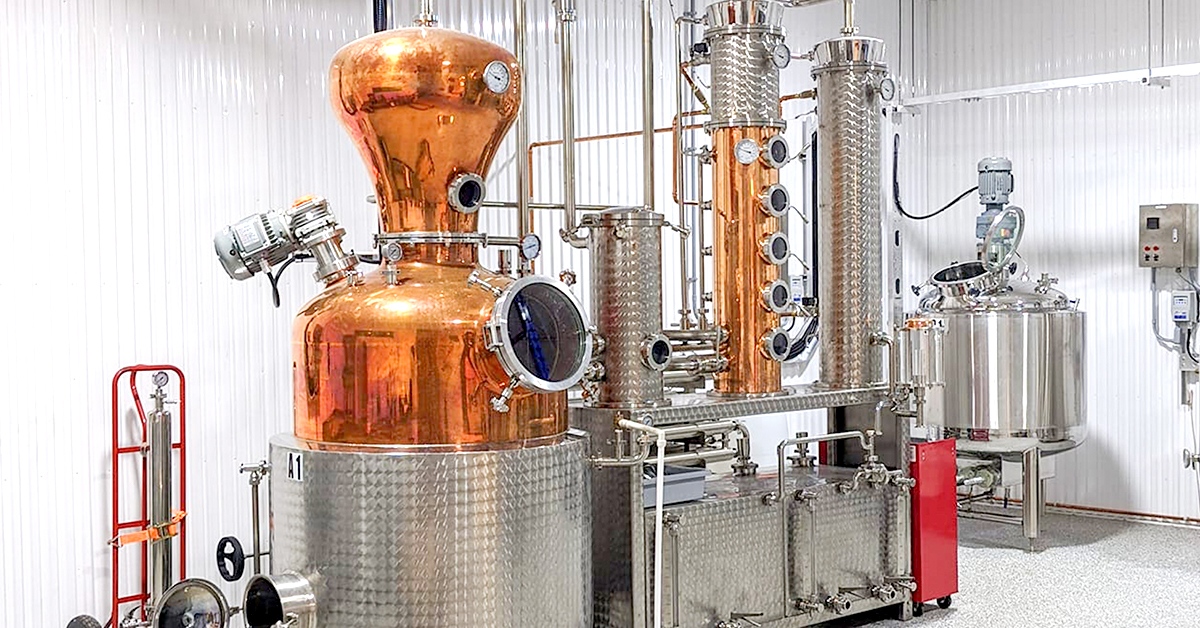
The metal you choose for your components isn’t just a checkbox on a spec sheet—it directly influences how your product performs under stress, heat, or corrosive conditions. A supplier who doesn’t understand the nuances between stainless steel grades, aluminum alloys, or exotic metals can cost you more than just money; they can compromise safety and longevity. That’s why metal type should be your first filter when vetting suppliers.
Weld quality is often invisible but carries the weight of structural integrity. Even the finest metal can’t save a product from catastrophic failure if the welds are inconsistent or weak. Look for a supplier who treats welding as a skilled craft, not just a production step, and can provide documentation of their processes and testing.
The Hidden Cost of Inadequate Post-Installation Support
When a system goes live, the assumption is that the hardest part is over. Teams often treat the launch as the finish line, but in reality it’s the starting point for a new set of challenges. Without proper post-installation support, small issues that could have been caught early spiral into larger, more expensive problems. The organization ends up paying a hidden tax in the form of reactive firefighting, prolonged downtime, and steadily eroding user confidence.
Poor support after installation doesn’t just strain IT resources—it bleeds into everyday operations. Employees who struggle with unresolved issues create workarounds that drift further from the intended design, introducing subtle inefficiencies and data integrity risks. Over time, these patchwork solutions become ingrained, making the system harder to manage and upgrade. The real expense isn’t a single incident; it’s the accumulation of wasted hours, missed opportunities, and the slow decay of the software’s value.
Moreover, the impact extends beyond immediate functionality. Customer-facing systems that stumble post-launch can damage reputation in ways that are difficult to quantify. Partners and clients don’t distinguish between the installation phase and ongoing care—they simply see a product that doesn’t work as promised. Investing in comprehensive follow-through isn’t an optional extra; it’s a safeguard against the quiet, compounding costs that derail long-term success.
When Off-the-Shelf Still Designs Fall Short: Asking for Custom Fabrication
Standard still designs work well for common distillation tasks, but they quickly reveal limitations when you're dealing with unusual botanicals, high-viscosity washes, or very small batch sizes. Off-the-shelf columns and boilers are engineered around typical ethanol-water separations, so if your mash contains delicate flavor compounds or your process demands precise temperature gradients, you might find the default configurations strip away the very notes you aim to preserve.
Custom fabrication steps in where generic equipment can't adapt. A skilled metalworker can adjust column diameters, add modular plates, or build in bypass valves that let you manage reflux with real finesse. This isn't about cosmetic tweaks—it's engineering a system that aligns with a specific recipe or production rhythm, something mass-produced stills rarely offer. The upfront consultation determines whether you need a minor alteration or a ground-up redesign, but what you gain is hardware that works with your methods, not against them.
Sometimes the bottleneck is spatial, not chemical: you inherit a narrow cellar doorway or a low-ceilinged outbuilding. Factory-made stills come in fixed proportions that presume a spacious distillery, so when a standard pot won't fit, custom workmanship produces a vessel that maximizes capacity within the existing footprint. The result often outperforms the cookie-cutter alternative, because every weld and fitting was considered in light of actual workflow, heat distribution, and future maintenance access.
Calculating the True Lifetime Cost of Your Column Still Investment
The sticker price of a column still tells only a fraction of the story. While that initial invoice might feel like the big decision, it’s the ongoing drain from energy consumption, cooling water, and labor that silently shapes your true cost over the years. Too often, operators focus narrowly on the purchase and overlook how efficiency losses or frequent maintenance quietly chip away at margins month after month.
Mapping out a realistic lifetime cost means pulling in variables that don’t show up on a standard quote. Compare two stills with similar throughput but different insulation quality or heat recovery design— the one with lower upfront cost can end up costing far more in steam and repairs over a decade. Building even a simple spreadsheet that tracks projected energy use, typical part replacements, and expected downtime often reveals that the “premium” option pays for itself much faster than instinct suggests.
Lead Times and Delivery Promises: Separating Fact from Sales Fiction
When a sales rep confidently promises a four-week lead time, it's easy to get swept up in the optimism. After all, they have the glossy brochures, the firm handshake, and the reassuring tone that makes everything sound effortless. But behind that promise often lurks a tangled web of production bottlenecks, component shortages, and shipping delays that the sales team either doesn't know about or chooses to downplay. The first step in separating fact from fiction is to recognize that a delivery promise crafted to close a deal rarely reflects the messy reality of the factory floor or the logistics chain.
To cut through the sales fiction, you need to ask for specifics they can't easily dodge. Instead of accepting a vague 'we'll get it to you by June,' push for production schedules, batch numbers, or the actual shipping carrier details. Genuine transparency shows up as a shared project tracker, a candid conversation with the operations manager, or even a penalty clause for late delivery. If every question is met with a smooth deflection or a sudden mention of 'unprecedented demand,' you're likely hearing a script, not a plan.
Ultimately, the most reliable delivery promises come from vendors who treat lead times as a discipline, not a sales tool. These companies tend to quote longer, less impressive timeframes upfront—and then consistently beat them. They understand that a disappointed customer is far more damaging than a lost sale, so they build in buffers for the unexpected. Learning to gravitate toward those suppliers, and to read the overpromisers' tactics from a mile away, turns a potential headache into a straightforward procurement process.
FAQ
Column stills come in several designs, including pot stills with columns, continuous column stills, and hybrid systems. The right choice depends on what you're producing. For small-batch spirits like whiskey or rum, a pot-column hybrid might work best. For high-volume neutral spirits, a continuous system is more efficient. Start by defining your production goals—desired proof, flavor profile, and batch size—then match those to the still's capabilities.
The material largely dictates how the still handles heat and corrosion. Copper is common because it removes sulfides and enhances flavor, but it needs regular cleaning. Stainless steel is durable and easier to maintain, though it lacks copper's chemical benefits. Many setups use a combination—copper in the vapor path, stainless for structure. Look for quality welds and adequate thickness to avoid warping over time.
Don't overlook safety. Essential features include pressure relief valves, accurate temperature gauges, sturdy seals, and automated shut-off systems. Also check for proper ventilation requirements and how the still handles overpressure scenarios. A reliable supplier will walk you through their safety certifications and help you set up the equipment correctly to prevent accidents.
It's critical. A distributor with a solid track record often provides better installation guidance, faster replacement parts, and responsive troubleshooting. Before buying, ask for references, read unfiltered user reviews, and see how they handle warranty claims. Good support can save you weeks of downtime when something goes wrong.
Prices vary widely based on size, material, and complexity. A small craft-scale still might run a few thousand dollars, while larger industrial units can exceed hundreds of thousands. Customization, additional plates, automation, and brand reputation all add to the bill. Always compare quotes carefully and factor in shipping costs—some suppliers include it, others don't.
Absolutely. Many manufacturers offer modular designs where you can add plates, change condenser types, or adjust column height. If you need precise control over reflux ratios or want to integrate with existing equipment, discuss it upfront. Customization often leads to better efficiency and a unique spirit character, but it may increase lead time and cost.
Routine maintenance includes thorough cleaning after each run to prevent buildup, checking gaskets and seals, and inspecting heating elements. Copper parts require periodic descaling. A good supplier will give you a detailed maintenance schedule and may offer service contracts. Clarify what's included in the manual—step-by-step cleaning guides are essential if you're new to distilling.
Ask for performance data from the manufacturer, such as production rate in liters per hour and energy consumption. Better yet, visit an existing setup to see it in action or request a live demonstration. Be wary of inflated claims; cross-reference with user reports on industry forums. Also consider how easily you can scale up the system if your needs grow.
Conclusion
Before committing to a column still supplier, it's essential to move beyond glossy brochures and deeply assess what your operation truly needs. Start by nailing down the output volume and purity levels your process demands—overestimating leads to wasted energy, while underestimating bottlenecks your entire production line. Equally critical is the material quality and welding craftsmanship; a still built from subpar metals or with porous welds will corrode, leak, or taint your product, costing far more in the long run than the upfront savings. Don't overlook the hidden price of weak post-installation support, either. A supplier who vanishes after delivery leaves you stranded during troubleshooting or optimization, eroding uptime and profitability.
Another pitfall is assuming standard designs will fit your workflow. Off-the-shelf units often force compromises, so gauge whether a supplier can truly customize fabrication to match your space, heating method, or automation needs without exorbitant engineering fees. Smart buyers also map out the lifetime cost, factoring in energy consumption, maintenance intervals, and anticipated part replacements—not just the purchase price. Finally, scrutinize lead time claims. Sales promises can be fiction, and a delayed column still can stall your entire ramp-up. Visit the factory, talk to existing users, and verify that the supplier’s track record matches their delivery narrative before you sign.
Contact Us
Contact Person: Ada Xu
Email: [email protected]
Tel/WhatsApp: 0577-86806088
Website: https://www.dayuwz.com/