

Corrugated Box Solutions That Improve Product Protection and Reduce Packaging Costs
2026-11-20
Every shipment tells a story before the box is even opened. When corrugated boxes are treated as an afterthought, product damage and runaway packaging costs quietly eat into margins. This guide looks at how smarter corrugated box solutions from Zemeijia help brands improve product protection while trimming unnecessary packaging spend—without guesswork.
When a Smaller Box Protects Better: Flute Profiles That Absorb More Impact
Most people assume a bulkier corrugated board automatically means better protection, but impact absorption often depends more on flute geometry than raw thickness. Finer profiles such as F, G, and N pack more flutes per linear foot, creating a denser network of arches that distributes shock across a larger number of contact points. That structure allows a slim, rigid box to handle drops and edge impacts without relying on thick walls or heavy fillers.
The counterintuitive result is that a smaller outer carton can outperform a larger one when the flute profile is matched to the failure mode. In e-commerce overboxing, a compact box made from micro-flute board limits product movement and keeps the protective surface close to the item, which reduces the lever effect that amplifies impact at corners. Because the flutes collapse in controlled stages, more kinetic energy is spent deforming the board rather than transferring into the product.
Cutting Corrugated Weight Without Cutting Corners on Cushioning
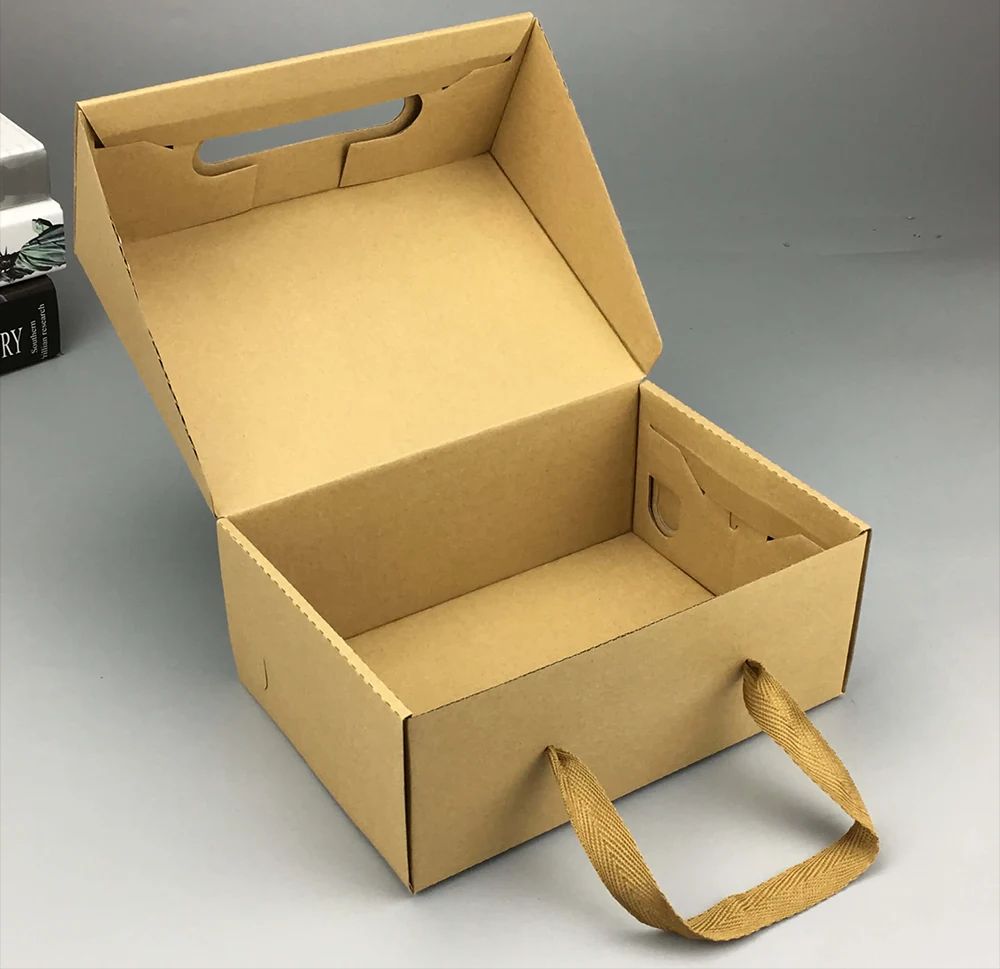
Shaving weight from corrugated packaging usually makes people nervous, and for good reason. A lighter board can mean fewer fibers, thinner walls, and a box that folds when it should hold. But the trade-off is not as fixed as it used to be. By rethinking flute profiles and paper combinations, converters now pull grams out of a sheet while keeping the cushioning exactly where impacts land.
The work happens in the middle of the board. Instead of simply downgrading to a lighter liner, designers lean on shorter, tighter flute geometries that put more vertical support under the facing sheets. They also shift to high-performance liners with better stiffness-to-weight ratios, so the board resists bending without carrying extra fiber. In areas that take repeated hits, such as corners, edges, and base panels, local reinforcements do the heavy lifting while the rest of the panel stays lean.
Drop tests and compression runs tell the same story. A well-designed lightweight board can match the protection of a heavier sheet, and in some cases it resists corner crushing better because the structure, not the fiber volume, is doing the work. The payoff shows up in smaller material invoices, easier handling on the line, and fewer cubes shipped with no loss in arrival condition.
Designing Boxes Around Drop Height, Not Just Product Dimensions
Most packaging teams still size a box from the product's length, width, and height. Add a little clearance, check the carrier's dimensional weight, and call it done. But that approach quietly assumes the box will sit flat on a shelf for its entire journey. In real fulfillment, boxes get dropped, kicked, stacked under heavier cartons, and occasionally thrown onto porches. The dimension that matters most isn't the product's footprint—it's the distance a package is likely to fall before it hits concrete.
Designing around drop height changes the conversation from static fit to dynamic survival. A product can rattle loosely inside a perfectly rectangular carton and still arrive smashed because the void space let it accelerate into a corner. Instead of measuring only the item, we measure the threat: a 30-inch drop onto a warehouse floor, a 48-inch fall from a conveyor, or a six-foot tumble off a residential railing. That number drives cushion thickness, internal bracing, and even the orientation of the product inside the box. A narrow edge can survive a short fall in any direction, but a flat face may need twice the protective distance when it lands parallel to the ground.
The payoff is a box that looks slightly overbuilt on a spec sheet but performs predictably in the back of a delivery van. It might use a taller insert, an eccentric flap fold, or a crumple zone at the corners—none of which a product-dimension calculator would ever suggest. By shifting the design reference from the item to the impact, you stop shipping cardboard rectangles and start engineering small, repeatable crash tests.
One Blank, Multiple Depths: Scoring Patterns That Reduce SKU Count
A single blank can replace a surprisingly wide range of finished parts when scoring depth is treated as a design variable rather than an afterthought. Shallow scores act as hinges, deeper scores create controlled break points, and full-depth cuts allow separation. By combining these depths on one blank, manufacturers can produce several distinct configurations from the same starting piece, collapsing what would normally be a shelf full of separate SKUs into one manageable item.
The real savings show up far beyond the warehouse. Fewer stock codes mean simpler forecasting, lower minimum order quantities across the supply chain, and less chance of obsolete inventory sitting in a distribution center. The pattern itself carries the burden: each line has to be tested for repeatable folding or tearing, and tolerances need to hold across material batches. Once that work is done, the blank becomes a quiet workhorse, delivering multiple depths without multiplying part numbers.
This approach works especially well for packaging, display units, and modular components where the same footprint can serve several assembly paths. Instead of asking procurement to manage three or four near-identical blanks, a single part number covers the range, with scoring depth doing the differentiation. It keeps the product line visually varied and functionally flexible while the back-end inventory stays lean.
Moisture-Resistant Corrugated That Keeps Strength in Cold Storage
Cold storage punishes ordinary corrugated. Condensation seeps into the fluting, the board softens, and boxes start to sag long before the pallet reaches the freezer door. This grade takes a different route: the liner and medium are treated to resist moisture ingress without turning brittle at low temperatures.
What matters in a blast freezer isn't just surviving the cold—it's holding stacking strength after repeated thaw cycles. The moisture-resistant barrier slows absorption, while the fiber structure keeps its compression values even when the air is heavy with frost. Boxes stay square, corners hold, and the bottom layer doesn't buckle under the weight above.
The result is packaging that works with the environment rather than against it. Pallets move through cold storage without bulging or tearing, and the cartons retain enough rigidity to protect the product until it reaches the customer.
Replacing Plastic Void Fill with Engineered Paper Structures
The switch away from plastic void fill often starts with a simple substitution, but engineered paper structures demand a different mindset. Instead of relying on air pillows or foam peanuts to occupy space, this approach uses die-cut, folded, and interlocking paper forms that brace products inside a carton. The geometry does the work: angled ribs can hold heavy items away from box walls, while crumple zones absorb drops at the corners where impacts actually land.
What makes these structures practical is their tunability. A flat sheet of kraft board can be scored into a lattice that expands into a suspension cradle for glass bottles, or into a series of stepped wedges that keep irregular metal parts from shifting. Because the density, flute direction, and cut pattern are all adjustable, a packaging team can match the cushioning to the product's weight and fragility without overbuilding. The result handles the same rough journey through parcel networks, yet tears down flat for curbside recycling.
There is also a quiet operational benefit. Warehouses no longer need separate hoppers for plastic film or bulky dispensing machines; the paper components arrive flat, store in less space, and can often be fed into existing carton erecting lines. When a customer opens the box, the unboxing feels deliberate rather than disposable, and the entire package can go into a single recycling stream. That shift removes a material headache instead of just replacing one waste problem with another.
FAQ
Most damage comes from concentrated impacts at corners and edges, loose movement inside the box, and repeated stacking pressure. Adjusting the box to match the product footprint, adding corner posts or scored buffers, and specifying a flute profile that holds its compression strength under load tends to prevent more damage than simply using thicker board.
Larger flutes like A and C provide more shock absorption per pound of fiber, while smaller flutes like E and F create a smoother surface with better print quality but less cushioning. Choosing a profile based on the actual drop and stacking conditions can lower caliper and weight without sacrificing protection, which reduces both material and freight costs.
A box that is even slightly oversized forces you to pay for empty space in every shipment. Right-sizing removes that void, lowers dimensional weight charges, and often allows more cartons per pallet. The savings add up fastest in ecommerce and subscription orders where package volume is high and product sizes vary.
Switching from a standard recycled medium to a high-performance liner or using a hybrid board can improve tear and puncture resistance at a lighter basis weight. In many cases the board cost per carton stays flat or drops slightly while survival rates improve, making the upgrade pay for itself through fewer replacements and credits.
Start by identifying where failures occur, usually at seams, score lines, or open areas around the product. Reinforcing just those weak points with glued inserts, tighter tolerances, or a different box style often works better than adding weight everywhere. Testing the revised design against actual carrier handling data helps confirm the fix before scaling it.
Edge crush testing, burst testing, and box compression testing cover the basics, but they do not always predict field performance. Drop tests, vibration tests, and sequenced compression conditioning that mimics stacked pallets in a trailer give a clearer picture. Running a small pilot through your normal fulfillment path is usually the most reliable check.
When the product has an uneven shape or fragile corners, adding die-cut trays, pads, or corner blocks can localize protection where it is needed. That often costs less than upgrading the entire outer carton to a heavier board, and it keeps the package lighter while reducing the risk of damage in the specific zones that matter.
Ventilation holes, a moisture-resistant medium, or a change in storage and sealing practices can handle many condensation problems. If the box only needs short-term protection, wax alternatives and water-based treatments applied selectively to seams and bottom panels are usually cheaper than fully coated board.
Conclusion
Protective packaging often fails because it is sized around product dimensions while the actual damage occurs through drops, vibration, stacking, and moisture. Corrugated solutions reverse that approach. By matching flute profiles to impact absorption, a smaller box can outperform a larger one, using less board without giving up cushioning. Lightweight grades and reworked flute geometry then take out excess weight while maintaining the edge crush and puncture resistance needed for corners and edges. This lowers material spend and reduces the number of damaged shipments, especially when the box is engineered for the drop height it will face rather than for a generic sizing formula.
Scoring patterns that allow one blank to fold into multiple depths cut SKU counts and speed up changeovers, so warehouses and pack stations carry fewer box styles. In cold storage, moisture-resistant liners and adhesives keep corrugated from softening and losing stack strength, which prevents collapsed loads. For internal cushioning, engineered paper structures replace plastic void fill with interlocking, recyclable forms that brace products firmly without foam or pillows. Taken together, these changes reduce total packaging cost, simplify handling, and improve product protection under real shipping conditions. That combination matters most in high-volume operations where small per-box savings accumulate quickly.
Contact Us
Contact Person: Sasha Du
Email: [email protected]
Tel/WhatsApp: +86 13869836645
Website: https://www.zmjpackagings.com/