

Foot Spa Massager Manufacturer Questions to Ask Before Choosing a Partner
2026-11-24
Most foot spa massager sourcing headaches start long before production—when the right questions never get asked. Price sheets look similar, but a manufacturer’s answers reveal whether you’re getting a true partner or just a supplier. Below, we break down the questions that expose real capability, from QC consistency to after-sales support, and show how XINGBU handles them.
Where Production Capacity Meets Your Actual Delivery Dates
Production schedules often look great on a spreadsheet until a supplier delay, a customs hold, or a material shortage quietly pushes the timeline out. We tie capacity planning directly to the dates we commit to, so the number you see isn't a hopeful estimate—it's what the line can actually handle right now.
Every order gets checked against live production load rather than a static calendar. If a line is near its limit, your delivery window reflects that before you place the order, not after. That way, the conversation stays honest on both sides and you can plan your own downstream work with confidence.
When demand shifts or a component arrives early, those changes are folded into the schedule immediately. The point isn't to promise the earliest possible date; it's to give you a date that holds up when production actually runs.
The Certifications That Matter for Your Target Markets
Certification choices rarely reward a blanket approach. Buyers in Germany often expect TÜV or GS marks alongside CE compliance, while procurement teams in the United States look for UL or ETL listing before a product reaches a shortlist. Matching the credential to the region and the decision-maker saves more time than chasing every recognizable badge.
Industry-specific requirements matter just as much as geography. Medical device distributors may ask for ISO 13485 and MDSAP recognition, automotive suppliers lean on IATF 16949, and enterprise software buyers frequently request SOC 2 or ISO 27001. The certifications that carry weight are the ones your actual customers already reference in their vendor questionnaires, not the ones that simply look impressive on a website.
It is also worth treating certification as a maintenance commitment. A mark that requires annual audits, recertification fees, or updated technical files can strain a small team if it was chosen without a clear commercial reason. Start with the credentials named in real tenders and distributor conversations, then build outward only when a specific market demands it.
Custom Work That Goes Past a Printed Logo
A printed logo on a blank shirt is the easy path, but it rarely leaves a mark. Real custom work asks a tougher question: what does this garment need to say when someone sees it from across the room? That means thinking about fabric texture, thread weight, placement that follows the body's own lines, and finishes that don't just sit on top of the material but become part of it. Every choice gets made with the wearer in mind, not just the brand.
We lean into techniques that demand more attention. Dense embroidery that changes how a sleeve feels when it moves. Appliqué built from layered twill and satin, cut by hand instead of stamped. Distressed inks that break in over time, so a jacket gets better after fifty wears. The point is never to decorate a product for the sake of decoration. It's to bring something into existence that a print file alone could never produce.
That approach changes the relationship between the garment and the person wearing it. A chest hit becomes a texture you notice when you cross your arms. A back panel becomes a reason someone asks where the piece came from. Custom work like this stays out of the discard pile because it carries the marks of real decisions, made slowly and with care.
How Quality Issues Are Caught Before They Ship
Most defects don't surface at the end of the line. They're stopped much earlier, often during first-article inspection or a design handoff review where tolerances and material choices are challenged against real production conditions. Teams working this way treat a drawing revision as a checkpoint, not a formality.
On the floor, operators use jigs, go/no-go gauges, and inline sensors that flag drift before it becomes a batch problem. When something looks borderline, the line pauses long enough to quarantine the affected units and trace the root cause—sometimes down to a single cavity in a mold or a dull cutting edge.
Before anything leaves the dock, a final audit pulls samples and checks them against the original customer requirements, packaging included. That last pass isn't about discovering brand-new failures; it's about catching the small mismatches that slipped through earlier gates, so the shipment only goes out when every open flag has been closed.
What Daily Communication Looks Like When Timelines Slip
Deadlines stop being stated as calendar dates and start sounding like weather forecasts. A teammate who used to say “Tuesday afternoon” now says “sometime in the middle of the week, assuming the API review doesn’t drag.” People lead with caveats before mentioning any progress, and the word “done” gets replaced by softer versions like “wrapped up for now” or “in a decent spot.”
The tone of check-ins changes too. Managers ask fewer yes/no questions and more open ones like “what’s the riskiest part right now?” because they know the original plan no longer holds. Status updates shrink in length but grow in hedging. A one-line note may carry three qualifiers, and silence in a group chat often means someone is privately reworking a date before saying it out loud.
Side conversations multiply. People trade quick calls before standups, share tentative dates in direct messages, and agree on fallback plans that never make it into the tracker. The formal channel stays optimistic while the real adjustment happens in smaller threads, where someone finally says the delay outright and everyone quietly revises their own week around it.
The Real Cost Breakdown After the Initial Quote
Most people see the quoted price and assume that's the number they'll pay. It rarely works out that way. Once the job begins, you start noticing the line items that weren't in the original estimate: disposal fees, fuel surcharges, minor adjustments that suddenly require a change order. These aren't hidden exactly, but they're certainly not foregrounded during the sales conversation.
What makes this trickier is the language of the initial quote. Phrases like "starting at" or "under ideal conditions" often do a lot of quiet work. The final invoice tends to reflect reality rather than the pitch — extra hours, unexpected material upgrades, or even a simple misjudgment of the site. By the time the last payment clears, the total can sit anywhere from fifteen to thirty percent above the original figure.
A practical habit is to ask for a breakdown that separates fixed costs from variables before signing anything. If the contractor hesitates to commit to a ceiling, treat that as a signal. The real cost after the initial quote isn't just about arithmetic; it's about how clearly the risks were laid out from the start.
FAQ
We regularly rework housing shapes, add or remove heat settings, adjust vibration intensity, and integrate features like rollers or bubble trays. If you have a rough sketch or a competitor unit you want to improve, we can turn that into a working prototype, though complex electronics may add two to three weeks to the sampling stage.
Yes. We keep UL, CE, UKCA, and FCC documentation current for our standard models, and we can apply for ETL or SAA when a client's target region requires it. Third-party testing is handled by labs we have worked with for years, so the paperwork usually moves faster than it would through an unfamiliar facility.
We run inline checks at each station and a full functional test on every unit before packing. During peak months, we add a second QC shift and pull random samples for soak tests that run overnight. Defect rates are tracked weekly, and if a batch exceeds our internal threshold, we stop the line and investigate before resuming.
For a standard model with your branding, plan on 25 to 35 days. Fully custom tooling usually adds another 20 to 30 days for mold development and testing. Around major holidays, we recommend adding two weeks to those estimates because component suppliers and freight forwarders both slow down.
You are welcome to visit. You would walk the molding floor, assembly lines, testing area, and warehouse. We do not script the tour, so you can stop and talk with line workers or ask to see the latest defect log. If travel is difficult, we can arrange a live video walkthrough with the production manager.
We ask for photos and serial numbers of the affected units, then we investigate within 48 hours. If the cause is our manufacturing, we replace the stock or issue a credit, depending on what works better for your cash flow. For ongoing issues, we send a corrective action report and adjust our inline checks so the same fault does not repeat.
Yes. We can handle branded boxes, foam inserts, and multilingual manuals. Our in-house design team prepares print-ready files, and we provide digital proofs for approval before production. For small first orders, packaging setup fees are often waived if you commit to a follow-up order within six months.
We sign NDAs and keep pre-production files in a restricted-access server. Only the engineers and account manager assigned to your project can open them. If you want extra protection, we can split tooling ownership or register the design under your company name before sampling begins.
Conclusion
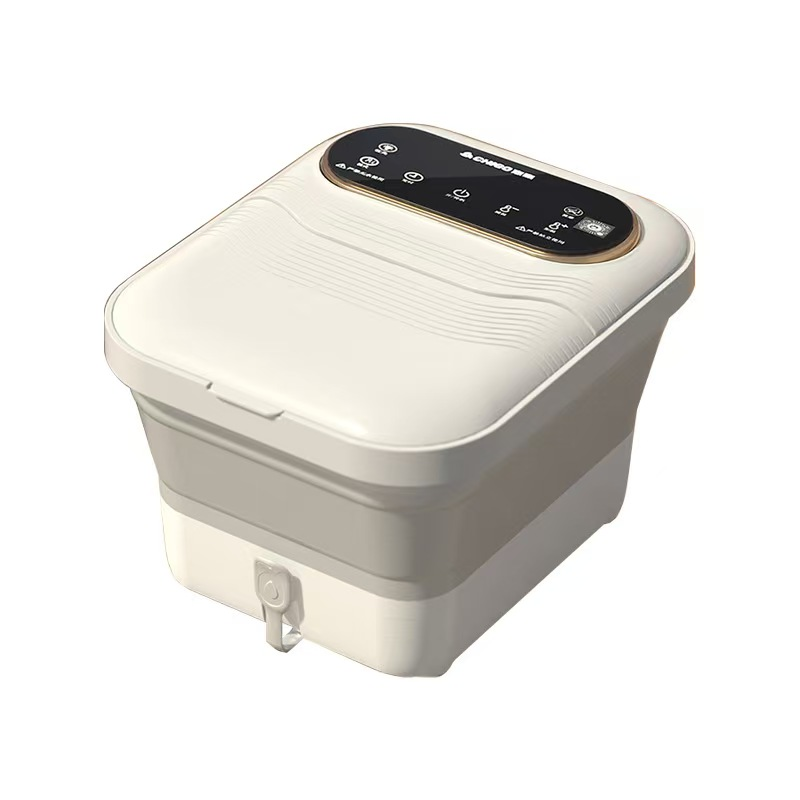
Choosing a foot spa massager manufacturer should start with whether their stated production capacity actually matches the delivery dates they promise. Ask for recent orders similar to yours in size and complexity, then check how often those shipments left on time. Certifications matter only when they cover your target markets, so verify that the test reports correspond to the exact voltage, plug type, and materials you plan to sell. Customization should also go beyond a printed logo. A capable partner can discuss motor adjustments, heating element placement, basin geometry, control panel layout, firmware changes, and packaging built for heavier units without treating every request as an exception.
Quality control needs to be visible before the container leaves the factory. Ask how defects are caught on the line, what internal failure rate they record, and whether third-party inspections are allowed without resistance. Daily communication is just as important, especially when timelines slip. A reliable manufacturer will tell you about a delay before you notice it in a tracking app. Finally, move past the initial quote and ask for the real cost breakdown, including tooling amortization, component changes, testing fees, packaging revisions, and freight adjustments that often surface after the first order. Manufacturers who hesitate to share those details are usually protecting a margin rather than building a partnership.
Contact Us
Contact Person: Hannah
Email: [email protected]
Tel/WhatsApp: +86 18266954198
Website: https://www.okmassager.com/