

Fully Automatic Paper Bag Machine Manufacturer Delivers Smart Packaging Solutions for High-Volume Production
2026-11-16
In an era where high-volume packaging demands both speed and precision, one name is quietly redefining the game: ROKIN. Imagine a fully automatic paper bag machine that not only keeps pace with your most aggressive production targets but actually thinks ahead to prevent costly downtime. This isn’t just automation—it's a smart packaging ecosystem designed to streamline your entire workflow. As we unpack the technology behind ROKIN's latest innovation, you'll discover how intelligent engineering is turning ordinary production lines into profit powerhouses.
Redefining High-Speed Paper Bag Production: The Core Engineering Behind Our Machines
Redefining High-Speed Paper Bag Production: The Core Engineering Behind Our MachinesInside the Smart Factory: How Automated Controls Minimize Waste and Downtime
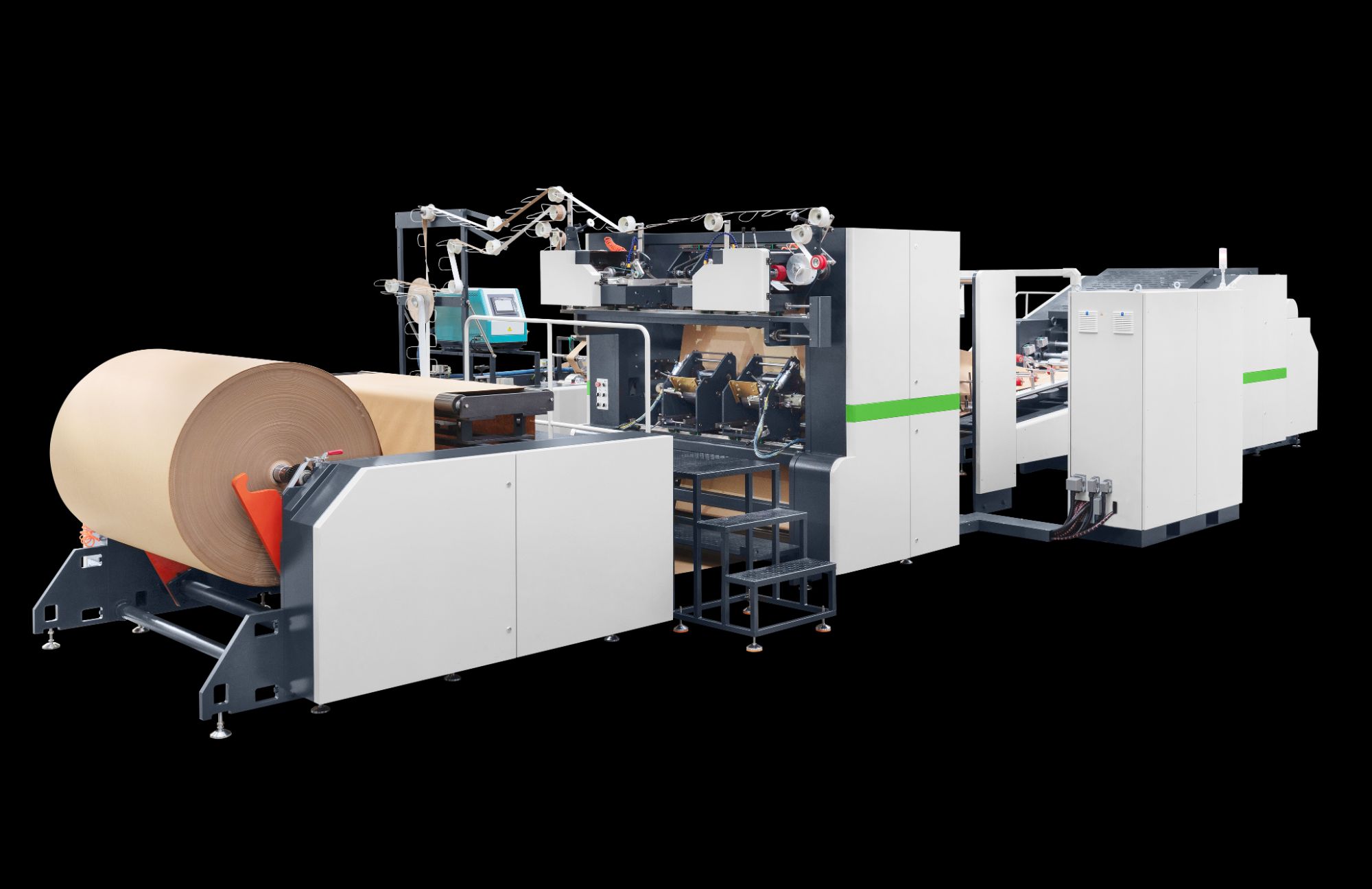
Walking through a smart factory, the first thing you notice isn't the hum of machinery—it's the silence where breakdowns used to be. Automated controls don't just run the line; they listen to it. Vibration sensors on a motor, for instance, can pick up a slight imbalance weeks before it becomes a seized bearing. Instead of waiting for a failure, the system tweaks the load or schedules a targeted maintenance window, keeping production flowing and scrap rates almost nonexistent.
Waste gets attacked from multiple angles at once. Real-time vision systems scan every unit, catching microscopic defects that human eyes would miss, and instantly feed that data back to adjust the process upstream. If a nozzle starts drifting out of spec, the recipe corrects itself mid-batch so the entire run doesn't end up in a dumpster. It's not about producing faster; it's about never producing something destined for the trash in the first place.
Downtime becomes a puzzle that's solved before it exists. Historical data from thousands of cycles teaches the control network the exact rhythm of each machine. When a conveyor belt's torque signature shifts by half a percent, the system knows that cleaning or a minor part swap can be done during a planned pause, not at 3 a.m. on a Saturday. The result is a floor where the unexpected rarely happens, and when it does, the reaction is already scripted—minimizing minutes lost and keeping the entire plant in a self-correcting flow.
Beyond Standard Output: Custom Bag Formats That Fit Your Exact Production Line
Walk into most packaging facilities and you’ll spot the same handful of bag styles—pillow bags, gusseted pouches, maybe a quad seal if they’re feeling adventurous. But when your product doesn’t sit neatly inside those standard shapes, the entire line suffers. You end up with puffy seals, wasted headspace, unstable pallets, and operators forced into constant manual adjustments just to keep things running. That’s the quiet cost of settling for off-the-shelf bag formats.
A truly custom bag design starts with how your product behaves. A snack mix heavy on sharp, irregular pieces needs a film structure and seal geometry that won’t puncture under pressure, while a fine powder demands not just barrier protection but a spout or reclosable opening that doesn’t cake shut after first use. The bag’s dimensions, corner radii, gusset depth, and even the placement of a tear notch all flow from real-world filling speeds, drop distances, and retail display constraints—not from a catalog selection.
This approach shifts the conversation from “what’s available” to “what does your line actually need to hit its throughput and quality targets.” We’ve built bag lines around narrow neck designs for dense granules, oversized header cards for pegboard retail, and resealable sliders on shapes that conventional machines would reject. The result is packaging that moves through your form-fill-seal or pre-made pouch equipment without constant babysitting, letting you stop fighting the bag and start trusting it.
From Raw Reel to Finished Pack: End-to-End Automation That Scales With Demand
It starts with a massive roll of raw material gliding into the intake, untouched by human hands. Precision feeders align the substrate while sensors map tension, thickness, and edge position in real time—adjusting on the fly without pausing the line. Every inch is accounted for before it even reaches the first forming station.
From there, the line folds, seals, and fills in a continuous motion governed by adaptive software. When order volumes spike, extra modules slide into the sequence without rewriting the whole workflow. Changeover happens in minutes, not hours—so a smaller seasonal batch gets the same fluid movement as a high-volume contract run. The result is a pack that looks identical whether you produce five thousand units or five hundred thousand, with minimal scrap and no surprise downtime.
Material Flexibility Unlocked: Running Kraft, Recycled, and Coated Papers Without Compromise
The real test of a packaging line isn’t how well it handles one substrate, but how effortlessly it shifts between kraft, recycled, and coated papers without constant adjustments. Many machines slow to a crawl the moment you swap a smooth coated sheet for a rough, fibrous recycled grade. We’ve tuned every feeder, guide, and folding mechanism to read the paper—not fight it. The result is a line that maintains speed and crease precision across a wildly diverse material spectrum, all in the same shift.
Recycled content often brings inconsistency: caliper variation, surface fuzz, and unpredictable stiffness. Coated papers, on the other hand, demand gentle handling to avoid scuffing, yet need firm, accurate folds. Bridging those extremes requires more than a robust motor. We rethought airflow in the feed section to stabilize lightweight recycled sheets and added adaptive pressure rollers that sense coating thickness in real time. Operators don’t touch a bypass or a speed dial—the line self-adjusts within seconds, keeping output steady regardless of what arrives on the pallet.
What makes this flexibility practical is its transparency. No hidden conversion kits, no prolonged changeover sequences. A quick-reading interface shows the active material profile and live tension mapping, so floor teams trust the automation rather than overriding it. Running a mixed job of brown kraft mailers and glossy coated inserts back-to-back becomes an ordinary workflow, not a scheduled event. That’s how you turn material variability from a production headache into a straightforward capability.
The Silent Advantage: Energy Efficiency and Long-Term Reliability in Continuous Operation
In environments where machines run around the clock, the true cost of operation isn't just the initial price tag—it's hidden in the power drawn hour after hour, day after day. Systems built with energy efficiency at their core don't just lower electricity bills; they fundamentally reduce thermal stress on every component. Less wasted energy means less heat, and less heat means a slower aging process for circuit boards, power supplies, and mechanical parts. This isn't a flashy spec sheet number; it's a quiet, compounding gain that builds operational resilience over years of nonstop duty.
Long-term reliability isn't born from rugged labels alone—it's engineered through a relentless focus on component-level endurance and power management. When a device is designed for continuous use, the smallest inefficiencies magnify into failure points. Thoughtful engineering sidesteps this by selecting components rated well beyond nominal loads, implementing closed-loop thermal controls, and writing firmware that gracefully manages power states during fluctuating workloads. These decisions never make it into marketing bulletins, but they're exactly why some equipment stays online for a decade while its counterparts falter after three years.
The silent advantage reveals itself most clearly during maintenance windows that never get scheduled. Without fans clogging, capacitors swelling, or joints cracking under thermal cycling, systems simply keep running. This absence of drama becomes a strategic asset—fewer field dispatches, less emergency inventory, and planning cycles that actually hold shape. The bottom-line payoff is cumulative: a widening gap between the cost of operation and the cost of ownership, all driven by choices that never make a sound.
FAQ
We built the feed system with adjustable tension controls and sensor-guided alignment so it adapts on the fly. Kraft, recycled, coated, or extra-thick stock—the machine self-calibrates in seconds without manual recalibration, which means fewer stops and consistent output across material changes.
It’s not just automation for the sake of it. Our control stack uses real-time production data to predict wear on sealing jaws and cutting blades, automatically adjusting dwell time and pressure. Operators get plain-English maintenance alerts on their tablet, not just cryptic error codes. The machine learns from each run to refine bag dimensions and glue patterns, so scrap drops noticeably after the first few batches.
Absolutely. One bakery we work with runs over 120 bags per minute during holiday surges, and the machine keeps the seam strength within half a percent of the target spec. We use servo-driven draw rollers instead of clutch systems, so acceleration and deceleration are smoother—no tearing, no misaligned prints, even when you push it to the rated maximum.
If the floor prep is done, our team usually has it running within three to five days. We pre-assemble the main modules at our factory, so onsite work is mostly alignment, power hookup, and a few hours of training. One converter in Ohio hit their target output by lunch on day four.
The tooling is modular—twist-lock and dowel-pin setups let you change format in under 20 minutes. We include a library of digital recipes for common styles like SOS bags, V-bottom, and flat handles. If you need something unusual, our applications engineers will dial in the settings remotely and send a verified parameter file you can load via USB.
We designed it for shop-floor reality. The HMI uses a smartphone-style interface with picture-based menus. Most operators learn to run it in a single shift. If something goes off-track, the system offers step-by-step visual guides on the screen—like “clear the suction cup in zone C” with a photo of the part highlighted. You don’t need an engineer for daily operation.
Conclusion
The fully automatic paper bag machinery from this manufacturer redefines high-speed production through core engineering that eliminates bottlenecks at every stage. Within the smart factory environment, self-adjusting control systems continuously monitor material tension, register accuracy, and glue application, dramatically cutting waste and preventing unscheduled downtime. Rather than limiting output to standardized items, the platform accommodates custom bag formats—whether for flat-bottom boutiques, square-bottom groceries, or gusseted industrial sacks—adapting the tooling in minutes to fit an exact production line. This fusion of speed, intelligence, and customization forms the backbone of truly smart packaging solutions for today’s high-volume demands.
The process unfolds as a seamless end-to-end automation, pulling from a raw paper reel and delivering finished, counted, and banded packs ready for dispatch, all while scaling effortlessly from short runs to multi-million unit orders. A standout material flexibility allows the same machine to run uncoated kraft, fully recycled fibers, and coated or barrier papers without compromise on opacity or seal integrity, responding to shifting sustainability goals. Underpinning everything is a silent advantage: servo-driven motion and regenerative energy systems that keep power consumption low even during 24/7 operation, delivering long-term reliability that plant managers count on. Together, these capabilities translate into a packaging asset that grows with the business and continuously reduces cost per bag.
Contact Us
Contact Person: CARA
Email: [email protected]
Tel/WhatsApp: +8619519778302
Website: https://www.rokinmachinery.com