

Heavy Weight Soundproofing Blanket Supplier Guide to Choosing Durable Noise Control Solutions
2026-11-16
Industrial noise doesn't just disrupt work, it quietly wears down equipment, communication, and long-term hearing. Yet many facilities still rely on thin temporary barriers that fail within months. A heavy weight soundproofing blanket is different, but only if you know which layers actually stop low-frequency rumble. This guide breaks down what durable acoustic control really requires, from mass-loaded vinyl cores to weather-resistant facings. Along the way, Top Packaging standards show why edge sealing and reinforced grommets matter more than a thick-looking outer quilt. If you're tired of replacing blankets every season, keep reading.
What Actually Makes a Soundproofing Blanket Heavyweight
Most of the weight in a genuinely heavy acoustic blanket does not come from extra layers of polyester fill. It comes from dense, limp materials such as barium sulfate-loaded vinyl or mass-loaded PVC that add surface density without making the panel stiff. That distinction matters because sound isolation follows a mass law: each doubling of mass per square foot generally adds about 5–6 dB of transmission loss in the mid and high frequencies.
The second piece is how that mass is distributed. If the barrier layer is too rigid, the blanket cannot drape tightly around pipes, equipment, or door gaps, and those small air paths undo much of the benefit. Better heavyweight blankets embed fine heavy particles in a flexible binder, so the material hangs flat and seals against irregular surfaces instead of bridging over them.
Finally, construction details like quilting patterns and edge bindings keep the internal layers from shifting or settling into thin spots. A product that looks thick on a spec sheet can lose its effectiveness if the core bunches at the bottom after a few weeks of hanging. In practice, what makes a soundproofing blanket heavyweight is not just pounds per square foot on paper, but whether that weight stays evenly placed and able to conform where it is installed.
Matching the Blanket to the Noise Source Without Overpaying
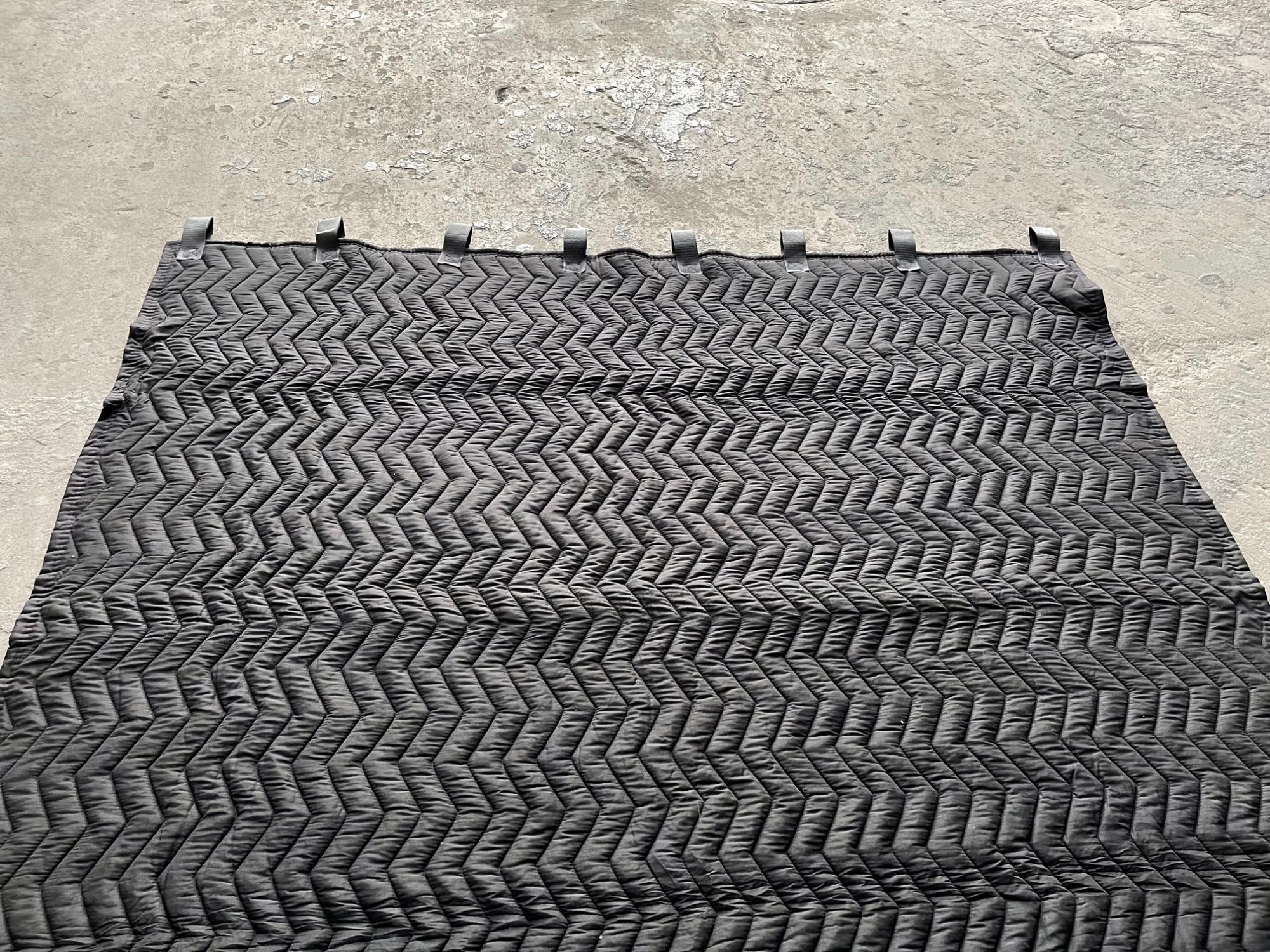
Acoustic blankets rarely fall short because they are too thin; they fall short when the mass and fiber structure do not line up with the dominant frequencies you are actually hearing. A low rumble from an HVAC unit behaves differently from sharp voices or traffic hiss, and a blanket meant for thermal comfort can leave both problems untouched. Before adding another panel, identify whether the complaint is low-end vibration, midrange chatter, or high-frequency leakage. That distinction changes the material choice more than thickness alone.
Once the noise profile is clear, pay only for the layer that does measurable work. For low-frequency drone, limp-mass vinyl or a dense quilted barrier with sealed edges is worth the extra cost; for voices and television bleed, a heavy acoustic blanket with a porous face and enough air space behind it can be enough. Avoid the reflex of buying the thickest, heaviest option unless that mass is placed where it can interrupt the actual transmission path. Tight perimeter coverage and closing small gaps often return more isolation than another inch of fill.
Reading Material Specs Beyond the Marketing Jargon
Spec sheets have a way of turning simple questions into a wall of numbers. A phone with a 200-megapixel sensor can still produce muddy low-light shots if the pixels themselves are tiny, and a pair of headphones with a frequency range far beyond human hearing says little about how they actually render vocals. The trick is to treat printed specs as clues rather than answers.
Some terms are engineered to impress rather than inform. "Aerospace-grade aluminum" rarely means the same alloy used in an aircraft wing; it often refers to a common 6000-series metal that many brands share. Likewise, peak brightness on a display may be sustainable for only a few seconds before heat forces it down. Ask which spec holds under ordinary conditions, not in a lab demo.
When you strip away modifier-heavy language, a few measurements consistently matter more than the rest. For laptops, sustained performance and fan noise under load tell you more than a short turbo boost figure. For fabrics, stitch density and fiber length outlast any "military-grade" label. Real-world usage is the only benchmark that doesn't care about the marketing budget behind it.
Installation Realities That Decide Long-Term Performance
Most long-term failures are not decided by the product, but by what happens before it goes down. Substrate moisture that reads fine on paper can be trapped under a fast-track schedule, and the early morning dew no one wipes off becomes the real bond breaker. Installers often have to work around occupied spaces, which means surface prep gets shortened, primers are applied too thin, and cold joints are cleaned with whatever solvent is on the truck. Those choices quietly set the performance ceiling well below the lab values.
Then there are the details that never show up in a specification: the edge that gets shimmed to hide an uneven slab, the sealant that cures against damp concrete, or the traffic direction that shifts before the material has reached its early strength. Temperature swings during the first night can do more than a year of normal wear, especially when infrared heaters are moved too early. A successful installation is not about hitting one perfect set of conditions; it is about controlling the messy, real-world variables long enough for the system to become what it was designed to be.
Fire Weather and Wear as Hidden Durability Filters
Durability is rarely just a number on a stat sheet. In practice, fire and weather do the sorting that crafting menus cannot. A piece of gear that survives a brief torch flame might still warp after repeated exposure to wet-dry cycles, and that is where the hidden filter does its work. The materials that look identical at first glance start to separate once heat, moisture, and friction are introduced.
What makes these filters hard to notice is that they operate slowly. A haft does not snap the first time it gets singed; it loses flexibility over a dozen small fires. Boot leather does not split in the first rain; it stiffens and cracks after enough mud, frost, and drying. By the time a failure happens, it feels sudden, but the real cause was a long pattern of exposure that no quick inspection could catch.
This shifts how someone should evaluate equipment. Instead of trusting a label or a single stress test, the more useful question is what the item has already been through. Repeated exposure to fire weather and ordinary wear acts as a quiet audit, removing the pieces that cannot handle real conditions and leaving behind the ones that can.
Questions Worth Asking a Supplier Before You Commit
Most sourcing conversations are shaped by price, minimums, and lead times, but the suppliers worth keeping ask different questions back. Before you sign anything, find out how they handle a late shipment, a flawed batch, or a sudden spike in demand. A supplier who only talks about their strengths probably has not been tested hard enough. Ask for a specific example of a mistake they made and what they did to fix it—not the polished version, the operational one.
Dig into their production rhythm rather than their catalog. Who actually runs the line on a Friday afternoon? What happens when a key material is delayed and the container is already booked? These questions reveal whether you are dealing with a factory that solves problems or one that simply passes them along. Listen for pauses, not just answers. A thoughtful hesitation often signals real experience, while instant reassurances can hide a layer of subcontractors you will never see.
Finally, ask about the last order they turned down. Few buyers do this, but it tells you more than any audit report. A supplier willing to say no to work that does not fit their capacity or expertise is protecting long-term reliability. That kind of honesty matters far more than a perfect sample. Commit to the ones who talk about constraints openly—they are the ones who will tell you the truth when your order is at risk.
FAQ
It usually comes down to mass, edge finishing, and the outer facing. Look for high-density fiberglass or mineral wool cores, reinforced hems, and a scrim or vinyl face that resists oil, moisture, and abrasion. Cheaper versions tend to fray at the grommets or tear after a few hangs.
Ask for test data by frequency band, not just a single NRC or STC figure. A credible supplier should be able to share lab reports or field measurements and explain how the blanket performs at low frequencies versus mid and high frequencies. If they hesitate, treat the spec sheet as marketing.
Heavyweight options make sense around punch presses, generators, compressors, outdoor chiller lines, or any source with strong low-frequency output. Lighter curtains can handle speech or office noise, but they won't do much when structural vibration and low-end rumble are the problem.
Grommets should be spaced closely enough to prevent sag, ideally reinforced with webbing or metal rings. Hems need double stitching or heat-sealed edges. Hardware should include rated hooks or tracks, because the blanket's own weight becomes the main long-term failure point.
Only if the outer layer is built for it. You want a sealed PVC, silicone, or vinyl-coated fabric and rust-proof grommets. Even then, confirm temperature range and UV stability. A mineral wool core that gets wet can lose performance and become a maintenance headache.
Map the actual openings, pipe runs, and access points first. If standard sizes leave gaps, custom panels are worth it because noise leaks through even small openings. A good supplier will ask for photos or dimensions and recommend panel overlap rather than selling the largest blanket available.
Keep them free of oil and dust buildup, inspect stitching and grommets monthly, and avoid folding them when wet. Store flat or rolled, not crammed. If a panel gets torn or compressed, replace it early; a damaged section can let enough noise through to undo the rest of the barrier.
They are most effective as part of a broader plan. Use them to block direct sound paths, enclose noisy equipment, or create temporary barriers, but combine them with vibration isolation, seals around edges, and absorption where needed. Expecting a hanging blanket to solve all low-frequency problems usually leads to disappointment.
Conclusion
The term heavyweight gets thrown around too easily in this category. A real heavy soundproofing blanket earns that label through dense mass-loaded vinyl, multiple internal layers, and tightly sealed edges, not just a thick felt face. If the noise problem is mostly low-frequency rumble from a compressor or chiller, a limp mass barrier works; if the issue is sharp metallic clatter, you may need absorption plus a barrier or you will pay for weight that does little. Reading past marketing language means asking for tested transmission loss or insertion loss figures instead of accepting a product name with the word acoustic in it.
Long-term performance often comes down to the parts nobody photographs. Grommets, stitching, facing material, and closure systems fail first under repeated handling, weather, or heat. A blanket that meets a fire rating in a lab may still degrade quickly outdoors if the facing is not UV-stable or the seams are not reinforced. Before committing, ask a supplier how the blanket is built at stress points, whether it has been used in comparable installations, and what the warranty actually covers beyond the first few months. That conversation reveals more than a spec sheet ever will. It also tells you whether the supplier understands the difference between a temporary wrap and a permanent noise control fix.
Contact Us
Contact Person: Shelly
Email: [email protected]
Tel/WhatsApp: 86-577-64286522
Website: https://www.topmovingpad.com/