

How a Leading Cycling Socks Manufacturer Designs for Comfort and Performance
2026-06-02
When every pedal stroke counts, the right gear makes all the difference. At Mingjun, we know that cycling socks aren’t just an afterthought—they’re a critical layer between you and the road. Our design philosophy blends advanced moisture-wicking fabrics with targeted compression zones to reduce fatigue and keep feet cool under pressure. But how exactly does a leading manufacturer turn performance demands into everyday comfort? Let’s take a closer look at the craft behind the threads.
Engineering the Ideal Yarn Composition for Endurance
Achieving endurance in yarn starts well before the spinning frame, with fiber selection playing a decisive role. Long-staple cottons and high-tenacity synthetics form the backbone of resilient blends, but it’s the precise ratio—often leaning toward a dominant natural fiber cushioned by a minority of engineered filament—that curbs abrasion and pilling without sacrificing hand feel. Small adjustments in micronaire and staple length distribution can shift a yarn’s failure mode from catastrophic breakage to a gradual, predictable wear.
Beyond mere material choice, the internal architecture of the yarn determines how stresses are distributed. Twist density and direction are tuned not just for strength, but to create a self-supporting helix that resists untwisting under cyclic tension. In multi-ply constructions, opposing twist layers act as a mechanical fuse, redistributing load before individual fibers snap. Even the migration of short fibers toward the core during drafting is deliberately encouraged, placing tougher filaments at the surface where they shield the yarn from direct friction.
The final formulation often undergoes micro-coating or inter-fiber bonding treatments that remain invisible to the eye but drastically lower surface drag. By manipulating hydrogen bonding sites or adding a sparing amount of flexible resin at the crossover points, the yarn acquires a dampening mechanism that quiets the microscopic sawing action between adjacent fibers. What results is not just a longer-lasting thread, but one that maintains its original elasticity and drape through hundreds of stress cycles, making it suited for applications where failure is simply not an option.
Weaving a Breathable Second Skin
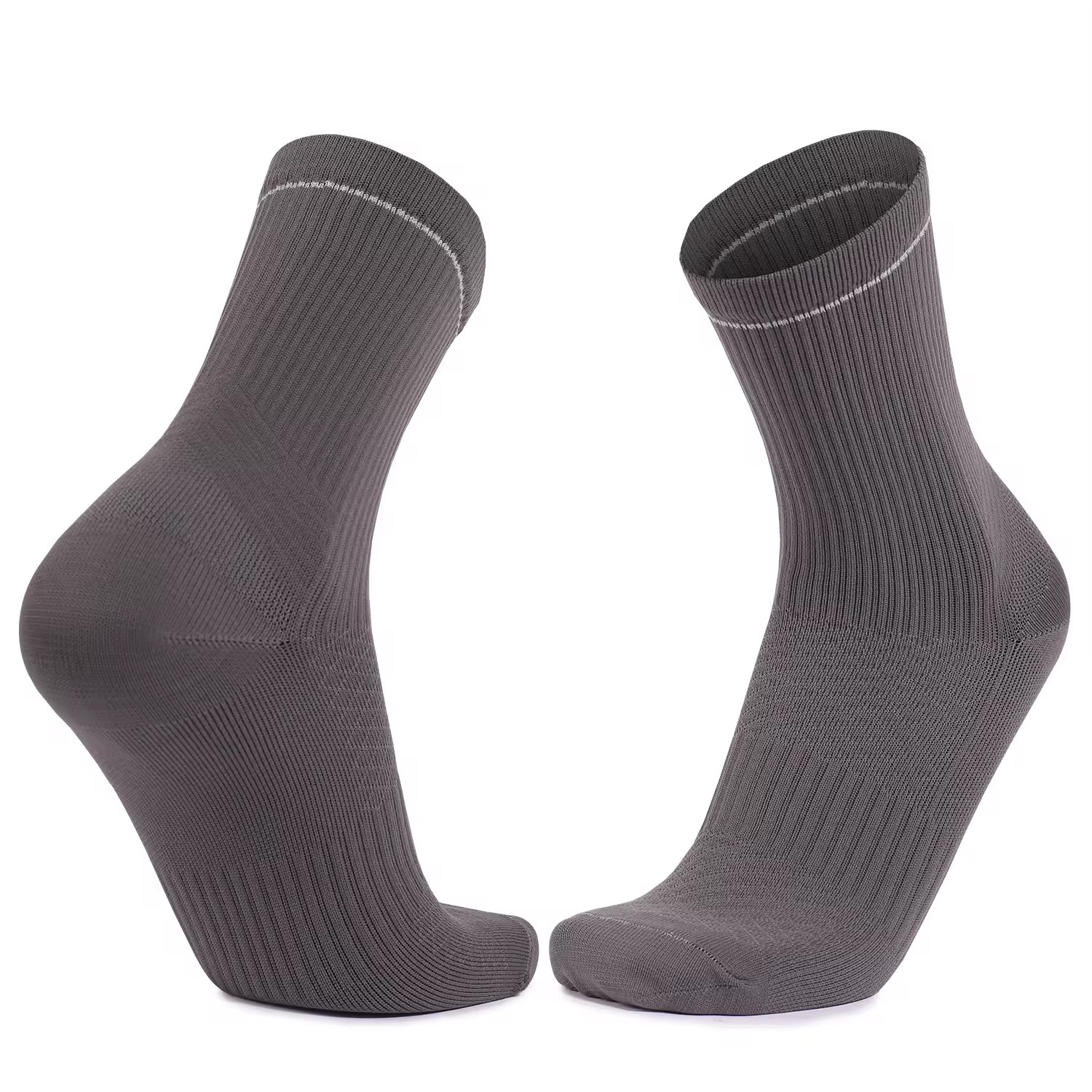
Imagine a fabric so finely tuned that it mimics the quiet efficiency of your own skin—breathing with you, adapting without a second thought. We start with ultra-fine yarns, chosen not just for softness but for their ability to create millions of microscopic gaps between fibers. These aren't holes you can see, but they are pathways for warm air and moisture to escape, keeping you comfortable even when the world heats up around you. The trick lies in a specialized knitting technique that catches light like a lattice of shadows, moving sweat out while drawing freshness in. It’s the kind of thoughtfulness you feel but rarely notice, a second skin crafted from attention to detail that never shouts for recognition.
What sets this apart is how the weave itself works without relying on chemical finishes or membrane layers that can degrade over time. Each thread interlocks with a slight, deliberate tension, creating a structure that remains open enough for air to pass through yet tightly knit enough to offer modest coverage and durability. The result is a garment that feels weightless, almost forgettable against your body, yet resilient through countless wears and washes. Whether you’re chasing a morning run or navigating a packed afternoon commute, the fabric stays quietly active, managing moisture and temperature so you barely have to. It’s a quiet kind of innovation—an honest, physical solution woven right into the foundation of what you wear.
Pressure Mapping: Where Padding Meets Precision
Every curve and contour of the body tells a story—one that our padding must listen to. Pressure mapping transforms that story into actionable insight, revealing exactly how force distributes across a surface when someone sits, leans, or lies down. It’s not just about cushioning; it’s about understanding where support is truly needed and where softness can thrive without compromise.
By blending material science with real-time feedback, we move beyond guesswork. Sensors detect peak pressure zones that would otherwise go unnoticed, guiding us to sculpt padding that cradles without collapsing. The result is a tailor-made interface between human and product—one that feels almost intuitive, because it’s built on data, not assumptions.
In practice, this means every ounce of foam, gel, or fiber is placed with intent. High-risk areas get denser reinforcement, while adjacent zones remain plush to preserve natural movement. It’s a delicate dance of layering and density shifts, all orchestrated to minimize fatigue and maximize long-term comfort. That’s where padding stops being a generic layer and becomes a precise, living solution.
The Role of Seamless Construction in Long-Ride Comfort
When you're hours into a ride, every tiny distraction gets amplified. A barely-there seam that seemed invisible in the showroom becomes an irritating ridge, while a pressure point from a poorly bonded joint slowly morphs into outright pain. Seamless construction eliminates these weak spots by creating continuous surfaces that distribute weight evenly, reducing the friction and shear forces that eventually lead to tenderness. It's not just about avoiding discomfort—it's about maintaining focus and maintaining energy when the miles stretch on.
The way seams are bonded or stitched also directly affects how well riding gear breathes and flexes. Traditional flatlock seams might look technical, but they tend to grab and restrict movement as you shift your weight or change posture. Seamless zones in key areas—like the crotch or underarms—allow for a more natural range of motion, so you aren't fighting your own clothes while navigating gusty crosswinds or tight corners. This fluidity cuts down on the micro-adjustments riders make constantly, which add up to fatigue you feel the next day.
Long-haul comfort also hinges on how gear interacts with the rider's temperature regulation. Bulky seams can trap heat and sweat, creating hotspots that disrupt the body's cooling mechanisms. By contrast, seamless construction often incorporates varying knit densities that wick moisture precisely where it's needed, helping you stay dry and temperate. This isn't a luxury; when you're exposed to the elements for hours, managing your microclimate is what lets you arrive fresh instead of drained.
Thermal Regulation Without the Bulk
Traditional thermal management often relies on thick, heavy insulation or energy-hungry active systems. There’s a smarter way—integrating temperature control directly into the material itself. By engineering structures at the microscopic level, we can achieve the same level of comfort without the clumsiness of conventional layers. Think of it as baking the climate control right into the fabric of your gear, so it works passively without fans, wires, or excess heft.
What makes this approach stand out is its ability to maintain a stable microclimate no matter the external conditions. Instead of adding more bulk when temperatures rise or drop, the material adapts by absorbing, storing, or releasing heat as needed. This dynamic response means your jacket stays breathable during a morning hike yet seals in warmth once the sun dips behind the peaks—all while weighing next to nothing. It’s practically like wearing a second skin that does the thinking for you.
Versatility is the real breakthrough here. This isn’t just for outdoor apparel; imagine construction materials that moderate indoor temperatures, medical wraps that prevent overheating without sacrificing mobility, or automotive interiors that keep you cool without cranking the AC. By ditching bulky insulators, we unlock designs that are sleeker, lighter, and far more efficient—proving that sometimes the best performance comes from what you don’t see or feel.
Real-World Testing: From Lab Data to Road Feedback
Lab simulations can only tell you so much. A suspension that feels plush on a hydraulic rig might chatter over expansion joints, while a powertrain mapping that delivers seamless torque on a dyno could hesitate during a steep grade with a full load. The real verdict comes from miles of tarmac, gravel, and unexpected potholes—places where data points become physical sensations.
We treat public roads as our most unforgiving test cell. Every prototype logs thousands of miles across urban gridlock, sweeping mountain passes, and neglected backroads. Our engineers don't just read telemetry; they feel the steering weight build through a cambered corner, listen for wind whistle at 80 mph, and note how the structure shudders over railroad crossings. These subjective impressions are then cross-referenced with accelerometer traces, strain-gauge logs, and thermal camera footage to turn human perception into measurable targets.
The feedback loop doesn't end with the press of a 'save' button. When a test driver flags a brake pedal that feels wooden after repeated high-speed stops, the data gets dissected back at the lab—pad compounds are reformulated, booster curves are remapped, and within days a revised setup is back on the road. This tight cycle between raw road feedback and rapid iteration is what polishes a good car into a great one, ensuring that the final calibration feels cohesive and alive, not just correct on paper.
FAQ
We focus on merino wool blends for moisture-wicking and temperature regulation, paired with synthetic fibers like nylon and spandex for stretch and durability. The exact mix varies by sock height and intended riding conditions.
Road socks have targeted cushioning under the metatarsal heads and heel to absorb constant pedal vibration, while mountain bike versions add extra protection on the toe cap and ankle bone for trail debris and low-speed impacts.
Flatlock seams eliminate rubbing against the foot, and we often use hand-linked toe closures to prevent bunching. For ultra-distance riders, we even offer seamless designs knit in one continuous tube.
Graduated compression helps venous return, but we apply it precisely—too much restricts blood flow. Our 15–20 mmHg zone sits at the arch and calf, tapering off at the ankle to aid circulation without numbness.
We simulate wet and dry conditions using a friction-testing rig that mimics foot movement inside a shoe. Fabrics that prove too abrasive are discarded; the goal is a coefficient of friction below 0.3 against skin.
A double-layer welt with a soft elastane core provides grip. We avoid stiff rubber bands, instead knitting a subtle silicone dot pattern on the inner cuff—this keeps the sock in place during hard efforts without marking the skin.
Open mesh zones across the instep and dorsal foot encourage evaporative cooling. The yarns are air-textured to increase surface area for sweat dispersion, and we avoid dark colors that absorb sunlight unnecessarily.
Indirectly, yes. By minimizing movement within the shoe, a precise fit reduces energy loss. We also incorporate a stiffer arch band that helps lift the plantar fascia slightly, potentially delaying fatigue during long rides.
Conclusion
Leading cycling sock manufacturers begin at the fiber level, engineering yarn blends that balance durability, stretch, and moisture management for hours in the saddle. A careful mix of nylon, polyester, and elastane is tuned to provide targeted compression without restricting blood flow, while hydrophobic and hydrophilic fibers work together to pull sweat away and speed up evaporation. The fabric is then knit into a breathable structure using mesh zones and venting channels that create a ‘second skin’ feel—close-fitting yet airy. During the design phase, pressure mapping tools analyze foot-to-pedal contact, guiding the placement of cushioning exactly where road vibrations hit hardest, such as the forefoot and heel, to prevent numbness and fatigue without making the sock bulky.
Seamless toe closures and flatlock stitching are non-negotiable; even the smallest ridge can turn into a hot spot after 100 miles. By knitting the sock in a single piece, friction is virtually eliminated. For thermal control, instead of thick layers, the manufacturer uses advanced fiber technologies like phase-change materials or hollow-core yarns that trap or release heat as conditions change, maintaining an ideal microclimate. Finally, prototypes undergo rigorous testing—first with lab instruments measuring pressure distribution and moisture wicking, then with professional and amateur riders who log thousands of miles. Their feedback is integrated into final tweaks, ensuring that every pair meets the demands of real-world cycling.
Contact Us
Contact Person: Tiga
Email: [email protected]
Tel/WhatsApp: 8613058331729
Website: https://www.china-socksfactory.com/