

How Ultrasonic Bubble Sensor Factories Deliver Precision Bubble Detection for Medical and Industrial Systems
2026-09-22
In medical and industrial systems, even a single unnoticed bubble can compromise safety or performance. Ultrasonic bubble sensors have become the quiet guardians of fluid lines, catching what the human eye cannot. Yet not all sensors deliver the same precision under real-world conditions. That’s where Siansonic stands apart—designing and manufacturing ultrasonic bubble sensors that combine advanced acoustic engineering with rigorous factory calibration. This article explores how Siansonic’s production approach ensures reliable, repeatable bubble detection, from dialysis machines to semiconductor processing, and why that matters for your most critical systems.
Echoes in the Flow Path: How Ultrasonic Pulses Catch What Eyes Miss
A pipeline buried under concrete hums with movement, but no one can see the thin crack spreading inside its wall. That is where ultrasonic pulses step in. They shoot through metal, liquid, or tissue as high-frequency sound waves, and when those waves hit a boundary, an air pocket, a density shift, they bounce back. The returning echo carries a fingerprint of whatever it met. By timing those echoes down to microseconds, operators map flaws invisible to any camera or human eye.
Think of it as tapping a wall to find a hollow spot, except the tap moves at thousands of meters per second and the “sound” is far beyond hearing. In a flow path, whether it is oil through a refinery pipe or blood through an artery, ultrasonic pulses reveal blockages, corrosion, or delamination that hide beneath smooth surfaces. No drill, no shutdown, just a transducer sending sound and listening for the whisper of a defect.
What makes this method stand out is not just sensitivity but reach. Light stops at the first opaque layer; sound travels through steel, plastic, and living tissue with ease. An ultrasonic scan can follow the entire flow path, catching a pinhole leak behind a flange or a fatigue crack at a weld root long before pressure drops or a stain appears. The eyes see the outside, but the pulse hears the inside story.
Cleanroom Choreography: The Manufacturing Steps That Keep Sensors Contaminant-Free
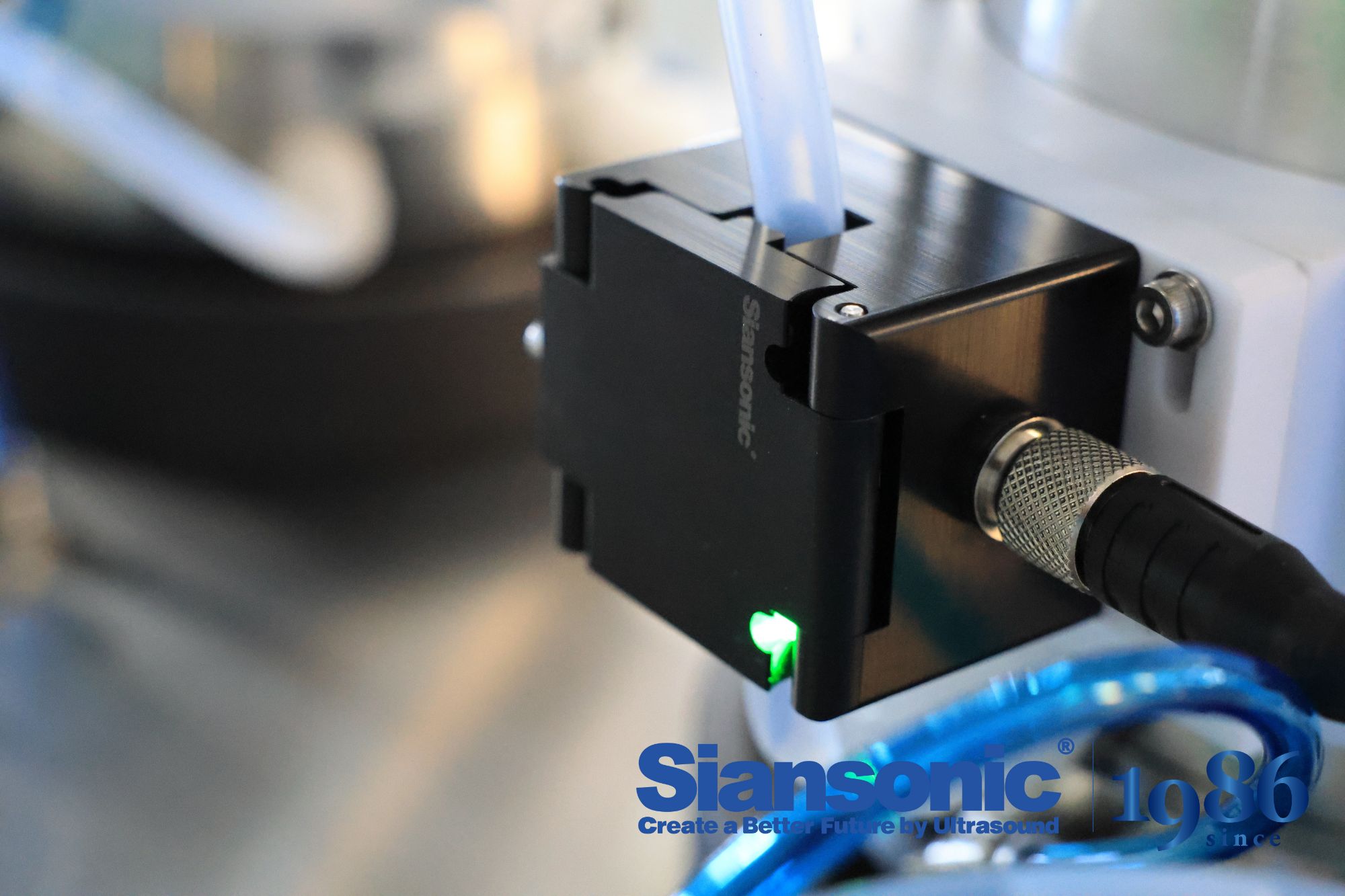
Every sensor begins its life inside a controlled environment where a single speck of dust can ruin an entire batch. Workers suit up in full bunny gear—hoods, masks, boots, and gloves—before passing through an air shower that blasts away loose particles. The floor itself is often perforated, pulling air downward so that any stray mote gets sucked away from the wafer instead of settling on it. This isn't just ritual; it's the first line of defense in a process where yields depend on invisible discipline.
Once inside, the real choreography starts. Wafers move from station to station on automated tracks, but human hands still guide the most delicate transfers. Photolithography uses light to print microscopic circuit patterns, and before that step, the wafer gets a spin-coat of photoresist—a task so sensitive that even a tiny vibration can cause uneven thickness. After exposure, developers wash away the unexposed resist, revealing features measured in nanometers. Each chemical bath, rinse, and dry cycle is timed to the second, with operators monitoring particle counts in real time.
Deposition and etching add and remove material layer by layer, often in vacuum chambers that keep out ambient contamination. Sputtering machines hurl atoms at the wafer to build conductive films, while plasma etchers carve trenches with reactive gases. Between steps, wafers rest in nitrogen-purged cassettes, never exposed to open air. The final packaging happens in a separate cleanroom, where sawing, die attach, and wire bonding must occur under the same strict particle limits. It's a slow, methodical dance—any misstep means scrapping the lot, which is why the cleanroom itself feels more like a surgical theater than a factory floor.
When Every Bubble Counts: Precision Detection in Infusion Pumps and Dialysis
Air embolism remains one of the most feared complications in intravenous therapy and hemodialysis, yet it is often the smallest bubbles that slip past conventional sensors. In infusion pumps, a bubble smaller than 50 microliters may not trigger an alarm, but when that bubble reaches a pediatric patient or a compromised vascular bed, the consequences can be devastating. Precision detection therefore starts with rethinking sensor placement and sensitivity—using multi-frequency ultrasonic arrays that can distinguish between a true air bubble and harmless micro-foam, while compensating for fluid viscosity and tubing compliance. This level of granularity allows clinicians to intervene before a subclinical event becomes a crisis.
Dialysis machines present an even tougher challenge because blood is drawn, processed, and returned through extracorporeal circuits under negative and positive pressure swings. A detector that works in a static saline prime may miss bubbles when blood is turbulent or when degassing occurs due to pressure drops across the dialyzer. Modern systems are moving toward paired optical and acoustic sensors that cross-reference bubble size, velocity, and count. One sensor alone can be fooled by protein deposits or tubing kinks, but two independent modalities reduce false alarms while catching bubbles as small as 20 microliters at clinically relevant flow rates.
The payoff of this precision is not just patient safety but workflow stability. Nurses learn quickly to ignore alarms that cry wolf, yet a detector tuned to true physiological risk earns trust and reduces alarm fatigue. In neonatal and cardiac units, where even a 0.5 mL/kg air dose can be lethal, every bubble truly counts. By designing detection algorithms that learn baseline noise signatures and adapt to changing hematocrit or line pressure, engineers can deliver a system that stays silent when it should—and shouts only when a bubble is large enough, fast enough, and located where it matters. That balance between sensitivity and specificity is what separates a checkbox feature from a life-saving safeguard.
Harsh Environment Hardened: Industrial Sensor Builds That Defy Vibration and Heat
Inside a steel mill, a proximity sensor mounted on a vibrating conveyor has already survived six months of continuous shock loads that would shake a standard unit loose in days. The secret isn't just thicker metal—it's a layered defense. Internal circuit boards are potted in a thermally conductive epoxy that both damps resonance and pulls heat away from the sensing element. The housing uses a two-piece threaded design with a copper gasket, so every joint stays sealed even as thermal expansion pushes components in different directions.
Heat is the quieter killer. In engine test cells and furnace monitoring points, ambient temperatures swing from -40°C at night to 180°C during operation, and cheap sensors drift out of spec within weeks. Hardened builds compensate at the material level: the sensing coil is wound on a ceramic former instead of plastic, and the connector pins are welded rather than soldered. This eliminates the tin whisker growth and solder fatigue that cause intermittent failures in high-vibration, high-temperature loops.
Field failure data from mining trucks and offshore drilling rigs shows the difference. A standard industrial sensor may claim a vibration rating of 10 g, but a hardened unit with a tuned mass damper and a steel alloy housing can sustain 30 g continuous while maintaining repeatability within 0.5%. The extra cost—often double a general-purpose part—pays for itself in avoided downtime, because when a critical bearing temperature reading goes dark on a vibrating crusher, the whole line stops, not just the sensor.
Calibrating for Chaos: Custom Tuning for Unpredictable Fluid Dynamics
Turbulence refuses to follow a script. When you're dealing with flows that shift from laminar to fully chaotic within seconds, standard calibration tables quickly become decorative fiction. The real work starts when you accept that the model parameters you tuned last week might be useless this afternoon. Custom tuning in this space means building a feedback loop that treats every simulation run as a fresh observation, not a repeat of the last one.
One approach that has repeatedly proven its worth is to pair high-frequency sensor data with a deliberately simplified surrogate model. Instead of trying to capture every eddy, you train the surrogate to match the specific failure modes your system actually exhibits—cavitation onset, boundary layer separation, or pressure oscillations. The tuning routine then adjusts coefficients on the fly, favoring recent discrepancy patterns over long-term averages. It's less about achieving a universal fit and more about staying honest with the current state of the flow.
The result is a calibration process that feels less like curve fitting and more like an ongoing negotiation with the physics. Some runs will still surprise you, but the surprises become smaller and arrive with enough warning to adjust downstream decisions. For systems that cannot afford the luxury of re-tuning before every operational cycle, this kind of adaptive, custom approach is the difference between riding the chaos and being swept away by it.
From Analog to Algorithm: Smart Signal Processing for False Alarm Immunity
For decades, false alarm immunity depended on analog circuitry—fixed filters, comparator thresholds, and hard-wired logic that tried to separate genuine signals from noise. These systems worked acceptably in stable environments but quickly lost their edge when interference patterns shifted, temperatures drifted, or a new source of electromagnetic noise appeared. Every adjustment required physical component changes, and the result was often a compromise between missing real events and crying wolf too often.
The move to algorithm-driven signal processing changes that trade-off. Instead of a single static threshold, smart algorithms continuously model the background, track signal statistics, and adapt decision boundaries in real time. A transient spike from a nearby motor, for instance, no longer triggers the same reaction as a sustained pattern that matches a known threat signature. By learning what "normal" looks like for a specific installation, these systems can suppress nuisance alarms while preserving the sensitivity needed to catch genuine anomalies.
FAQ
Production lines rely on tightly controlled acoustic lens bonding and piezoelectric element alignment. Each transducer pair is assembled under microscopic guidance to keep the beam path centered, then subjected to a reference bubble stream to confirm the signal-to-noise ratio before the housing is sealed.
Calibration rigs use standardized test fluids that mimic blood, saline, hydraulic oil, or coolant. Technicians adjust gain, pulse width, and threshold filters per fluid type, storing parameter sets in the sensor's onboard memory so the same hardware can switch between a dialysis machine and a fuel line monitor without rework.
A mismatched pair wastes acoustic energy and creates dead zones where small bubbles vanish from the signal. Factories measure each crystal's resonance frequency and impedance, then pair transmitters and receivers within a narrow tolerance, often 0.5 percent or less, to maintain a clean forward-scatter response.
Accelerated aging tests subject sensors to thermal cycling, vibration, and continuous ultrasonic exposure for hundreds of hours. Afterward, units are re-tested against a known bubble generator. Any shift beyond 2 percent in trigger threshold triggers recalibration or rejection, ensuring field stability over multi-year service intervals.
Medical versions use injection-molded housings with snap-fit tubing interfaces and biocompatible adhesives, assembled in cleanrooms. Industrial probes get stainless steel or PEEK bodies, welded seams, and hardened cable strain reliefs. Shared core electronics are mounted on flexible PCBs so the same line can produce both variants with quick tooling changes.
Impedance mismatch at the sensor-wall and wall-fluid boundaries causes echoes that bury bubble reflections. Factories select coupling materials with impedance values between the piezo ceramic and the target fluid, then apply thin, uniform adhesive layers under vacuum to eliminate air pockets that would otherwise act as false bubble signals.
A microfluidic bubble generator produces bubbles from 10 to 200 microns in diameter. The sensor output is logged against a high-speed camera reference. Acceptance criteria require detection of at least 95 percent of 50-micron bubbles in saline and a false-positive rate below one event per hour under clean flow.
Laser Doppler vibrometry now maps the actual vibration pattern of each transducer before installation, allowing factories to reject units with spurious modes. Automated optical inspection of bond lines and machine learning-based anomaly detection on acoustic waveforms further reduce unit-to-unit variation, bringing repeatability to within a few millivolts of output amplitude.
Conclusion
Ultrasonic bubble sensors do their work by listening to the echoes that bounce back from the flow path. A piezoelectric element sends short pulses through the liquid, and when a bubble passes, the acoustic impedance mismatch creates a signature reflection that optical sensors often miss. Factories build these sensors in cleanrooms where particle counts are tightly controlled, because even a speck of dust on the transducer face can scatter the signal and mask a tiny bubble. For infusion pumps and dialysis machines, that missed bubble could travel straight into a patient's bloodstream, so assembly steps include ultrasonic cleaning, dry-nitrogen purging, and final acoustic testing in degassed water.
The same core sensing principle gets re-engineered for harsh industrial environments. Manufacturers pot the electronics in vibration-damping compounds, use stainless steel or PEEK housings, and stress-relieve solder joints so the sensor keeps working next to hot pumps and rumbling compressors. Because real fluid dynamics are messy—turbulent flow, changing viscosity, entrained air—each production batch is custom-tuned. Engineers vary the drive frequency, pulse repetition rate, and detection threshold to match the customer's media and flow regime. On top of that, modern sensors embed smart signal processing: instead of a fixed amplitude trip, the firmware tracks baseline noise, recognizes bubble signatures by their rise time and duration, and rejects false alarms from debris or flow transients. That blend of cleanroom fabrication, environmental hardening, and algorithm-driven interpretation is how ultrasonic bubble sensor factories deliver precision bubble detection for both medical and industrial systems.
Contact Us
Contact Person: Ivy Zhang
Email: [email protected]
Tel/WhatsApp: +86 1081502288
Website: https://www.siansonic.com/