

Knife Gate Valve Company: Essential Selection Criteria and Industry Insights
2026-07-27
Selecting the right knife gate valve can be a daunting task, especially with countless options flooding the market. But when downtime isn’t an option and process integrity is on the line, the decision becomes critical. In this blog, we’ll cut through the noise with essential selection criteria and real industry insights—backed by the expertise of THT. Let's dive into what makes the difference between a valve that just works and one that works for years.
Beyond the Spec Sheet: What Real-World Conditions Demand from Your Valve
The datasheet tells you it can handle 300 psi and 400°F, but it doesn’t mention the abrasive slurry that slowly chews through the seat every cycle, or the way condensation drips onto the actuator during night shifts, encouraging corrosion in places no accelerated lab test ever replicates. In the field, it’s the accumulation of these small, unglamorous stresses that separate a decade of reliable service from a premature teardown.
Installation conditions often rewrite the rules entirely. That perfectly tuned Cv curve assumes straight-run pipe upstream, but your valve finds itself wedged behind a pump with a tight elbow barely three diameters away, scrambling the flow profile and turning cavitation predictions into guesswork. Factor in the maintenance reality—techs who might over-torque packing glands because “tighter is better,” or the tool clearance that doesn’t exist on the inboard side—and suddenly the “standard” design needs a lot more thought.
Then there’s the medium itself, rarely as clean as the spec implies. Process upsets send slugs of entrained solids, unexpected pH swings embrittle sealing surfaces, and seasonal temperature cycles cause enough thermal expansion to shift seating stresses. A valve that merely satisfies a laboratory test is one thing; one that thrives despite these real-world ambushes earns its place on the P&ID.
The Hidden Cost of Choosing the Wrong Knife Gate Valve
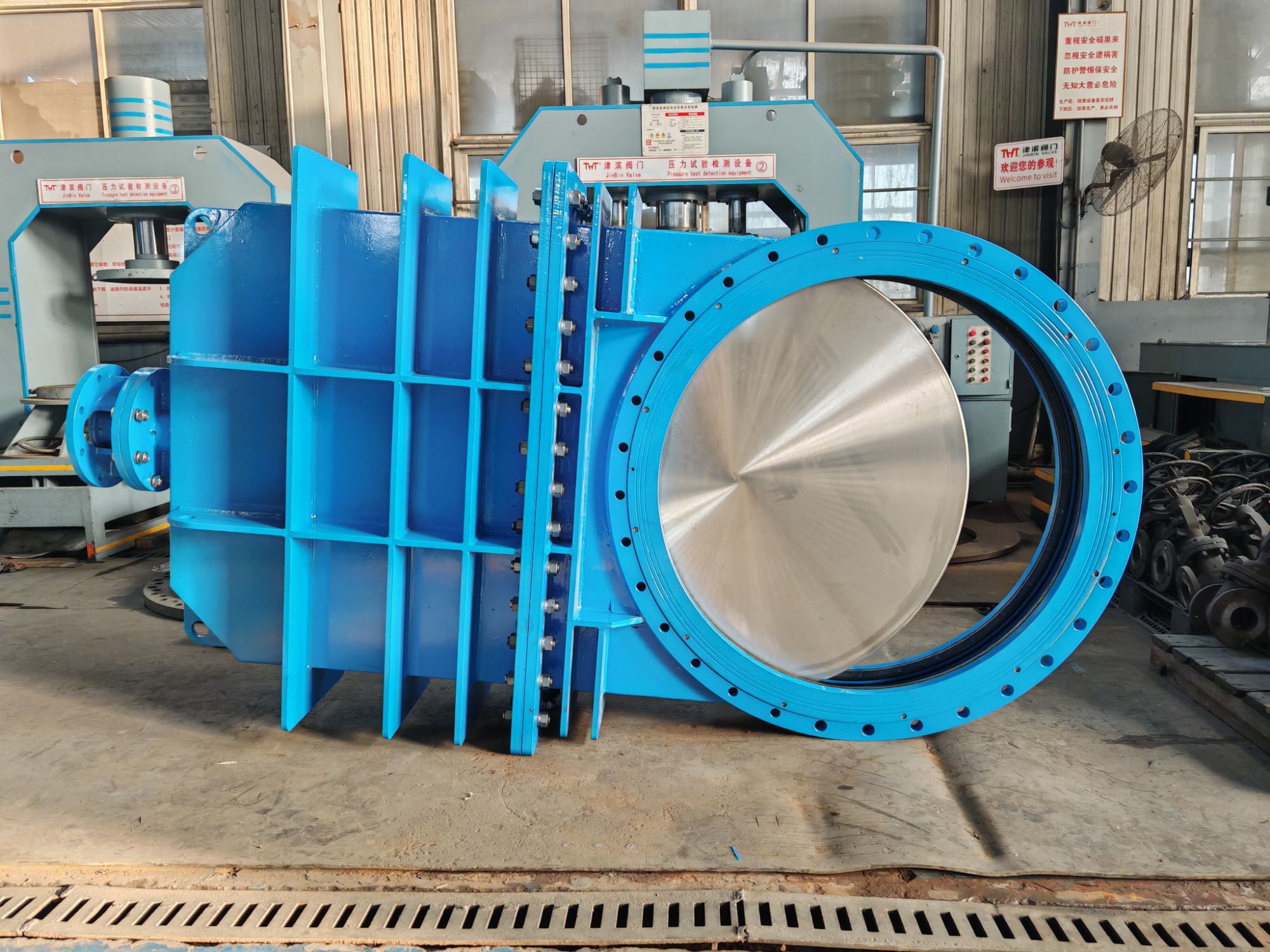
When a knife gate valve fails prematurely, the immediate expense of replacing the unit is just the beginning. Production downtime, emergency maintenance crew calls, and potential damage to adjacent equipment can spiral into costs that far exceed the valve's original price. In operations where continuous flow is critical, every minute of unplanned stoppage translates directly into lost revenue and missed deadlines.
A mismatched valve also introduces ongoing efficiency losses that often go unnoticed. Leakage through the seat, difficulty in operation under pressure, or material incompatibility with the media can degrade system performance over months. These subtle issues lead to higher energy consumption, increased wear on pumps and compressors, and a greater risk of environmental spills—all of which quietly erode the bottom line.
Beyond the tangible expenses, the wrong choice erodes trust in the system's reliability. Frequent malfunctions frustrate operators and make it harder to maintain consistent output quality. Over time, this can affect customer satisfaction and even tarnish a company's reputation for dependability. The true cost isn't just in the ledger; it's in the confidence lost across the entire operation.
Material Matters: How Chemistry Shapes Valve Longevity
The secret to a valve's long life often lies in the subtle dance of atoms and bonds. When engineers talk about durability, they are really talking about how a material resists corrosion, fatigue, and wear at the molecular level. Take austenitic stainless steels, for instance. Their chromium content isn't just a number on a data sheet; it spontaneously forms a self-healing oxide layer that shrugs off aggressive chemicals. Without this passive film, even the toughest alloy would crumble in days. It's not just about choosing the right metal—it's about letting chemistry do the heavy lifting.
But chemistry cuts both ways. A valve handling high-temperature hydrogen faces a very different challenge: atoms so small they can slip right into the metal lattice and turn it brittle. Here, the wrong microstructure can spell disaster. That's why savvy material selection goes beyond generic grades and digs into things like grain size, inclusion control, and heat treatment history. A valve isn't just a chunk of metal; it's a carefully orchestrated arrangement of phases and precipitates, each playing a role in holding back the relentless assault of the process fluid.
Even in seemingly low-tech applications, surface chemistry matters more than you'd think. Polymer seats and seals might look inert, but they can swell, extract plasticizers, or undergo chain scission when exposed to certain fluids. A valve that seizes after six months often fell victim to a chemical compatibility oversight—something the bulk data sheet never warned about. The takeaway? Longevity isn't about chasing the strongest material; it's about finding the one whose chemical personality matches the job.
When Standard Isn't Enough: Customization for Extreme Applications
Off-the-shelf components rarely survive in environments that push the boundaries of temperature, pressure, or corrosion. When a standard bearing seizes in a deep-sea ROV or a seal crumbles inside a chemical reactor, the cost isn't just measured in replacement parts—it's measured in downtime that can spiral into millions per hour. Customization here isn't a luxury; it's a survival strategy. It begins with rethinking materials at the molecular level, substituting generic alloys with bespoke blends that laugh at galling and shrug off hydrogen embrittlement. The geometry shifts, too—clearances engineered for thermal expansion, surface treatments that turn a passive surface into an active defense against wear.
Yet extreme applications don't just test physical limits; they test the assumptions baked into every catalog specification. A gear designed for a satellite actuator doesn't just need to handle vacuum and radiation; it needs to do so after a decade of storage, a violent launch, and zero maintenance. That's when customization evolves from material tweaks into a full-system dialogue. Engineers work backward from failure modes that never appear in standard test procedures, simulating the combined load of shock, vibration, and thermal cycling until the margin of error disappears. The result rarely looks like the original—often it's simpler, stripped of every gram that doesn't earn its place, with redundant features hidden in plain sight.
The hidden advantage of pushing past standard limits is the cascade of unexpected benefits. When you design a valve that won't clog in molten salt, you inadvertently solve flow-control problems in other high-viscosity processes. Customization for extremes becomes a laboratory for innovation, forcing teams to question the very physics they took for granted. It's a mindset that refuses to accept the phrase "not rated for this environment," and instead asks, "What would it take to make it work?" That question, applied relentlessly, doesn't just produce a part—it reshapes the entire performance envelope of an industry.
Maintenance Myths That Shorten Valve Life
Many valve issues can be traced back to well-intentioned maintenance habits that actually do more harm than good. One of the most persistent myths is that a tighter bolt always means a better seal. In reality, over-tightening flange bolts often leads to gasket deformation, stress cracks, and eventual leakage—problems that could have been avoided by following manufacturer torque specs. Another common misconception is that any grease will work for lubricating valve stems. Using the wrong lubricant can attack seal materials, harden under pressure, or trap abrasive contaminants, significantly accelerating wear.
Equally damaging is the belief that valves don't need regular attention if they're operating smoothly. Internal corrosion, debris accumulation, and subtle stem scoring can go unnoticed until a critical failure occurs. Some technicians also resort to aggressive cleaning methods—like wire brushing sealing surfaces—which can create tiny scratches that guarantee a poor shutoff. Respecting the valve's design limits and sticking to a preventive, rather than reactive, maintenance mindset is the real secret to a longer service life.
From Slurry to Success: A Process Engineer's Selection Roadmap
Every process engineer knows that slurry is the pulse of many production lines, but transforming that messy, particulate-laden flow into a streamlined success story demands more than just textbook knowledge. It starts with a keen eye for the peculiarities of your specific slurry: the particle size distribution that can clog filters overnight, the viscosity that swings with minor temperature changes, or the abrasive nature that eats through standard piping. Jumping straight to equipment catalogs is a recipe for costly rework. Instead, seasoned engineers spend time at the bench, running settling tests and rheology profiles that reveal how the slurry behaves in the quiet moments between mixing—because that’s where the real trouble hides. Only by mapping these traits against the actual plant conditions can you begin to chart a selection route that avoids the common pitfalls of underperformance.
With the slurry’s character in hand, the roadmap pivots to matching hardware to reality. Pumps, for instance, aren’t just about capacity and head; the choice between a peristaltic pump’s gentle squeeze and a centrifugal pump’s sheer power can make or break particle integrity. The same logic applies to mixers, where excessive shear might degrade a valuable crystal while too little leaves you with an unmanageable sludge. Smart engineers look beyond glossy spec sheets, testing scale-down prototypes and having frank conversations with vendors about failure modes they’ve seen in the field. This phase is less about linear optimization and more about balancing trade-offs: energy costs versus uptime, upfront price versus maintenance headaches. It’s in these gritty, practical decisions that a process engineer truly earns their badge, turning a chaotic slurry into a predictable, profitable stream.
FAQ
Look beyond the basic catalog specs. A manufacturer’s real strength shows in their engineering support—can they handle unusual pressures or custom flange modifications without long lead times? Also, dig into their traceability: do they maintain full material certifications and test reports per order? A shop floor visit often reveals more about quality than any brochure.
Abrasives punish anything less than rugged construction. Stainless steel bodies hold up against corrosion, but the gate itself needs hardened alloys or a protective coating like Stellite. If the media includes grit, resilient seats won’t last—opt for metal seats with a scraping action to keep the sealing face clean. Never ignore the shaft; two-piece stem designs with a polished finish cut down on packing wear caused by particle infiltration.
Bidirectional sealing isn't just about flow direction flexibility. It eliminates the guesswork during installation and prevents pressure spikes from the wrong side in draining circuits. A well-engineered design uses a floating gate that wedges tight regardless of which side pressure hits, so you don't need separate upstream and downstream kits. This really saves time in line-blind or isolation duties.
Packing is often the first point of failure. Cheaper valves use a simple stuffing box that compresses unevenly. You want a live-loaded gland with multiple rings of braided PTFE or graphite. Some companies add a lantern ring for injection of barrier fluid if the process is sticky. If the packing access isn't easy without removing the actuator, maintenance crews will hate you—look for a design that lets you adjust or replace from the top.
When a seat wears out, downtime clocks start ticking. Valves with a wraparound sleeve seat that can be slipped out without pulling the entire valve from the line save hours. In pulp stock or slurry service, crews should be able to swap the seat and the gate guide liners using basic tools in under 30 minutes. If the manufacturer hasn’t thought about lift-out clearance or alignment pins, you’ll feel it in your maintenance budget.
Standards give you a baseline, but they’re not all equal. API 600 is really meant for gate valves in refinery service, so its wall thickness and testing rules are overkill for lighter process lines. MSS-SP-81 is tailored to knife gate valves—it covers face-to-face dimensions, pressure testing, and design features specific to their use. Checking if a supplier actually certifies to the latest edition prevents conflicts with your pipe specs.
Mining and wastewater share a common demand: handling dense, stringy, or settling media without clogging. Knife gate valves thrive here because their thin gate slices through solids. In tailings lines, we’re seeing more urethane-lined bodies that resist abrasion while being lighter than cast iron. Wastewater plants push for zero-leakage hooded designs that contain odors. The trend is toward smarter position feedback to integrate with SCADA, reducing manual inspections.
Ask for a list of maintenance contracts in your region, not just sales references. A vendor should stock seal kits and gates for their popular sizes locally, not ship from overseas. Check if they offer on-site service for blowout prevention or stem retrofits. The real test is calling their support line with a made-up emergency—do you get an engineer or a voicemail? Responsive support cuts plant risk far more than the initial price difference.
Conclusion
Selecting a knife gate valve goes far beyond comparing pressure ratings and face-to-face dimensions on a data sheet. Real-world conditions—abrasive slurries, corrosive chemicals, or high-cycle sequencing—quickly expose weaknesses that lab tests never replicate. A valve that performs flawlessly in clean water can fail within weeks when handling dense solids, leading to unplanned downtime and eye-watering replacement costs. That hidden expense often dwarfs the initial purchase price, making upfront savings a false economy. Process engineers must therefore look deeper, evaluating how the valve body, gate, and seals interact with the actual process media under dynamic flow, not just static benchmarks.
Material chemistry becomes the linchpin of long-term reliability. The difference between a stainless steel that resists pitting and one that succumbs to chloride attack is often a few percentage points of alloying elements. In extreme applications—whether cryogenic temperatures, abrasive mining slurries, or scaling-prone pulp stock—standard off‑the‑shelf solutions rarely hold up. Smart customization, from hard‑faced gates to purged stuffing boxes, extends service life dramatically. Yet even the best‑engineered valve will disappoint if maintenance teams cling to myths like “tighten the packing until it stops leaking completely.” Over‑compression accelerates stem wear and packing burnout, while overlooking cavity flushing in solids service invites clogging. A robust selection roadmap weighs all these factors, transforming a potential failure point into a reliable process asset that thrives from slurry to success.
Contact Us
Contact Person: Su Zhang
Email: [email protected]
Tel/WhatsApp: +86-25219206
Website: https://www.tht-valve.com/