

Laser Safety Glasses Manufacturer: Your Guide to Choosing the Right Protective Eyewear
2026-05-20
When working with lasers, protecting your eyes isn't just a precaution—it's a necessity. But with so many options on the market, finding the right laser safety glasses can feel overwhelming. That’s where LASERPAIR comes in, a manufacturer dedicated to combining certified protection with uncompromised clarity and comfort. In this guide, we’ll walk you through everything you need to know to choose the perfect pair—without the guesswork.
Matching Eyewear to Your Laser’s Wavelength and Power
Selecting the right protective eyewear isn’t just about picking a pair that looks sturdy—it’s a precise calculation tied directly to the laser you’re using. Each laser emits light at a specific wavelength, and your safety glasses must be designed to block or attenuate that exact range. A mismatch can render the eyewear useless because the optical density (OD) rating only applies within a narrow spectral band. For instance, glasses rated OD 6+ at 1064 nm won’t protect you from a 532 nm green laser. Always check the manufacturer’s specification label, and never assume universal coverage. The wavelength dictates which filter technology is needed, whether it’s absorptive dye, reflective coating, or a hybrid blend.
Power matters just as much. Even if your glasses block the correct wavelength, they might not withstand the intensity of a high-power beam. Eyewear is tested against a damage threshold—typically expressed in watts per square centimeter—beyond which the filter material can degrade, crack, or instantly fail. For pulsed lasers, consider peak power and pulse duration, not just average output. A pair that holds up under a continuous 5-watt diode might fail instantly against a Q-switched pulse delivering megawatts in nanoseconds. Look beyond the OD number; ask for the damage threshold data and make sure it exceeds your laser’s worst-case scenario.
Comfort and fit also play a hidden role in matching eyewear to your system. If the glasses fog up, slip, or feel awkward, you’ll be tempted to lift them at the worst moment. The ideal pair balances optical clarity with a snug, wraparound design that doesn’t pinch. Lenses should offer a high visible light transmission (VLT) so you can see your work clearly without straining, but never sacrifice protection for brightness. Take the time to try different frames with your actual setup—what works in a catalog might not work when you’re bent over an optical table for hours. Your laser’s parameters define the technical starting point, but your real-world habits determine whether that protection stays in place when it counts.
How Optical Density Ratings Translate to Real-World Protection
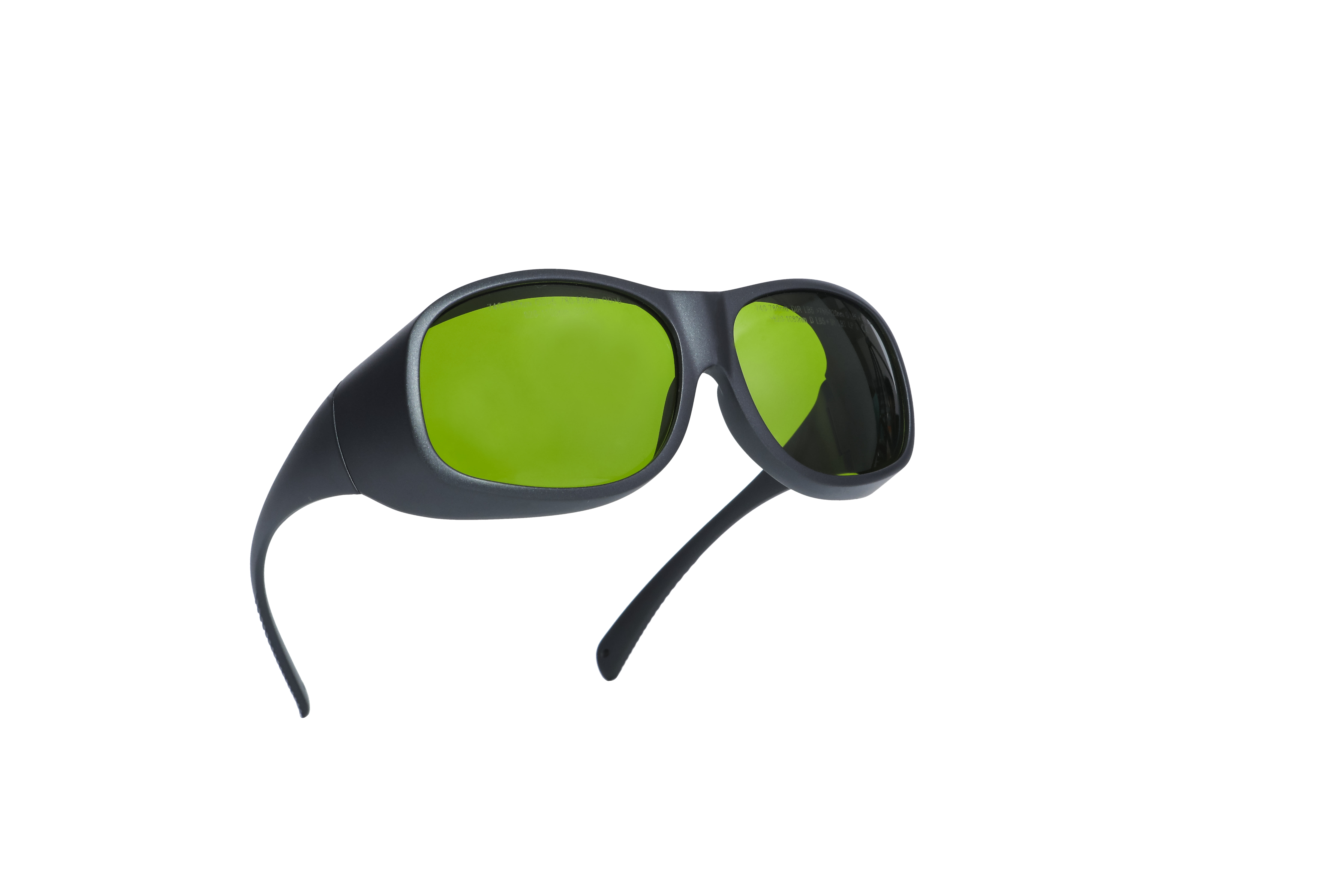
Optical density (OD) is a measure of how much a filter or lens attenuates light, expressed on a logarithmic scale. An increase of 1 in OD corresponds to a tenfold reduction in transmitted light—so a filter rated OD 2 cuts light to 1% of its original intensity, while OD 3 brings it down to 0.1%. This relationship means that even small differences in rating can dramatically alter the amount of radiation reaching the eye, which is critical when dealing with lasers, welding arcs, or intense broad-spectrum sources.
In practical terms, the numbers directly translate to how well your eyes are shielded during a task. For example, standard sunglasses might offer around OD 1 to OD 2 for visible light, reducing glare outdoors but leaving you vulnerable to invisible hazards like near-infrared or ultraviolet. Laser safety eyewear, on the other hand, often specifies OD values at particular wavelengths—an OD 4+ at 1064 nm ensures that if a beam hits the glasses, less than 0.01% passes through, preventing retinal damage even in direct exposure scenarios.
Choosing the right OD isn’t simply about grabbing the highest number available, though. Over-dimensioned protection can make it impossible to see your work clearly, leading to user error or removal of safety gear. A realistic assessment of the source’s power, wavelength, and typical exposure duration helps match the OD rating to the actual risk, ensuring that the protection remains both effective and usable in everyday settings.
Why Frame Fit and Comfort Matter as Much as Lens Specs
When we get caught up in comparing lens coatings, blue light filters, and high-index materials, it’s easy to forget that the frame itself is in constant physical contact with your face. Even the most advanced prescription lenses won’t perform well if the frame is constantly sliding down your nose, pinching behind your ears, or tilting at an odd angle. These small, nagging discomforts can distract you throughout the day, leading to eye strain and headaches that have nothing to do with the lens quality. A well-fitted frame, on the other hand, keeps the optical centers aligned with your pupils, ensuring that you’re actually looking through the sweet spot of the lens rather than over or under it.
Comfort goes beyond just avoiding pain—it directly affects how often you wear your glasses and how you perceive the world through them. A frame that feels weightless and stays in place lets you forget you’re even wearing glasses, whether you’re focused on a screen or driving at night. The bridge fit, temple length, and weight distribution all play a role in maintaining that effortless experience. If a frame doesn’t match the contours of your face, you’ll find yourself constantly adjusting them, breaking your focus and potentially missing important visual details. In contrast, a comfortable pair seamlessly integrates into your life, making the lens technology truly effective.
There’s also a psychological side to how a well-fitted frame makes you feel. A pair that sits squarely and comfortably can boost your confidence, helping you appear more poised in professional or social settings. Conversely, a poor fit can make you self-conscious, drawing attention to constant fiddling. When you combine that natural comfort with precision optics, the result is a product that enhances your vision without calling unwanted attention to itself. It’s a quiet partnership between frame and lens where neither outshines the other, but together they elevate your daily experience in a subtle, meaningful way.
Decoding Safety Certifications and What They Actually Mean
Safety certifications appear as reassuring stamps on everything from electronics to children’s toys, but their real meaning often hides behind a jumble of acronyms and fine print. Instead of just skimming for a logo, it pays to know what the mark actually evaluates. For instance, a CE marking isn’t a quality endorsement from an independent body—it’s a manufacturer’s declaration that the product meets EU health and safety requirements, leaving much of the verification in their own hands. Distinguishing between self-declared marks and those backed by rigorous third-party testing is the first step in grasping what a certification truly brings to the table.
Beyond the surface, certifications split into different tiers of trust. A UL listing from Underwriters Laboratories signals that a product sample underwent extensive evaluation for fire, shock, and mechanical hazards, with ongoing factory inspections to ensure consistency. In contrast, the FCC logo simply confirms that electromagnetic interference stays within acceptable limits—it doesn’t touch product safety or durability. Learning which certifications involve unexpected audits and which are one-time checks can help you spot the difference between a genuinely reliable product and one that merely meets minimum legal standards.
The real insight often lies in what certifications don’t say. A “child-safe” label might only refer to the absence of small parts for a certain age, ignoring toxic materials or structural weaknesses. Similarly, an IP67 water-resistance rating guarantees immersion up to 1 meter for 30 minutes under controlled lab conditions, but it doesn’t account for chlorinated pools, moving water, or wear and tear over time. By reading between the lines and questioning the limits hidden in the test parameters, you move past marketing fluff and make decisions grounded in how a product actually performs in the messiness of daily life.
Lens Materials and Coatings That Stand Up to Your Workflow
When you're deep into a project, the last thing you want is lens fog or a scratch sending you back to the supply closet. That's where material choice really earns its keep. Polycarbonate lenses have become the workhorse for high-impact environments—they absorb shock without adding weight, which means all-day comfort without that nagging pressure on your nose bridge. Trivex takes a similar path but dials up the clarity, giving you a crisp view that helps catch fine details without eye fatigue. For those who lean toward glass, it still holds its ground in chemical-heavy settings, shrugging off splashes that would etch other materials. The trick is matching the material to your actual daily demands, not just the spec sheet.
Coatings are where performance gets a serious bump, and a few stand apart from the standard fare. Anti-reflective finishes have moved beyond simple glare reduction—modern multi-layered stacks actually harden the surface, so you're getting scratch fighting and better light transmission in one shot. Hydrophobic and oleophobic topcoats are another quiet game-changer; they force water and skin oils to bead up and slide off, which means less wiping and a longer clean window, especially if you're moving between indoor conditioning and outdoor humidity. A quality hard coat remains non-negotiable, but look for manufacturers that bond it to the lens substrate rather than just dipping the finished product—the adhesion makes a noticeable difference after months of daily wear.
Pairing the right base with the right shield can transform how your eyewear handles your workflow. In industrial settings, a photochromic polycarbonate with a permanent anti-fog treatment can adapt from shadowed inspection stations to outdoor loading docks without missing a beat. Digital creatives might find their stride with a high-index material wrapped in a blue-light filter that doesn't skew color accuracy—a subtle tweak that eases screen strain by the end of a long edit. Daily wear isn't just about surviving hazards; it's about reducing those small frictions that chip away at focus. Thoughtful material and coating combos quietly keep you in the zone, so the glasses fade into the background and the work stays front and center.
Balancing Visibility and Protection Without Compromising Your Vision
True clarity comes from materials that shield without stealing focus. Modern protective films and coatings are engineered to disappear into the background, letting your core design elements speak while they handle impact, abrasion, and UV damage. The key lies in selecting solutions that maintain crisp light transmission and color accuracy, so your work always looks exactly as you imagined it—just safer.
Too often, protection means accepting a hazy finish or a wavy texture that alters the feel of a surface. But advanced nano-coatings and ultra-clear laminates now perform at a level where the only evidence of their presence is the durability they provide. Whether it’s a vibrant mural, a sleek display, or a tactile product, the right barrier works invisibly, preserving the subtle interplay of gloss, matte, and texture you’ve carefully curated.
The sweet spot isn’t about sacrificing one for the other—it’s about integration. By embedding protection into the design layer without layering on a separate, noticeable shield, you get a unified finish that endures. This approach respects the depth of your artistry, keeping every detail intact while extending its life against everyday wear. The result is a seamless experience where vision remains untouched, and longevity becomes a silent promise.
FAQ
Focus on wavelength coverage, optical density, and visible light transmission. Make sure the glasses meet international standards like ANSI Z136 or EN 207 for your specific laser type.
Check your laser's wavelength and power output, then refer to the safety standard's requirements. Higher optical density ratings block more energy, but you don't need excessive protection if it compromises visibility.
Absolutely. Each lens material and tint is optimized for certain wavelength ranges. Using the wrong filter can be dangerous, so always match the eyewear to your laser's specific wavelengths.
Look for lightweight frames, adjustable temples, and models with ventilated side shields. Some manufacturers offer customizable fits to reduce pressure points during long procedures.
In North America, ANSI Z136.1 is common; in Europe, EN 207 and EN 208. Glasses should be labeled with the protection levels and tested for impact resistance as well.
Many manufacturers provide prescription inserts or can make the protective lenses to your prescription. It's worth investing in custom options if you wear corrective lenses daily.
Reputable manufacturers provide certification documentation and lot testing. Always check for labeling that shows wavelength and optical density, and avoid uncertified products even if they seem cheaper.
Inspect them regularly for scratches, cracks, or coating damage. Clean with mild soap and water or approved lens cleaners, and store them in a protective case away from direct sunlight.
Conclusion
Choosing the right laser safety glasses starts with understanding your laser's wavelength and power. Without matching the eyewear to these parameters, even the most expensive glasses offer no real protection. Optical density (OD) ratings tell you how much the lenses attenuate light, but translating that to real-world safety means considering factors like beam exposure duration and direct versus diffuse viewing. A high OD on paper doesn't guarantee safety if the glasses don't fit properly—gaps around the frame can let stray reflections in, which is why comfort and a secure, wrap-around design are just as critical as the lens specifications.
Beyond basics, you need to decode safety certifications like EN 207 or ANSI Z136, which test not just the lenses but the full frame under realistic conditions. The lens material and coatings matter too: polycarbonate offers impact resistance while specialty glass handles high-power beams, and anti-fog or scratch-resistant coatings keep your vision clear. Ultimately, the goal is balancing visibility and protection—you shouldn't have to squint through dark lenses or distort colors to stay safe. By selecting eyewear that aligns with your workflow, you protect your eyes without compromising your ability to see detail and work precisely.
Contact Us
Contact Person: Jenny
Email: [email protected]
Tel/WhatsApp: +86 13537713281
Website: https://www.laserpair-safety.com/