

Micronized Dipentaerythritol Wholesale: Key Benefits and Industrial Applications
2026-07-07
In the world of flame retardants, micronized dipentaerythritol is quietly revolutionizing industrial safety. Its ultra-fine particles offer unmatched dispersion and efficiency, making it a critical additive for intumescent coatings and plastics. But sourcing high-purity material in bulk can be a challenge. That's where X.X.F.R comes in—providing top-tier wholesale solutions that balance performance and cost. In this post, we'll unpack the key benefits and dive into the industrial applications that make micronized dipentaerythritol a must-have for modern manufacturers.
Tiny Particles, Massive Impact: Understanding Micronized Dipentaerythritol
When you first encounter micronized dipentaerythritol, it’s easy to overlook. The powder is so fine it almost floats, particle sizes often measured in just a handful of microns. But that’s exactly where its power lies. By reducing the material to such a tiny scale, the total surface area balloons, unlocking a level of reactivity and dispersion that standard grades simply can’t match. It’s a quiet transformation—no dramatic chemical change, just a physical grind—yet it turns a workhorse polyol into something far more versatile.
In practical terms, this means micronized dipentaerythritol slips seamlessly into formulations that demand absolute uniformity. Think of UV-curable coatings where even a microscopic clump can ruin a finish, or high-end synthetic lubricants that rely on consistently distributed solids. The small particle size also accelerates dissolution in heated resins, cutting processing time and energy. It’s not simply about making things smaller; it’s about rethinking how a material interacts at interfaces, letting formulators push boundaries in clarity, stability, and mechanical performance.
Perhaps most compelling is what this opens up for industries chasing lightweight strength. As a core building block for resins and esters, micronized dipentaerythritol helps create densely cross-linked networks without brittleness—boosting heat resistance and chemical inertness. Its hydroxyl groups, now more accessible than ever, react efficiently to form tough, durable architectures. The result: composites that protect wind turbine blades, automotive parts that shrug off corrosion, and coatings that keep their gloss for years. All because someone looked at a familiar molecule and asked, “What if we just made it smaller?”
Why Micronization Matters: Enhanced Performance Unlocked
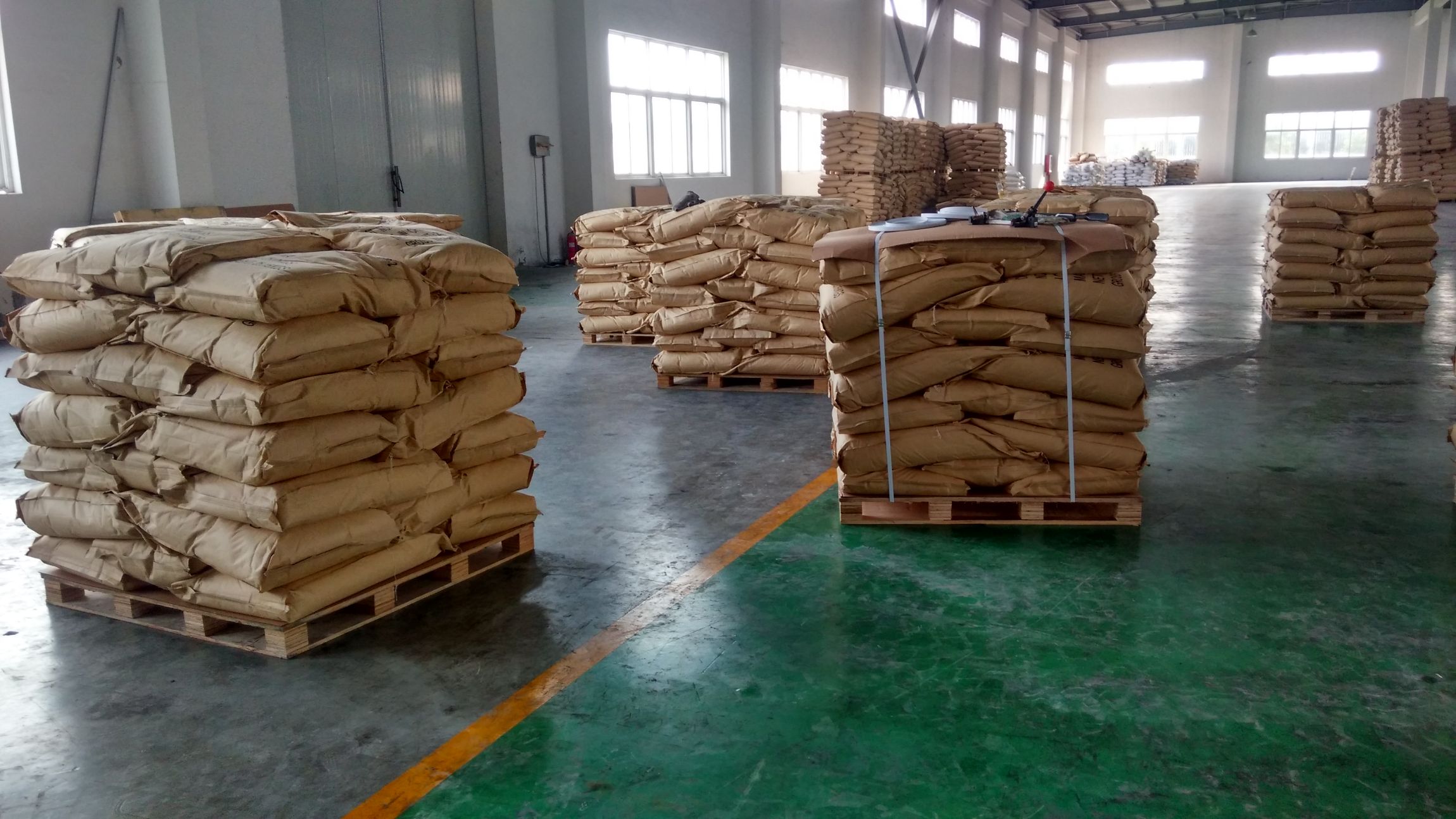
Particle size has a far greater impact on product efficacy than most realize. When ingredients are reduced to microns, their surface area expands dramatically, allowing them to interact more readily with surrounding mediums—whether that's a solvent, the human digestive system, or a polymer matrix. This isn't just about faster dissolution; it's about unlocking potential that coarse powders simply can't offer. A micronized active will disperse evenly, absorb completely, and perform reliably, batch after batch.
The real-world benefits become obvious in sensitive formulations. Consider poorly soluble actives: a coarse grain might pass through the body with minimal absorption, leaving intended benefits unrealized. Micronization changes that by creating a fine, uniform dispersion that the body can actually utilize. The same principle applies in industrial settings, where micronized pigments deliver richer color with less material, and advanced ceramics gain strength from the uniform sintering of ultrafine powders. Precision at the microscale cascades into macro-level advantages.
Yet the process itself requires finesse. Not all micronization techniques preserve the integrity of heat-sensitive or shear-sensitive materials. Advanced fluidized-bed jet milling, for instance, uses compressed air to accelerate particles into each other, producing micron-sized powders without contamination or thermal degradation. The result is a pristine material whose enhanced performance stems purely from its controlled size distribution, not from chemical additives or coatings. That’s what makes micronization a genuine enabler: it amplifies inherent properties without altering the core identity of the ingredient.
From Coatings to Resins: Where This Ingredient Shines
This ingredient has quietly become a workhorse across multiple industries, but its true talent shines when we look at its role in coatings and resins. In protective coatings, it delivers exceptional adhesion and weather resistance, helping surfaces stand up to everything from salt spray to extreme UV exposure. Whether applied to metal, concrete, or wood, the ingredient forms a durable barrier that extends the life of the substrate, often outperforming traditional options in demanding outdoor environments.
When the conversation shifts to resins, the ingredient reveals a different side. It acts as a reactive modifier or crosslinker, enhancing flexibility without sacrificing hardness. This balance is crucial in applications like industrial flooring or composite materials, where cracking or brittleness can lead to premature failure. Formulators value the way it improves processing characteristics, allowing for smoother application and better wetting, which translates into fewer defects in the final product.
Beyond performance, there’s a practical advantage that often goes unspoken: the ingredient’s compatibility with a wide range of other components. It blends easily into epoxy, urethane, and acrylic systems, simplifying reformulation efforts. This adaptability means manufacturers can use a single trusted material across their product lines, reducing complexity and keeping inventories lean. In an industry where material consistency can make or break a reputation, this level of reliability is what keeps it in high demand.
Smart Sourcing: What to Look for in a Wholesale Supplier
Finding the right wholesale partner isn't about checking boxes on a list; it's about spotting the subtle cues that reveal how a supplier truly operates day to day. You want a partner who communicates with clarity, not one who hides behind vague answers or long delays. When you ask about lead times or order minimums and get a crisp, confident reply within a day, you're likely dealing with a team that runs a tight ship. On the flip side, hesitation or evasiveness often signals deeper operational cracks that will eventually trip you up.
Pricing is obviously critical, but raw unit cost rarely tells the full story. Dig into the hidden layers: packaging standards, shipping reliability, quality control protocols, and whether they can scale as you grow. A supplier that offers a slightly higher per-unit price might save you thousands down the road if they have rigorous inspection routines and zero tolerance for sloppy packaging. I've learned to value consistency over small price breaks—your customers care far more about getting the product they expected than they do about the margin you squeezed out of a cut-rate manufacturer.
Finally, pay attention to how they handle mistakes, because something will inevitably go sideways. A supplier's reaction to a mixed shipment or a quality slip tells you everything about their character. The good ones own the problem immediately and respond with concrete fixes, not excuses. They keep a buffer of stock for emergencies and don't make you beg for replacements. Skip the ones who treat you like you're an inconvenience the moment things get tough—those relationships cost more energy than they're worth.
Beyond the Powder: Technical Edge in Modern Formulations
Powders might be the foundation, but today’s advanced formulations are rewriting the rulebook on what a supplement can achieve. It’s no longer just about grinding up an active ingredient and calling it a day—modern techniques blend material science, biochemistry, and even culinary artistry to create products that work harder and feel better. Think targeted-release profiles that sync with the body’s natural rhythms, or micronized particles that dissolve effortlessly and absorb in a fraction of the time. The goal isn’t just to deliver a nutrient; it’s to engineer an experience that fits seamlessly into real-life routines while maximizing the biological payoff.
One standout innovation is the use of lipid-based delivery systems, which essentially mimic the way the body handles dietary fats to sneak compounds past harsh digestive barriers. This approach dramatically boosts bioavailability for notoriously stubborn ingredients like curcumin or CoQ10, turning them from expensive waste into genuine game-changers. Meanwhile, encapsulation technologies are evolving beyond simple protective shells—multi-layer matrices can now stagger the release of different ingredients, preventing premature interactions and ensuring they reach their intended sites intact. It’s a level of control that simply wasn’t possible with conventional dry blends, and it opens doors to combining actives that would otherwise cancel each other out in a basic powder mix.
The technical edge also shines in how formulators handle the “invisible” aspects that users rarely think about. Particle size distribution, surface charge, and even crystalline structure are meticulously tuned to influence taste, mouthfeel, and stability. For instance, agglomeration processes transform dusty, clumpy powders into free-flowing spheres that dissolve cleanly, while co-processing with natural excipients can mask off-notes without synthetic sweeteners. These refinements might sound minor, but they accumulate into a product that doesn’t just claim superiority—it demonstrates it, from the first spoonful to the last measurable effect in the body.
Driving Innovation: Emerging Industrial Uses and Market Trends
Across sectors, a quiet wave of experimentation is turning fringe concepts into operational realities. Manufacturers are embedding adaptive sensors directly into assembly lines, enabling real-time defect detection without slowing production. Meanwhile, logistics firms are piloting decentralized inventory systems that learn from demand spikes, rerouting stock before shortages arise. These emerging use cases share a common thread: they blend physical processes with adaptive intelligence, sidestepping rigid legacy systems in favor of flexible, self-correcting workflows.
Market momentum is shifting toward modular, edge-deployed tools that perform specialized tasks reliably, rather than monolithic platforms promising full-scale transformation. Analysts point to a surge in targeted deployments—vision systems for quality control, predictive maintenance modules for heavy equipment, dynamic pricing engines for perishable goods. The trend is clear: value is accruing to solutions that deliver immediate, tangible improvements, while the appetite for multi-year overhauls continues to cool.
What ties these developments together is a growing emphasis on contextual adaptation. Instead of chasing generic breakthroughs, forward-looking teams are refocusing on domain-specific problems—reducing waste in textile cutting, optimizing energy consumption in cold storage, or synchronizing multi-vendor supply chains on a single pane of glass. This shift is quietly reshaping investment priorities, favoring nimble, interoperable tools over speculation-driven projects.
FAQ
Micronized dipentaerythritol is a finely ground form of dipentaerythritol, a polyhydric alcohol. The micronization process reduces particle size to a uniform, ultra-fine powder, which dramatically improves dispersibility and reactivity. Unlike standard granules or flakes, the micronized version blends more evenly into formulations, leading to smoother finishes and faster processing times in manufacturing.
Buying wholesale often secures a lower per-unit cost and a steady supply chain, especially if you're using it as a core raw material. It also reduces procurement frequency and shipping overhead. Many suppliers offer bulk pricing tiers and dedicated inventory support, which helps stabilize production costs and avoid downtime from stock shortages.
The coatings sector dominates, particularly alkyd and polyester resins for automotive, industrial, and architectural paints. UV-curable coatings and inks are a close second. Beyond that, synthetic lubricants, adhesives, plasticizers, and even certain specialty explosives make use of its multifunctional hydroxyl groups to build durable polymer networks or improve performance.
In alkyd resin synthesis, ultra-fine particles dissolve faster and react more completely, which drives higher crosslinking density. That translates into harder, glossier films with better chemical resistance. It also cuts down mixing time and energy consumption because you avoid the lumping or settling that can happen with coarser grades.
Keep it sealed in its original packaging in a cool, dry area away from moisture and direct sunlight. Although dipentaerythritol is hygroscopic, the micronized powder can cake if exposed to humidity. Ideally, storage temperature should stay below 30°C (86°F), and the area should be well-ventilated to prevent dust accumulation.
Consistent particle size distribution is critical—variation can throw off your mix times and final product texture. Ask for a certificate of analysis with each batch, look for ISO or similar quality certifications, and inquire about their micronization technology. A supplier who provides technical support and predictable lead times often delivers far more value than the cheapest quote.
Its high hydroxyl count makes it a reactive diluent and crosslinker in UV acrylate formulations. The fine particle size enables rapid dissolution into monomers and oligomers, so you get a homogeneous mixture that cures faster under UV light. This leads to coatings with outstanding scratch resistance, adhesion, and low shrinkage—ideal for high-speed printing and electronics encapsulation.
Conclusion
Micronized dipentaerythritol has emerged as a polyol that punches above its weight in industrial formulations. Shrinking the particles to just a few microns transforms a basic powder into a highly dispersible, fast-melting ingredient that blends effortlessly into polymer systems. This micronization step is far from cosmetic—it directly improves crosslinking uniformity, cuts down on mixing time, and elevates the final product’s scratch resistance, gloss, and weatherability. In the world of coatings, it’s a workhorse for high-solids alkyds, polyester melamines, and UV-curable lacquers, where it drives hardness without brittleness. Resin producers rely on it to fine-tune hydroxyl values and build resins that withstand demanding thermal and chemical environments. Adhesive and sealant formulators also tap its potential, leveraging the powder’s reactivity to create bonding systems that stay tough under real-world stress.
For companies buying at wholesale scale, the conversation quickly moves beyond simple tonnage. A supplier’s ability to deliver narrow particle size distribution, minimal fines, and consistent purity batch after batch separates a true partner from a commodity vendor. Technical support that helps troubleshoot formulation hiccups or optimize loading levels is worth its weight in production downtime saved. Beyond traditional roles, micronized dipentaerythritol earns its keep as a multifunctional additive: it serves as a carbonific agent in intumescent fire barriers, a nucleator that refines polymer crystallization, and a modulus booster in engineering thermoplastics. Emerging work in bio-based alkyds and low-VOC radiation-cure systems has opened new doors, with researchers harnessing its tetra-functional backbone to push sustainability targets. As regulatory pressures tighten and the hunt intensifies for drop-in performance enhancers, forward-looking operations are weaving this fine powder into development pipelines for tomorrow’s coatings, adhesives, and specialty polymers.
Contact Us
Contact Person: Guohua Wang
Email: [email protected]
Tel/WhatsApp: 8613003442895
Website: https://www.xxflameretard.com