

OEM Silicone Products That Deliver Reliable Custom Parts
2026-11-24
Most suppliers treat custom silicone parts as an experiment. Aobo Silicone treats them as a production discipline—so your OEM parts arrive on spec and ready to perform.
Silicone Parts That Keep Their Shape When the Heat Is On
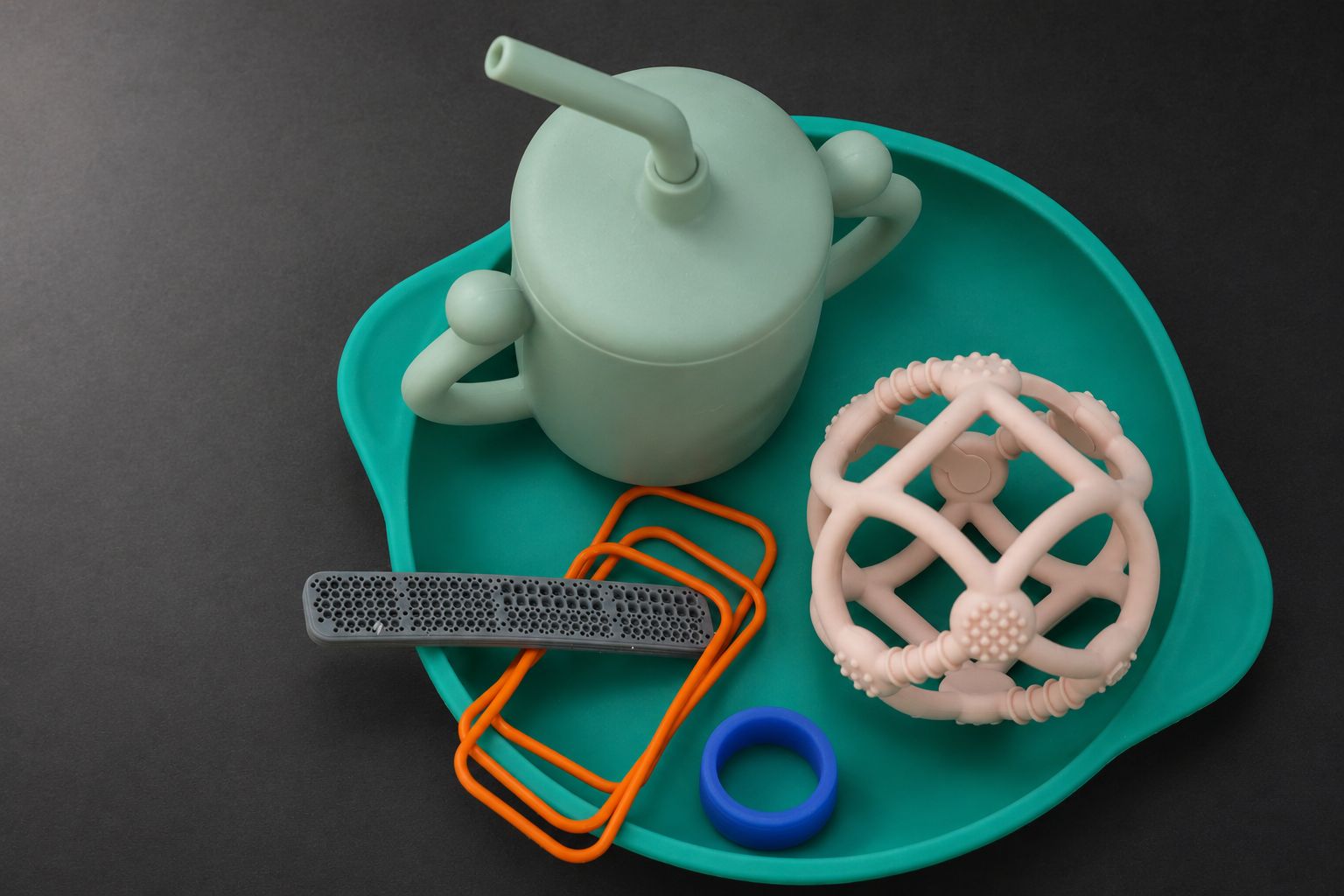
Most silicone blends start to misbehave once a bake sheet hits 220°C, but these parts don't flinch. The cross-linked structure holds firm through repeated oven cycles, so a gasket or mold comes out looking the same as it went in. No curling, no sagging, no soft spots that show up after the first use.
What makes the difference is the way the material recovers. Stretch a seal, twist a baking mat, or leave a spatula resting against a hot pan rim, and it still settles back to its original profile. That rebound matters in tight fits like lids and couplings, where even a slight warp can break contact.
For anyone swapping out cheap plastic or thin rubber parts, the tell is simple: run them through heat a few times. If they still seat cleanly and feel the same on day thirty as on day one, they're built around the right silicone.
Custom Tooling Without the Long Lead Time Runaround
A fixture that used to sit in a vendor queue for eleven weeks now gets cut, welded, and checked on the same floor where it will be used. The difference is not just speed; it is the removal of the back-and-forth that eats most of the lead time. Instead of sending a print into a black hole and waiting for a quote, the people making the tool talk directly with the operator or engineer who needs it, settle the critical dimensions in one meeting, and start on material the same afternoon.
That direct line also changes how revisions are handled. When a locating pin needs to shift or a clamp has to clear a new sensor bracket, the change is made to the existing tool rather than triggering a fresh purchase order and another two-week wait. Stocked blanks, standard bushings, and in-house heat treating cover most of what a custom fixture or workholding setup actually requires, so the unusual part is not treated as an interruption.
The practical result is tooling that fits the machine, the part, and the schedule at the same time. Prototype runs can start with purpose-built locating instead of a collection of toe clamps and hope. Production changes can get a revised nest or end stop without pausing the line for a month. None of this requires overbuilding or exotic materials; it simply keeps the tooling loop short enough that the hardware is ready when the work is.
Material Blends Selected for Actual Use, Not Just Spec Sheets
A spec sheet can tell you the fiber percentages, but it won't tell you how a fabric behaves after three days in a carry-on or a sudden downpour. That's the standard we use before any blend makes it into the lineup.
Some of the current favorites got there for unglamorous reasons: a cotton-nylon twill holds its crease through a twelve-hour workday, a merino-tencel jersey dries overnight in a humid hotel room, and a linen-cotton poplin softens without turning limp after repeated washing.
We treat material selection as a field decision. If it survives real use and still looks like something you want to put on again, it stays.
Consistent Dimensions Across Thousands of Parts
When a product line spans thousands of individual components, the real challenge isn't getting one part right—it's making sure every part agrees with every other. Small mismatches in hole spacing, flange thickness, or mating edge geometry tend to compound silently across assemblies, turning what should be a drop-in fit into a stack-up problem that only appears during final build. Keeping one master dimension thread running through the entire catalog eliminates that guesswork before it starts.
The practical answer is to stop treating each SKU as its own island. Shared datum references, common tolerance bands for mating surfaces, and a single library of fastener and clearance rules let thousands of parts behave like one system. When a bracket is revised, the change propagates wherever that interface appears—without manually chasing every drawing that happens to touch it.
Teams that hold this line rarely talk about heroics in CAD. Their models just fit. That consistency sounds unremarkable, but it's the difference between a parts list you can trust on a Monday morning and one that quietly generates rework orders for months.
Low-Volume Prototypes That Move Into Full Production Smoothly
The gap between a working prototype and a repeatable production line is where most problems hide. Early low-volume builds expose tolerance stack-ups, material quirks, and assembly sequences that bench testing never catches. Treating those first units as production rehearsals instead of lab artifacts lets teams lock in tooling decisions, fixture concepts, and inspection checks while changes are still inexpensive.
A smooth handoff usually comes from keeping manufacturing engineers in the room before the first article is built. Their notes on draft angles, part orientation, and fastening methods can prevent a clean prototype from becoming a difficult production part. It also helps to document the exact supplier for every resin, fastener, and finish, then freeze the geometry that passed functional testing.
Small-batch runs work best when they follow the same process logic as full scale. If a part will eventually be molded, relying too heavily on machined versions can create false confidence because the material behaves differently under load. Prototype materials should match production intent where it matters most: thermal performance, wear, chemical exposure, or electrical insulation. When the low-volume run shares suppliers and process rules with the planned line, the transition feels less like a handoff and more like a continuation.
Engineering Feedback That Arrives Before You Have to Ask
Most engineering feedback still behaves like a pull request comment: it arrives after the fact, usually because someone took the time to dig into a dashboard, a failed build, or a customer complaint. The better version is quieter. A deploy in staging starts eating memory at a rate that breaks from the last ninety days, and the team gets a note with the likely commit range and the exact container before anyone has wondered whether something feels off.
That kind of early feedback comes from wiring together weak signals that do not matter on their own: test flakiness, small latency shifts, retry rates, a slightly hotter garbage collector. Instead of adding another dashboard or paging someone at 3 a.m., the system groups those signals into a short, contextual message that tells an engineer what changed, why it looks odd, and where to look next. It lands in the channel the team already uses, not in a tool they have to remember to open.
When feedback shows up before you have to ask, it changes the rhythm of building. Engineers stop treating monitoring as a chore that interrupts them and start treating it as an early warning system that respects their attention. The result is not more alerts; it is fewer surprises.
FAQ
Material choice and process control usually decide it. We match the durometer and cure system to the operating environment, then hold molding temperature and time steady so dimensions and physical properties stay consistent from batch to batch.
Yes. Color is compounded before molding and checked against a reference sample under controlled light. For finish, tooling texture or a post-molding treatment can be adjusted to get anything from a polished sheen to a soft matte grip.
Most production runs stay within plus or minus 0.05 mm to 0.15 mm depending on geometry and hardness. Softer compounds and thin walls move more during demolding, so we agree on realistic tolerances after reviewing a prototype.
That is a common request. We prepare the substrate with a primer or a mechanical bonding feature, then mold the silicone around it. Pull tests and cross-section checks help confirm the bond will survive assembly and end use.
We often start with a single-cavity tool and sample parts in the production material. That lets you test fit, feel, and function early. If changes are needed, we modify the soft tool or cut a revised steel tool before scaling to multi-cavity production.
Typically a dimensional report, material certificate, and first-article inspection report. If your product needs it, we can also add biocompatibility statements, food-contact compliance, or lot-level traceability.
We use platinum-cured or food-grade silicones that meet common standards like FDA 21 CFR 177.2600 or ISO 10993 depending on the application. The best grade depends on whether the part is worn, implanted, or used in processing equipment.
Tool maintenance and process settings do most of the work. We keep parting lines clean, set clamp force and injection speed correctly, and use cryogenic deflashing when necessary. Visual inspection under magnification catches remaining issues before packing.
Conclusion
When a silicone component has to sit next to a hot manifold or survive repeated autoclave cycles, the gap between a clean CAD file and a dependable production part becomes obvious quickly. We choose material blends for the conditions the part will actually face, not just the numbers on a spec sheet. Heat resistance, compression set, and tear strength get weighted against how the part is assembled, handled, and serviced. That is why the finished parts hold their shape when temperatures climb, hold tolerances across thousands of units, and stop dimension creep once tooling has settled in. It is also why low-volume prototypes are handled like production parts from day one: the same fixtures, inspection points, and process notes stay with the program as volumes scale. That removes the usual revalidation scramble.
Custom tooling should not mean losing months or chasing a supplier for status. We keep lead times tight and use in-house mold design to catch problems before they turn into expensive downstream changes. Engineering feedback goes out early, often before a buyer has to request it. On larger runs, dimensional checks are part of the workflow instead of an afterthought, so part number fifty thousand matches part number fifty. The end result is a line of OEM silicone products that fits the rhythm of your assembly floor and keeps quality consistent from first article to last shipment.
Contact Us
Contact Person: May
Email: [email protected]
Tel/WhatsApp: 8618027576325
Website: https://www.aobosiliconeparts.com/