

OLED Display Module Manufacturer Insights: Choosing the Right Supplier for Your Projects
2026-11-16
Every project hinges on the quality of its components, and when it comes to display technology, the supplier you choose can make or break your design. From pixel density to power efficiency, the decisions pile up fast. That's where Jingda-Display steps in not just as a manufacturer, but as a partner who understands the tightrope between performance and production realities. In this post, we strip back the spec sheets and share what truly matters when vetting an OLED module supplier---saving you from costly mismatches and sleepless nights.
Screen Truths: 5 Subtle Red Flags When Auditing an OLED Factory Floor
The first thing that hits you isn't the hum of machinery—it's the way the overhead lights flicker ever so slightly in the inspection bay. On a proper OLED line, lighting is calibrated to a specific color temperature and diffused to avoid glare on unsealed panels. If you spot a single unshaded fluorescent tube or a window curtain left half-drawn, someone has stopped caring about stray photons. That casual disregard almost always leaks downstream into mura defects and uneven pixel aging that the final QA somehow never catches.
Watch the gloves, not the gowns. Everyone puts on the bunny suit for a tour, but the real tells are the fingertips. On a tightly run floor, operators swap nitrile gloves between handling different organic layers without being asked. I once saw a technician use the same pair to touch a shadow mask cassette and then a vials tray; the cross-contamination doesn't show up for weeks, but it'll eat your blue subpixel lifetime by double digits. A cleanroom where nobody corrects that motion mid-stride is one where defect maps are being silently massaged before they reach the customer.
Near the evaporation chamber access panels, take a beat and watch the maintenance log clipboard. If the last recorded leak-back test was signed off in identical handwriting three weeks running, start asking about particle counts. The same instinct applies to the buffered air showers between lithography and deposition—if the anemometer display is blank and nobody has taped a “DO NOT TURN OFF” note over the switch, assume the laminar flow hasn't been checked since commissioning. Little things like a missing desiccant breather on a solvent cabinet or a ladder left blocking a nitrogen purge valve aren't sloppiness; they're a factory’s subconscious admitting that its weakest link is already priced into the yield math.
Glass Half Full: How a Supplier's Yield Rate Shapes Your Product's Future
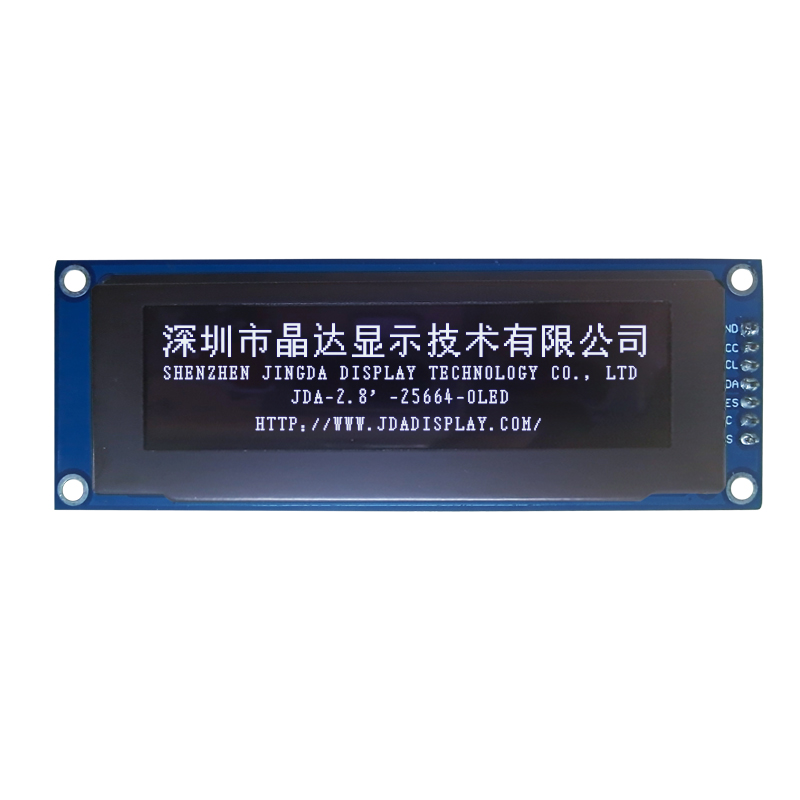
A supplier's yield rate is often glanced at as a dry procurement metric, but it quietly dictates the rhythm of your entire operation. When that percentage slips, it's never just about scrap counts on a spreadsheet. Delays compound, rework queues swell, and your production team spends more energy chasing shortages than building momentum. The cost isn't just the wasted material—it's the overtime, the air freight on late orders, and the trust your customers lose when timelines wobble. On the flip side, a yield rate that trends upward acts like a hidden lubricant: inventory buffers shrink, forecast accuracy sharpens, and product iterations speed up because you're no longer tripping over supplier-side volatility.
What separates good products from great ones often isn't a dramatic design breakthrough, but a supply chain that breathes steadily. High yield rates mean fewer production halts to qualify replacement batches, fewer compromises on material specifications, and a clearer line of sight from prototype to shelf. I've seen design teams pivot away from innovative features simply because the supplier couldn't hit a stable yield, forcing a downgrade to more predictable—but mediocre—alternatives. Your product inherits the ceiling of that rate: if the supplier consistently loses 15% to defects, that 15% doesn't vanish; it reenters your lifecycle as hidden re-testing, longer lead times, or quiet cost-cutting elsewhere.
Treating yield rate as a strategic compass rather than a vendor scorecard shifts how you partner. Beyond audits and corrective actions, the real conversation becomes about process transparency and joint improvement roadmaps. When a supplier knows you're willing to invest in their yield—whether through better tooling, refined quality gates, or shared data—the relationship moves from transactional to resilient. That shift doesn't just de-risk your roadmap; it opens headroom for features that would otherwise be too fragile to scale. The glass isn't half empty when yields disappoint; it's a signal you're looking at the wrong metrics or the wrong partnership, and that's entirely fixable.
The Custom Code Trap: Why 'Fully Turnkey' Often Means 'Fully Compromised'
There’s a seductive promise in the phrase “fully turnkey.” It suggests you’ll receive a polished, custom-built solution that simply works — no tinkering, no deep technical knowledge required. But peel back the shiny demo, and you often find a brittle house of cards. Every line of custom code written exclusively for you is a future liability. Unlike widely adopted frameworks or well-maintained open-source libraries, this bespoke logic hasn’t been battle-tested by thousands of users. The original developer might understand its quirks, but the moment they move on, that code becomes a cryptic artifact that no one else dares to touch without risking a cascade of failures.
What gets overlooked in the sales process is how deeply a “turnkey” platform locks you into its creator’s decisions. Need a small feature adjustment six months later? That’s a custom development project. Want to integrate with a new third-party tool? Hope the original architecture wasn’t tightly coupled in ways that make it a nightmare. What you bought as a finished product is actually the beginning of an expensive dependency — a roadmap forever steered by someone else’s availability and hourly rate. The very customization that sold you becomes the cage that limits your agility.
True independence comes from solutions that minimize black-box magic. When the underlying systems are standard, well-documented, and supported by a broad community, you’re not betting your operations on a single person’s imagination. You gain the ability to switch partners, troubleshoot internally, or even bring junior staff up to speed without months of archaeology. That’s the difference between owning your tools and renting a mystery. A genuine “turnkey” should hand you the keys, not a puzzle box that only one locksmith can open.
Ambient Genius: Matching OLED Readability to Real-World Light, Not a Lab
Most screen readability tests take place inside a dark room with calibrated equipment—hardly a reflection of how we actually use our devices. The moment you step outside on a sunny afternoon or sit by a window with shifting clouds, that carefully measured contrast ratio falls apart. Ambient Genius flips this script by embracing real-world light as a design parameter, not a distraction. It lets the OLED panel respond continuously to the colors and intensity of surrounding light, so text stays crisp without draining the battery at full brightness, and the screen feels less like a glossy mirror and more like paper on a bright day.
Instead of relying on a crude global brightness slider, this approach tunes individual pixel output based on how the eye perceives contrast under thousands of lighting conditions. Shadows on a sunny sidewalk, the warm glow of a café lamp, or harsh fluorescent office ceilings—each scenario shifts which parts of an image need boosting and which can stay muted. The result isn't just legibility on demand; it's a quieter kind of intelligence that knows when to brighten a dim detail just enough to make it visible without washing out the rest of the scene. And because OLEDs can illuminate pixel by pixel, there's no wasteful backlight inflation—only deliberate, energy-sparing adjustments.
The name says it plainly: this isn't about hitting a benchmark in a lab report. It's about making a screen that feels natural to look at wherever you happen to be, from a park bench to a midnight living room. That kind of ambient awareness means you stop noticing the screen itself and start seeing what's on it—without squinting or cupping your hand over the display. Over time, you might forget the technology is even there, and that's exactly the point.
Life After the Invoice: What Lifetime Buy Support Really Looks Like
The invoice is just the handshake—what follows separates a vendor from a partner. True lifetime buy support begins the moment your purchase clears, not with a generic thank-you email but with a proactive onboarding plan tailored to how your team actually works. You'll get a dedicated contact who knows your configuration history, not a ticket number buried in a queue. Questions about integration quirks or edge-case bug fixes are met with direct access to senior engineers, not scripted troubleshooting runbooks. The goal isn't just to solve problems; it's to make sure you never question if anyone is really on the other end of the line.
Over time, support evolves far beyond reactive fixes. You'll receive unsolicited patch bundles that address performance regressions we've caught during internal stress tests—adjustments you might not have noticed until they became critical. When your infrastructure shifts, we flag compatibility risks before you migrate, often suggesting configuration tweaks that keep legacy components humming alongside modern stacks. It’s a quiet, ongoing dialogue: release notes customized to your deployment, quarterly health checks that dig into log files with context only a long-term relationship can build, and the occasional “just checking in” message that unearths friction you’d accepted as normal.
The signature of real lifetime support shows up in the unglamorous corners. When a critical component quietly reaches end-of-life, we don’t just send a product-change notification—we ship a hardened replacement with migration scripts and offer to walk your team through a dry run on a sandbox. Years into the relationship, you might realize you’ve never once had to re-explain your architecture because the same core group has been listening all along. That continuity isn't an accident; it’s the outcome of treating support not as a cost center but as the long arc of a product’s value. Here, “lifetime” doesn’t mean until the next version ships. It means until you decide you’re done—and we’ll work to make sure that day never comes.
The Prototype Honeymoon: Separating Sample Seduction from Mass Production Reality
That first sample lands on your desk like a promise. Every weld is clean, the fit is perfect, and the material feels just right. It’s easy to fall in love at this stage—everything seems possible, and the path from this single flawless unit to thousands of identical ones appears almost automatic. But a factory sample has a very different agenda than a production line. It was built in a bubble, with hand-picked components, under the careful watch of a senior engineer who had all the time in the world. Mass production, on the other hand, runs at speed, with raw material variations, shift changes, and operators who may never have seen that original golden sample. Grasping that gap early prevents the prototype honeymoon from becoming a bitter hangover.
The seduction lies in the details that quietly disappear. That satin finish you loved? It took a master polisher forty-five minutes to achieve—time the factory can’t spare per piece. The silent switch mechanism on the prototype was sourced from a short-run supplier who can’t meet volume requirements. Even the color consistency, flawless under the sample’s controlled lighting, shifts under standard factory conditions. No one is deliberately cutting corners; it’s simply that a prototype answers the question “Can we make one?” while production asks “Can we make ten thousand this Thursday?” Recognizing which features are repeatable and which were one-time acts of craftsmanship is the only way to separate what’s truly specifiable from what’s just sample magic.
Moving past the honeymoon demands a deliberate shift in how you evaluate. Instead of signing off on the prototype and hoping for the best, build a bridge between that single unit and the chaos of the assembly line. Run a small pre-production batch with line workers, not your prototyping team. Measure not just the parts, but the time and skill each step requires. Watch for the silent substitutions that creep in when procurement starts chasing cost targets. The real test isn’t whether the factory can recreate your sample once more—it’s whether they can do it repeatedly, under real deadlines, without you standing there. Once you internalize that distinction, the prototype stops being an illusion you cling to and becomes a benchmark you actually use.
FAQ
A reliable partner will have in-house aging tests, pixel defect inspection, and environmental stress screening. Ask for detailed yield reports and whether they follow AQL sampling standards. Real consistency often shows in how they handle edge cases like mura effect or uneven luminance over time.
Look beyond their standard catalog. Request a design review session and check if they assign a dedicated project engineer. Good manufacturers will share a feasibility study including tooling timeline, flexible printed circuit constraints, and previous custom projects similar in complexity to yours.
Beyond datasheets, the right supplier offers initialization code examples, interface timing diagrams, and direct access to application engineers. Some even provide pre-tested driver board kits for rapid prototyping. Make sure they’re responsive within your working hours, not just a ticketing system.
Variations come from glass cutting schedules, polarizer attachment steps, and module bonding queue. A transparent supplier shares a Gantt chart breakdown and warns you of potential bottlenecks upfront. For a new custom design, 10-14 weeks is typical if they maintain buffer stock of driver ICs.
They’re a baseline, not a guarantee. Dig deeper: do they have RoHS and REACH compliance documentation ready? For medical or automotive projects, ask for ISO 13485 or IATF 16949 evidence. Also request audit reports from their factory floor — cleanliness and ESD control often tell the real story.
Check the manufacturer’s glass supplier relationships and multi-source policies. A stable partner often keeps a second source for driver ICs and has formal obsolescence notification procedures. You can ask to see their component lifetime tracking and any last-time-buy history over the past three years.
Conclusion
Walking an OLED module supplier’s production floor tells you more than any datasheet ever will. It’s rarely the glaring problems that sink a project – it’s the quiet corners. Faint mura drifting across panels under low brightness, glove marks on supposedly cleaned glass, or a test jig that hasn’t been recalibrated since delivery. These aren’t just housekeeping slips; they reveal a factory’s real relationship with consistency. Pair that with a hard look at their yield data – not the polished quarterly summary, but the raw per-batch numbers for your exact stack configuration. A supplier living off 65% true yield but quoting 85% is already baking your future returns and rework costs into deliveries. And if their solution to everything is a “fully turnkey” custom design that locks you into their proprietary driver architecture, you’re likely trading long-term flexibility for short-term convenience. The spec sheet might look identical, but the firmware hooks that matter in the field often end up sealed away, leaving you dependent on their roadmap.
Then comes the pivot from lab to life. Many OLEDs look brilliant under the calibrated 500-lux showroom glow, yet wash out entirely in the 25,000-lux chaos of direct midday sunlight reflecting off a white work surface. True readability demands a supplier who understands ambient contrast, not just peak luminance on a dark screen. That same depth of thinking needs to extend past the purchase order. When you’re promised lifetime buy support, dig into what that really means – is it wafer banking with documented traceability, or a warehouse shelf and crossed fingers? Finally, never let a flawless prototype seduce you. Hand-tuned samples born in a slow, engineering-led line tell a charming story, but the sequel must be written by a fully ramped assembly line running at cadence. The gap is where schedules unravel, and the only honest suppliers spend that honeymoon phase showing you exactly how the transition will be managed, not just handing over perfectly polished glass.
Contact Us
Contact Person: Vincent
Email: [email protected]
Tel/WhatsApp: 86 135 5485 1379
Website: https://www.jda-display.com/