

Pharmaceutical Air Compressor Factory Insights for Optimal Clean Air Performance
2026-08-21
Behind every life-saving tablet and sterile vial lies a hidden network of compressed air systems working under strict regulatory scrutiny. In pharmaceutical manufacturing, even trace oil or moisture can compromise product integrity—so how do leading factories achieve consistent, oil-free air without sacrificing uptime? This deep dive into pharmaceutical air compressor factory insights reveals the engineering choices, filtration strategies, and maintenance habits that separate compliant operations from costly failures. Whether you're upgrading an aging system or designing a new line, understanding these clean air fundamentals is essential—and partners like Seize Air are redefining what optimal performance looks like under pressure.
Why Oil-Free Air Still Fails Without the Right Filtration Train
Many operators assume that switching to an oil-free compressor removes the need for downstream filtration. That assumption falls apart the moment ambient air enters the intake. Even a Class 0 oil-free machine pulls in whatever is floating around the facility—dust, moisture, microbes, and often trace oil vapors from nearby equipment or vehicle exhaust. Without a properly staged filtration train, those contaminants ride straight through the compressor and into the process line.
The real problem is that oil-free describes the compression chamber, not the delivered air. Pipe scale, rust, condensed water, and biological growth can all appear after the compressor, especially when dew points are not controlled. A coalescing filter alone won't fix this; you need a sequence that addresses particles, water, oil vapor, and viable organisms in the right order. Skipping one stage—say, the dryer or the activated carbon element—often turns the remaining filters into bottlenecks or lets contamination slip past entirely.
What separates a reliable system from a compromised one is matching each filter stage to the specific failure mode. For instance, a cold storage facility might battle condensation, while a food packaging line faces microbial risk. The filtration train must be selected and arranged to handle those real-world conditions, not just to satisfy a spec sheet. In too many cases, oil-free air fails not because the compressor is weak, but because the filtration downstream was treated as an afterthought.
Dew Point Drift: What Humidity Data Says About Your Dryer's Health
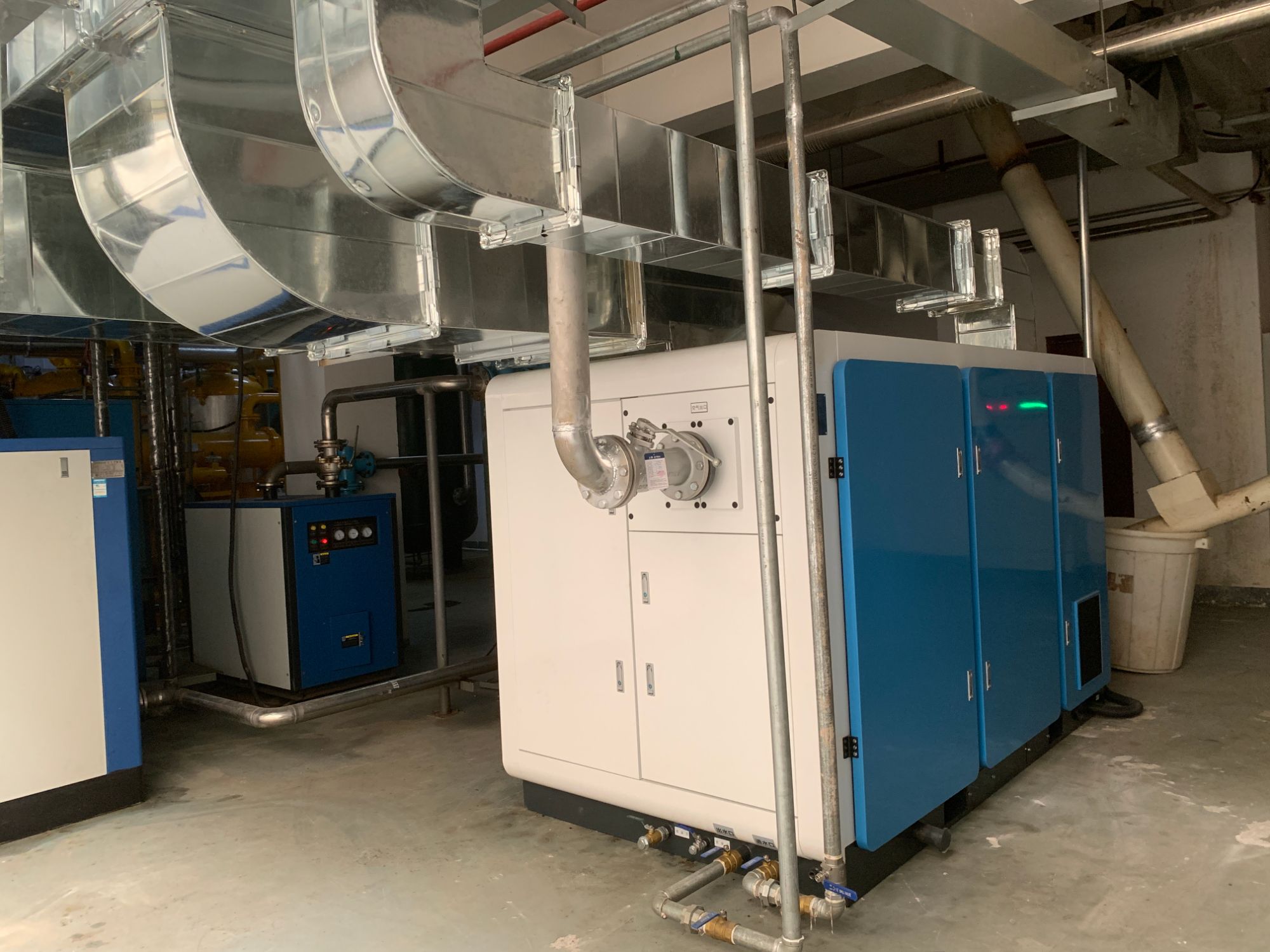
A slow upward creep in dew point readings rarely trips an alarm, but it is one of the clearest early signs that your dryer's drying capacity is fading. Instead of treating each reading as an isolated number, look at the trend across a week or a month. A rise of just a few degrees can point to a desiccant bed that is losing its edge, a regeneration heater that is not reaching full temperature, or a small air leak pulling moist ambient air into the process stream.
Sharp, sudden dew point spikes usually mean something broke, but the slow drift is more telling for long-term health. Compare dew point data against dryer load, inlet conditions, and regeneration cycles. If the dew point rises only during high-demand periods, the dryer may be undersized or the desiccant is nearing the end of its useful life. If the drift continues even at low load, check filters, seals, and drain valves before assuming the desiccant is to blame.
Tracking dew point drift also helps you schedule maintenance before moisture reaches your process. A dryer that holds a dew point of -40°F for months and then starts hovering at -30°F is telling you something is wearing out. By catching that subtle shift early, you can replace a heater element or tighten a fitting for a fraction of the cost of an unplanned shutdown or a batch of rejected product.
Matching Compressor Duty Cycles to Batch Sterilization Peaks
Batch sterilization cycles rarely create a steady demand for compressed air. Instead, they generate sharp spikes when autoclaves or sterilizers pressurize, followed by near-idle stretches during holding and cooling phases. Running compressors at a constant load across this entire cycle wastes energy and shortens equipment life. Matching the compressor duty cycle to these peak intervals means the machine ramps up only when the sterilization vessel actually needs air, then drops back instead of idling at full speed.
One practical way to achieve this alignment is to pair the compressor with a properly sized air receiver. The receiver stores compressed air during low-demand periods, letting the compressor run longer but at a lower average load, and then releases that stored volume during the sterilization peak. This smooths out the sharp demand curve. Another approach uses a variable speed drive compressor that can rapidly adjust motor speed to follow the exact pressure profile of the batch cycle, cutting power draw whenever the sterilizer is in a hold or purge phase.
Without this matching, facilities often see pressure sags at the start of a sterilization run and compressor short-cycling that accelerates wear on valves and seals. By tuning the control setpoints and storage capacity to the known timing of batch peaks, operators can keep pressure stable, reduce the total number of loaded hours on the compressor, and lower energy bills without compromising sterility assurance. The result is a supply system that breathes with the process instead of fighting against it.
The Overlooked Particle Load in Aging Air Receivers and Piping
Inside older receivers and piping, a slow but steady release of iron oxide, scale, and mineral deposits often builds up well beyond what routine filter checks suggest. Much of this material stays trapped in low-flow pockets, collecting along the bottom of tanks or in sagging pipe runs where airflow barely disturbs it. Only when a sudden pressure drop or system start-up shakes the line does this particle load move downstream in bursts, clogging regulators and eroding valve seats before anyone traces the problem back to the source.
The aging process itself accelerates the problem. Repeated thermal cycles, moisture contact, and mild acidic conditions from lubricant breakdown cause pitting and tuberculation on interior walls. These rough surfaces shed fine particulates continuously, and the debris is rarely uniform. Coarse rust flakes mix with fine dust, so filters that catch one fraction may let another pass through. Maintenance teams sometimes replace filter elements month after month without opening a drain valve or removing a pipe plug to inspect what has actually accumulated inside the vessel.
Over time, this particle load also binds with oil carryover and condensed water, forming a gritty sludge that settles in low points and narrow orifices. Air quality readings taken at the compressor outlet can look acceptable while the delivered air at the point of use carries enough abrasive material to shorten tool life and compromise sensitive processes. A practical inspection approach—drawing bottom samples from receivers, checking pipe elbows for wall loss, and flushing low-point drains—often reveals a far heavier particle burden than pressure drop or dew point alone would indicate. Addressing that source, rather than simply adding more filtration downstream, changes the maintenance conversation entirely.
Recovering Heat from Compressors While Holding ISO 8573-1 Purity
Heat recovery from air compressors often raises concerns about contaminating the compressed air stream, but with proper heat exchanger design, the two objectives can coexist. The thermal energy captured from the oil cooler or aftercooler never comes into direct contact with the compressed air if the recovery circuit is isolated. This separation allows facilities to reclaim up to 70–90% of the compressor’s electrical input as hot water or warm air without altering the air’s dew point, particle load, or oil carryover. The key is to position the recovery unit downstream of the compression stage but upstream of any point where condensate could re-enter the air path, and to use double-wall or plate-type exchangers that prevent cross-contamination.
Maintaining ISO 8573-1 purity while recovering heat depends on controlling temperature and moisture at every step. For example, if the recovery loop overcools the discharge air below the pressure dew point, liquid water forms and can trap particulates or oil aerosols, pushing the air outside its specified class. To avoid this, the heat exchanger should be designed with a minimum approach temperature and a condensate drain placed immediately after the cooler. Regular monitoring of the air’s pressure dew point and oil content—using portable or inline instruments—confirms that the recovered heat has not shifted the purity classification. Some systems also use a bypass valve that redirects hot air around the recovery coil when the thermal load is too low, preventing stagnant zones where bacteria or corrosion could develop.
In practice, integrating heat recovery without sacrificing air quality often means starting with a compressor that already meets a stringent ISO 8573-1 class, such as Class 1 for oil and particles, and then validating that the added heat exchanger does not introduce new contaminants. Stainless steel or nickel-brazed plate exchangers are preferred because they resist corrosion from condensate and do not shed fibers or particles. If the recovered heat is used for process water, a secondary loop with a non-toxic heat transfer fluid adds a further barrier. Ultimately, the system should be tested under worst-case summer conditions, when cooling demand and ambient humidity are highest, to ensure that the air purity remains within the required classes even when heat recovery is operating at full capacity.
Service Logs That Turn Maintenance into Audit-Ready Compliance
Every wrench turn and routine check generates data, but most facilities treat that data as a byproduct. The real shift happens when service logs stop being simple records and start functioning as a living audit trail. Instead of scrambling to reconstruct what happened six months ago, teams can point to granular entries that already match the language inspectors expect. The trick is to capture not just what was done, but why it was needed, who performed it, and what the next scheduled action should be.
Audit-ready compliance doesn't come from drafting perfect logs after the fact. It comes from designing maintenance workflows so that evidence is created naturally as work progresses. For example, a technician replacing a filter shouldn't just write "filter replaced" and move on. The entry should note the upstream pressure reading that triggered the replacement, the exact part number used, the torque value if applicable, and any deviations from standard procedure. When an auditor arrives, that single line becomes a self-validating story.
Another layer is consistency across shifts and locations. One team might log dates as MM/DD/YYYY while another uses DD.MM.YY, and suddenly the entire system looks sloppy. Setting up templates with mandatory fields—such as time zone, unit identifier, and sign-off initials—removes guesswork. But avoid making the template so rigid that technicians just click through without thinking. The sweet spot is a structure that guides without dictating, so each log reads like a brief professional note rather than a bureaucratic checkbox.
FAQ
It starts with material selection—internal surfaces are often electropolished stainless steel to minimize particle shedding, and every wetted component is evaluated for corrosion resistance and leachables, not just airflow capacity.
Because even trace oil aerosols can compromise sterile filtration and batch integrity. The factory designs compression chambers with dry-running seals and coated rotors so no lubricant ever enters the air path.
They typically pair heatless or heated desiccant dryers with oversized coalescing pre-filters, then monitor dew point at multiple sampling points. The goal is a stable -40°C or lower pressure dew point under fluctuating demand.
Filtration is layered—coalescing, adsorption, and sterile-grade membrane stages work together. The factory also validates each filter's microbial retention and extractables, not just particle efficiency at 0.01 micron.
Each compressor package undergoes point-of-use particle counting, oil vapor testing, and dew point logging under simulated load cycles. Some factories include a documented FAT that mirrors the customer's cleanroom operating profile.
Quick-access drain ports, tri-clamp connections, and sloped piping eliminate dead legs where condensate or biofilm can collect. Components that need routine service are placed outside the clean zone where possible.
Yes—design references usually include ISO 8573-1 for purity classes, GMP Annex 1 guidance for sterile manufacturing, and local pharmacopeia limits for oil and moisture, but a strong factory goes beyond minimum limits.
They use variable-speed drives with demand-based purge control for dryers, and heat recovery from compression is redirected to regenerate desiccant beds. The result is lower specific power without sacrificing dew point stability.
Conclusion
Oil-free compressor designs alone won't keep pharmaceutical air systems safe. Without a properly staged filtration train, even a well-maintained rotary screw or scroll unit can pass oil vapor, condensed aerosols, and submicron particulates into critical processes. Operators who track dew point trends instead of spot-checking humidity notice that gradual upward drift often signals failing desiccant beds or a worn dryer valve long before alarm thresholds trip. This same attention to load patterns matters at the batch sterilization peak, where compressor duty cycles that ramp too sharply can outpace dryer capacity and push moisture through the line.
Aging air receivers and distribution piping quietly shed rust, scale, and metal fines that no inlet filter can catch, so routine receiver blowdown and inline particle counts deserve a higher spot on the maintenance schedule. Meanwhile, heat recovery from compressor discharge can trim energy waste without compromising ISO 8573-1 purity—provided the heat exchanger stays on the oil-free side and condensate drains are sealed against backflow. What often gets overlooked is the service log itself. When every filter change, dew point reading, and duty cycle adjustment is recorded with clear pass/fail criteria, maintenance stops being reactive and becomes an audit-ready trail that quality teams and regulators can actually trust.
Contact Us
Contact Person: Mia
Email: [email protected]
Tel/WhatsApp: +86 19821985894
Website: https://www.seize-air.com