

Shock Absorber Piston Manufacturer Choices That Directly Affect Ride Quality
2026-11-16
When you hit a pothole and feel that sharp jolt through the seat, the culprit isn't always your springs—it's often the piston inside your shock absorber. Every manufacturer makes claims about durability and precision, but only a handful deliver the tolerances that truly transform ride quality. At XIAYI, we've seen how the right piston design separates a composed highway cruise from a fatiguing, bumpy commute. This post breaks down the key manufacturer choices—from material selection to valve calibration—that determine whether your suspension feels planted or punishing.
What Actually Happens When Piston Clearance Is Too Tight
When an engine is assembled with piston-to-wall clearance below the manufacturer’s minimum, the trouble often stays hidden until the parts reach operating temperature. The piston, usually aluminum, expands faster and farther than the iron or coated aluminum bore. The oil film gets squeezed out from the skirt area, and the skirt starts rubbing directly against the cylinder wall. You get fine vertical scoring first, then deeper grooves as temperatures climb.
That friction feeds itself. Heat from the contact makes the piston swell even more, which closes the remaining clearance and pushes the skirt harder against the bore. The engine may begin to lose power, develop a sharp metallic rattle, or show rising oil temperature. If the ring lands overheat, the rings can scuff or lose tension, causing blow-by and oil consumption that pushes blue smoke out the exhaust.
Left unchecked, the piston can seize in the bore, sometimes snapping the connecting rod or scoring the crank journal. At that point the block usually needs an overbore and a new piston set, and the repair cost climbs quickly. Measuring with a bore gauge and following the piston maker’s clearance spec for the specific alloy and skirt design is the only reliable way to avoid the problem.
Raw Material Sourcing Decisions You Feel on Every Bump
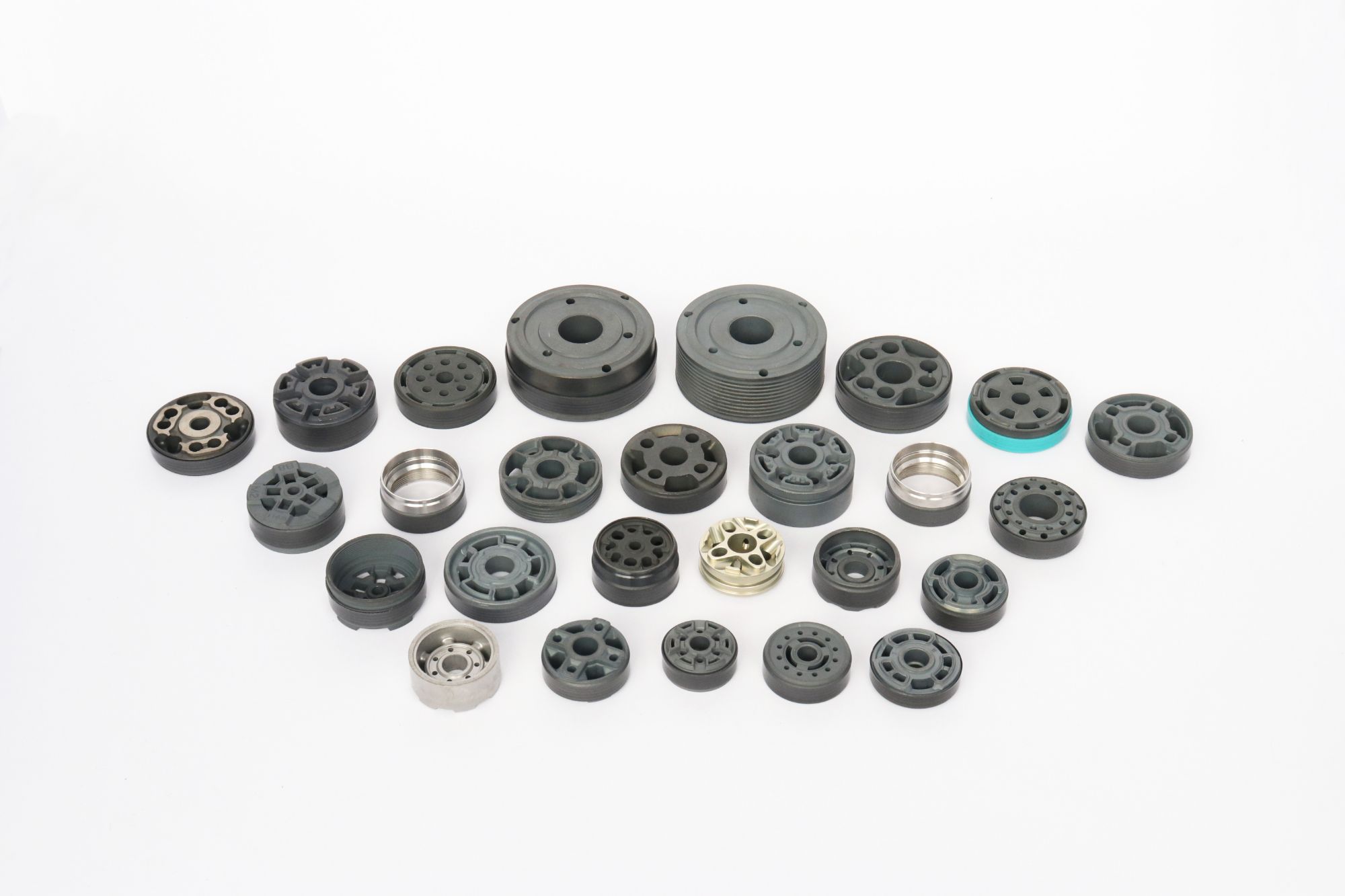
The shock absorbers in your vehicle aren't just engineered parts—they're the result of a global hunt for specific grades of steel, specialized rubber compounds, and hydraulic fluids that behave predictably under repeated stress. When a supplier swaps in a cheaper aluminum alloy for a piston rod or shifts to a lower-durometer bushing material, the change rarely shows up on a spec sheet. Instead, it announces itself through a subtle harshness over expansion joints, a faint rattle on washboard gravel, or a floaty sensation after a long highway sweep. Those small degradations in ride quality are direct feedback from sourcing decisions made thousands of miles away.
Consider the rubber isolators that anchor suspension components. A manufacturer might source natural rubber from one plantation during a dry season and synthetic polyisoprene from a petrochemical plant the next, simply because of a price swing or a shipping delay. Both meet the same ASTM hardness rating, but their damping curves diverge at low temperatures or under rapid cycling. You'll feel the difference as a faint vibration through the steering wheel on a cold morning, or a sharper impact noise over potholes that was previously muted. Nobody stamps that on the window sticker, yet your spine reads it clearly.
Even the hydraulic oil inside a damper carries the fingerprint of its origin. A batch refined from a different crude source, or blended with a slightly altered additive package to meet a new environmental regulation, can shift viscosity under heat. After twenty minutes of spirited driving, the suspension may lose that initial crispness, feeling progressively softer or more nervous. Drivers often blame tire pressure or alignment, but the real culprit is a spreadsheet-driven decision to switch fluid vendors. The lesson? Every bump transmits not just road texture, but the entire supply chain's quiet compromises.
The Overlooked Link Between Piston Ring Fit and Ride Quality
When drivers complain about a rough idle or subtle vibration through the seat, they rarely suspect the piston rings. Most attention goes to motor mounts, tires, or suspension bushings. Yet ring-to-cylinder-wall sealing directly shapes how combustion pulses reach the crankshaft. A ring set that doesn't seat evenly leaves microscopic gaps, creating uneven pressure spikes and low-amplitude harshness that feels like a drivetrain issue.
The connection to ride quality becomes clearer at low RPM and light throttle. Loose or poorly fitted rings allow combustion gas to escape past the piston, a condition known as blow-by. That loss reduces cylinder pressure consistency, so the engine hunts slightly at idle and shudders under part-load acceleration. Because the frequency is close to wheel-speed vibrations, drivers often mistake it for an out-of-balance tire or worn CV joint.
Proper ring fit—bore finish, end gap, and radial tension—matters as much as compression ratio for smooth power delivery. A shop that rushes honing or reuses rings with excessive clearance can save time but introduce a persistent, hard-to-diagnose roughness. Replacing rings and finishing the bores correctly often transforms the car's perceived refinement more than new shocks or softer bushings.
Why Some Manufacturers Skip Hardness Testing and How It Shows
In many machine shops, hardness testing is treated as an optional step—something that can be skipped when the schedule gets tight or when the material cert looks clean. Some manufacturers assume that if the steel came from a reputable mill and the heat treater has a good track record, spot-checking hardness on incoming parts is just redundant paperwork. Others simply don't have a calibrated hardness tester on the floor, or they lack someone trained to read the results properly, so the test quietly falls out of the workflow. The rationale usually sounds reasonable in the moment: save an hour, cut a cost, trust the supply chain.
But the absence of hardness data tends to show up later in ways that are hard to ignore. A batch of shafts that should have been through-hardened to 45 HRC starts failing in the field with bent splines or galled journals. Fasteners that were supposed to be quenched and tempered might shear under rated torque, or they might be so brittle that they snap during installation. The failure pattern is rarely dramatic at first—often it appears as a higher return rate, a spike in warranty claims, or a customer complaint about inconsistent tool life. By the time the problem is traced back, the original heat lot may be long gone, leaving no baseline to compare against.
What's more telling is that skipped hardness testing strips away the only quick, non-destructive way to verify that heat treatment actually happened as specified. Without a few Rockwell readings from each batch, a manufacturer has no evidence that the furnace temperature was correct or that the quench wasn't interrupted. The result is a kind of quiet gambling: most lots pass by luck, but the one that doesn't can cost far more than a hardness tester and ten minutes of an operator's time. The symptom on the shop floor is often a recurring quality issue that no one can explain because the key measurement was never recorded.
Matching Piston Flow Rates to Real Road Conditions
Real road surfaces rarely produce the smooth, constant shaft speeds assumed in dyno testing. A piston valve tuned only for a single flow rate will feel harsh over sharp-edged bumps yet floaty on long undulations, because the actual fluid demand shifts continuously with suspension velocity.
The most practical approach is to map the damper's force-velocity curve against data logged from your own routes. Instead of chasing a peak number, note where the suspension spends most of its stroke: low-speed piston movements control body roll and pitch, while high-speed events—typically above 0.3 to 0.5 m/s depending on the vehicle—handle square-edge hits and broken pavement. Matching flow rates means adjusting bleed, shim stack preload, and port area so the transition between these regimes happens without a spike in pressure.
It's often better to err on the side of slightly more low-speed flow than the bench suggests. This keeps the tire loaded on rippled asphalt and reduces the nervousness that comes from over-damped rebound. Logging actual shaft velocities with a linear potentiometer, then replaying those speeds on a shock dyno, gives a far more honest picture than any catalog curve.
The High-Mileage Regret of Cheap Piston Coatings
Every engine builder has seen the telltale signs: piston skirts worn to bare metal after 40,000 miles, rings that never seated right, and a bore that looks like it was honed with gravel. The culprit often isn't abuse or neglect—it's a bargain coating applied with more enthusiasm than expertise. Cheap piston coatings promise the same friction reduction and thermal barrier benefits as premium options, but they typically rely on thin, inconsistently applied layers that degrade under heat cycling. As the coating flakes or wears away, it leaves uneven surfaces that accelerate skirt and cylinder wear, defeating the entire purpose of the upgrade.
The real cost shows up later. A budget coating might survive the first few thousand miles without complaint, but high-mileage teardowns reveal the hidden damage: micro-scratches on the cylinder wall where exposed aluminum made contact, increased blow-by from rings struggling against a compromised skirt profile, and oil consumption that creeps up as the remaining coating sheds into the sump. Owners chasing a quick performance gain end up with a rebuild bill far steeper than the money saved on the coating itself. The regret isn't immediate—it builds slowly, like the carbon on a set of neglected intake valves.
Worse, many cheap coatings lack proper curing or surface preparation, meaning they never bond fully to the piston. What starts as a uniform grey finish becomes a patchy mess after repeated thermal expansion and contraction. The piston's thermal management suffers, hot spots develop, and the coating can even act as an abrasive once it breaks free. In high-mileage engines, that abrasive slurry circulates through the oil system, quietly wearing bearings and journals. The lesson is simple: if the coating price seems too good to be true, the long-term bill will more than make up the difference.
FAQ
Hardened steel or aluminum pistons each transmit impact forces differently. Steel offers more mass and heat stability, which keeps damping consistent on washboard roads. Aluminum sheds heat faster but can flex slightly under hard hits, subtly altering valve response. The material choice sets the baseline for how crisply the shock reacts to sharp bumps.
Coatings like Teflon or nitride reduce stiction between the piston and inner tube. Less stiction means the shock starts moving sooner on small ripples, giving a plush low-speed ride. Bare metal pistons are cheaper but can develop micro-scoring over time, which makes the suspension feel sticky after thousands of miles.
Ports with tapered or chamfered edges let fluid bleed through gradually, softening the initial compression over lane dots and expansion joints. Straight-cut ports open more abruptly, creating a firmer, sportier feel. Manufacturers that tune port geometry for progressive flow deliver a ride that absorbs small imperfections without wallowing.
Tight piston-to-bore tolerances, typically within a few microns, prevent internal leak paths that rob damping force. A supplier that batches pistons with consistent OD and roundness ensures every shock behaves identically. Loose tolerances cause uneven left-to-right damping, which drivers notice as a nervous or drifting front end.
Yes. A mirror-like finish on the piston skirt minimizes friction when the shock body flexes under lateral load. That reduces mid-corner harshness and keeps tire contact patch stable. A rough finish accelerates seal wear and can cause the shock to catch and release, making the car feel twitchy through long sweepers.
That clearance controls bypass flow around the piston. If it's too wide, high-frequency movements lose damping and the ride gets floaty. Too narrow and the shock becomes harsh at low speed. The right clearance, matched to oil viscosity, gives a firm yet compliant feel that doesn't fade when the shock heats up.
Pistons with larger or multiple valve ports allow fluid to circulate faster, carrying heat away from the piston face. This prevents viscosity breakdown during repeated hard braking or mountain driving. A restricted piston traps heat, leading to fade where the shock loses control and the vehicle starts to porpoise.
Premium suppliers invest in flow bench testing and real vehicle validation, so their pistons maintain consistent damping across temperature swings. Budget pistons often copy dimensions without matching surface finish or valve calibration. Over time, the premium part keeps the ride composed and quiet, while the budget part reveals itself through rattles and abrupt transitions.
Conclusion
When shock absorber pistons are machined with clearances that are even slightly too tight, the initial feel is often mistaken for firmness, but what you actually experience is hydraulic binding. The piston can't move freely through the oil, so every minor road imperfection transmits directly into the chassis. This gets worse when raw materials are sourced without tight control over grain structure or dimensional stability; a piston that grows a few microns on a hot day behaves like a different part altogether. And if the piston ring fit is overlooked, blow-by increases, pressure builds unevenly, and the damper fades on washboard surfaces instead of staying composed.
Some manufacturers skip hardness testing to cut costs, and that choice shows up later as accelerated wear on the piston OD and ring groove, which changes the valve response long before any visible leak. Cheap piston coatings are another high-mileage regret: once the plating wears through, the underlying steel pits and contaminates the oil, making the whole unit feel progressively harsher. Finally, flow rates need to be mapped to real roads, not just a single bench curve. A piston that flows beautifully on paper can still crash over expansion joints if the low-speed bleed isn't matched to actual suspension velocities. The takeaway is that ride quality isn't decided by the damper's exterior design; it's settled by these quiet manufacturing choices.
Contact Us
Contact Person: Leela
Email: [email protected]
Tel/WhatsApp: 8613586885132
Website: https://www.xiayishockparts.com