

Top 10 Solar Ground Mount Suppliers in China
2026-09-03
Choosing the right solar ground mount supplier in China is less about finding a manufacturer and more about finding a partner who won't disappear when the first gust of wind tests your array. After watching dozens of factories overpromise on load ratings and underdeliver on galvanized coating thickness, we narrowed the field to ten names with verified track records. Topfencesolar, for example, caught our attention with its modular rail system that ships flat and snaps together without welding—a detail that matters when your crew is sweating through a tight installation window. The full ranking below reveals which suppliers truly keep their promises, and which one might be the smartest bet for your next ground mount project.
Why Ground Mount Designs in China Favor Pre-Assembled Components
On utility-scale sites across Xinjiang and Inner Mongolia, the time between steel arriving and torque wrenches going quiet has shrunk dramatically because so much of the racking and wiring now shows up already bolted, crimped, and labeled. It’s not just about saving a few minutes per pile. A crew that used to spend three days squaring and torquing hundreds of joints can now drop pre-aligned purlins into place in an afternoon, with fewer misplaced washers and almost no field drilling. That speed matters when grid-connection deadlines are tied to tariff windows, and any delay on the civil side cascades into lost revenue.
Factory floors in Jiangsu and Zhejiang run torque guns with preset values, barcode checks, and fixture-based alignment that a sandy construction site can’t replicate. By moving assembly indoors, designers avoid the quality drift that comes from rotating crews, weather interruptions, and tool wear. Pre-assembled DC harnesses, for example, arrive with connectors already crimped and tested, so the only field task is plugging them into the inverter. This shifts risk away from untrained seasonal labor—something that still matters even in a country with a huge workforce, because the available hands are not always the ones with electrical experience.
There is also a quieter logistics incentive. Pre-assembled modules flatten the bill of materials and shrink the number of loose parts that have to be tracked, counted, and reordered. When a 100 MW site has 40,000 individual fasteners, losing even half a percent means weeks of downtime waiting for replacements. Pre-kitted pallets tied to specific array blocks keep installers moving without paper checklists or guesswork. For Chinese EPCs managing multiple projects at once, that repeatability is worth more than the marginal labor savings on-site.
Reading Between the Lines of Factory Audit Reports
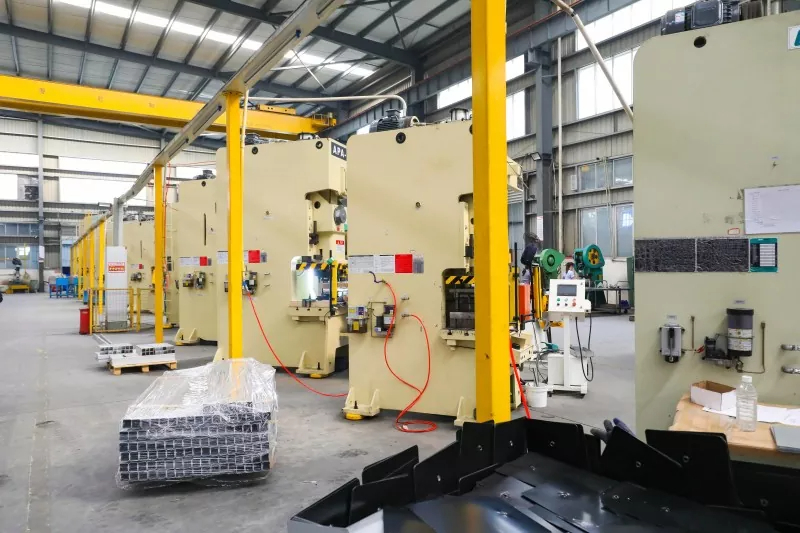
Factory audit reports often read like clean snapshots of compliance, but the real story hides in the margins. A missing signature on a corrective action form, repeated minor nonconformities that never escalate, or a sudden change in the auditor’s tone can signal deeper operational strain that a simple pass/fail rating overlooks. Reading between the lines means comparing audit cycles for patterns rather than viewing each report in isolation.
One underused tactic is to scrutinize the language of “observations” and “opportunities for improvement.” These are rarely neutral; they often mask concerns the auditor was hesitant to elevate into formal findings. Phrases like “management was cooperative” or “records were generally available” can imply limited access or selective documentation. Cross-checking these soft statements with production timelines and staff turnover data often reveals discrepancies that a surface-level review would miss.
Experienced buyers also look for what is not mentioned. The absence of comments on a high-risk process, such as chemical storage or night-shift operations, can be more telling than a full page of minor issues elsewhere. When a report repeatedly highlights administrative paperwork but stays silent on machine guarding or living wages, it is worth asking whether the audit scope was narrowed or whether the facility simply knows what to show. The most useful conclusions come from treating every sentence as evidence, not summary.
Corrosion Protection Methods That Extend Field Life in Coastal Zones
Coastal installations face a relentless combination of salt spray, high humidity, and abrasive sand, which can cut service life by half if left unchecked. A layered approach tends to work best: hot-dip galvanizing or thermal spray aluminum on structural steel, followed by a high-solids epoxy intermediate coat and a UV-stable polyurethane topcoat. The zinc or aluminum layer sacrifices itself at scratches and edges, while the organic coatings block chlorides from reaching the substrate.
For buried or splash-zone sections, cathodic protection often becomes the backbone of the strategy. Sacrificial anodes made of zinc, aluminum, or magnesium can be installed in bands or as ribbon anodes around piles, and their output is tuned to local soil resistivity and tidal range. In more aggressive settings, impressed current systems with mixed metal oxide anodes offer finer control and lower long-term maintenance, especially where inspection access is limited.
Beyond coatings and electrochemistry, small design changes pay off disproportionately. Avoiding crevices, specifying sealed fasteners, using polymer concrete or fiber-reinforced plastic for walkways and cable trays, and scheduling periodic freshwater rinsing of above-water surfaces all reduce the accumulation of salt deposits. Together, these measures routinely stretch field life from a baseline of 10–15 years to 25 years or more, with lower lifecycle cost than frequent patch repairs.
How Tilt Angle Decisions Impact Your Project's Payback Period
Tilt angle rarely gets the attention it deserves, but a difference of just five to ten degrees can quietly shave a few percentage points off your annual production. Over a 20-year project, those small losses compound into months of extra payback time. The tricky part is that the optimal angle for maximum kilowatt-hours is not always the one that repays your investment fastest—especially when local weather patterns and peak demand periods are factored in.
In areas with high summer electricity rates, a slightly lower tilt can capture more midday sun and speed up returns even if the total yearly output dips. Winter-peaking regions often benefit from a steeper angle that catches low-angle sunlight. The right decision depends on your roof orientation, latitude, and the hours when your power is worth the most.
What looks like a minor design tweak on paper can alter your cash flow more than upgrading panel wattage or chasing a marginally better inverter. Builders who test multiple tilt scenarios with real consumption data often discover that the best payback comes from leaning toward the season that pays, not the one that generates the most electrons.
Working Directly With Engineering Teams Instead of Sales Scripts
When you reach out to a vendor and get a sales rep reading from a script, you can usually tell within the first minute. The conversation feels rigid, the answers loop back to rehearsed talking points, and any question that falls outside the standard roadmap gets met with awkward silence or a vague promise to follow up. We decided early on that this approach doesn't work for the kind of problems we solve. So instead of routing you through a layer of account executives, we put you in touch with the engineers who actually build and maintain the systems you're evaluating.
Direct access to engineering changes the quality of the conversation. You're not asking a middleman to relay your concerns; you're talking to the person who can pull up a log file, reproduce a bug in real time, or sketch out how a particular integration would work under your specific constraints. That means the answers you get are grounded in what the code actually does, not what a slide deck claims it can do. It also means you can go deeper on topics like performance under load, failure modes, or deployment edge cases without hitting a wall of generic feature lists.
There's another side to this that often gets overlooked: when engineers talk directly to users, the product improves faster. Feedback doesn't get distilled through notes or CRM fields; it lands in the same channel where the team is already discussing trade-offs and priorities. That kind of tight loop is hard to fake with a polished sales process. It's why we keep the technical team involved from the first call onward. You should be able to ask hard questions and get honest, specific answers, not a pivot back to a value proposition.
Spotting Red Flags in Sample Kits Before Placing Bulk Orders
When you first open a sample kit, don't just check the overall look. Run your fingers along every seam and edge. A loose thread here or a slightly crooked stitch there might seem minor, but these are early warnings. If the sample uses thinner fabric than the spec sheet promised, or if the zipper feels cheaper than the one you approved, that's a signal the factory may be cutting corners. Color mismatch is another big one—hold the sample under different lighting and compare it against your Pantone reference. Even a slight shift suggests the dyeing process isn't tightly controlled, and bulk orders will drift further.
Actual-use testing uncovers problems that visual inspection misses. Wash the sample according to the care label, then measure shrinkage and check for fading or bleeding. Bend the seams hard, especially at stress points like underarms or pockets, and see if the stitching holds. If you're ordering packaging, open and close the box or bag repeatedly to test durability. Also look at the small details: Are labels sewn straight? Is the print registration aligned? A supplier that can't get the sample right rarely gets thousands of units right.
Finally, pay attention to how the supplier responds to your feedback. If you point out a flaw and they brush it off or say "it won't happen in bulk," that's a major red flag. A reliable partner will ask for photos, investigate the issue, and send a revised sample without arguing. If the second sample arrives with the same problem or a new one, walk away. Trust your instincts—if the sample feels like a compromise, the bulk order will be a bigger compromise.
FAQ
Look for in-house engineering capability and real project references, not just catalog claims. Suppliers that can customize tilt angles, wind load calculations, and foundation designs for your specific site tend to deliver fewer surprises during installation.
Not always. Aluminum resists corrosion well and is lighter, but steel often wins on cost and load capacity for utility-scale projects. Many Chinese suppliers now offer hot-dip galvanized steel with magnesium-aluminum coating as a middle ground.
Top suppliers usually provide adjustable leg heights, flexible purlin connections, and multiple foundation options like ground screws, concrete piers, or driven piles. Some will send engineers for a site survey even for mid-sized orders.
Look for ISO 9001, CE marking, and structural calculations according to local wind/snow codes. For international projects, ask for UL 2703 or IEC 62817 compliance for mounting systems, plus salt spray test reports if near coastal areas.
Often yes if your labor costs are high. Pre-assembled clamps and rails can cut installation time significantly, though shipping volume increases. Many Chinese manufacturers offer flat-pack vs. semi-assembled options with clear trade-offs.
More suppliers are integrating tracking systems, using high-strength steel to reduce material weight, and designing for bifacial modules with higher clearance and reflective ground coverage. Also, a shift toward recyclable aluminum for sustainability goals.
Request a video tour of their production line, ask for third-party audit reports like TUV or SGS, and order a small pilot batch before committing. Check if they have automated roll-forming or stamping equipment—manual shops often struggle with consistency.
Yes, many have dedicated teams for elevated structures, wide-span carports, and agrivoltaic frames. They can adapt to crop height, vehicle clearance, and snow load requirements, but you should provide detailed site drawings to avoid iterative delays.
Conclusion
China's leading solar ground mount suppliers have shifted toward pre-assembled components for a reason: fewer loose parts mean faster field installation and fewer errors under tight project deadlines. But anyone who has visited multiple factories knows the real story lies in the audit reports. A clean paper trail often hides shortcuts in weld consistency or bolt torque tolerances. Coastal projects add another layer; the best suppliers don't just offer standard galvanization—they push for hot-dip coatings with extra zinc thickness, plus sealed joints to keep salt spray from eating the structure within five years. Ignoring these details turns a cheap rack into a long-term liability.
Tilt angle is rarely a one-size-fits-all choice. A supplier that pushes a fixed 30° without asking about your latitude, soil type, or snow load is selling inventory, not engineering. Working directly with their structural engineers—not a sales script—can reveal whether they actually adjust purlin spacing or just recycle old drawings. Before committing to a bulk order, dissect the sample kit: look for burrs on bolt holes, inconsistent anodizing, and cheaper aluminum alloys that bend under finger pressure. These red flags are common even among top names, so the real shortlist emerges only after you strip away the marketing gloss and test what's in your hands.
Contact Us
Contact Person: Nancy
Email: [email protected]
Tel/WhatsApp: +86-13365923720
Website: https://www.topfencesolar.com/