

Top PVC Door Factory Picks for Durable and Stylish Home Entrances
2026-11-16
Most PVC door factories promise strength, style, or value—rarely all three in one frame. That changes once you look closely at how FANSI approaches production. From reinforced cores to fade-resistant finishes, their lineup is built for homeowners who refuse to choose between a durable entryway and a stylish first impression. Here are the factory picks worth comparing before you upgrade your entrance.
Factory floor habits that show up in longer-lasting PVC doors
A door that still closes square after ten years usually starts with a mixing room where the operator treats the extrusion blend like a daily recipe, not a fixed button. Sharp plants adjust the regrind percentage and stabilizer level when the weather turns humid or the line speed changes. It is not glamorous work, but it keeps the outer surface from turning chalky or cracking along the panel edges after a few hard seasons.
Further down the line, the corner welding station is where long-term trouble gets caught or created. Instead of relying on a quick visual check, experienced operators clean the weld plates on a set interval and measure the melt depth with a small tool that most visitors never notice. That routine keeps the seam at the lock rail from splitting open after repeated slamming and temperature swings.
There is also a quiet habit around the glass area. Once the glazing bead goes in, the assembled slab rests in the shop long enough for the sealant to firm up before wrapping and stacking. It costs floor space and slows the afternoon shipment, but it means the gasket is not asked to do all the water-shedding work on the first rainy day.
Entry door profiles that keep home entrances looking sharp without trading away weather resistance
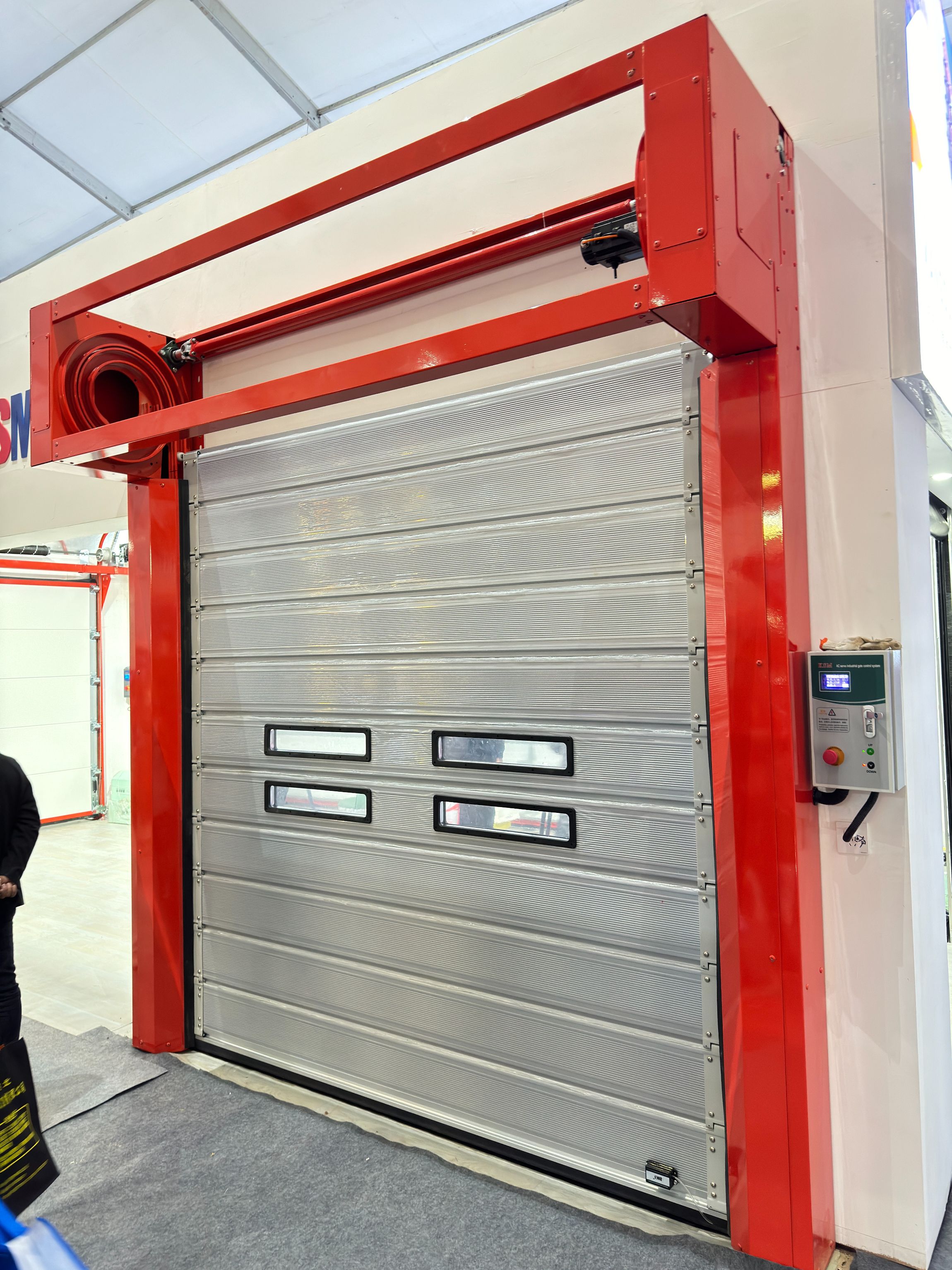
A sharp entry line doesn't have to mean choosing between looks and durability. The right profile keeps edges crisp while its internal chambers and gaskets quietly handle wind, rain, and temperature swings. Instead of bulky weatherstripping bolted on as an afterthought, the seal sits flush within the frame, so the sightlines stay clean and the door still shuts tight.
Materials matter just as much as the silhouette. Powder-coated aluminum or reinforced uPVC profiles resist scuffs and salt air without developing that chalky fade, and the finish holds up even on south-facing entries. Integrated drainage paths move water out before it can pool, while thermal breaks keep the interior side from turning cold in winter or hot in summer.
What you notice at the curb is a neat, contemporary edge. What you don't see is the continuous compression seal, the sloped threshold, and the corner joints designed to stay locked under repeated slamming. That balance lets the entry feel crisp rather than overbuilt, and still shrug off storms year after year.
Why panel depth and corner welding matter more than a color chart
Panel depth is one of those details you don't notice until a door starts to sag or a cable bundle refuses to fit. A deeper panel changes how hardware mounts, how wiring is routed, and how much stress the frame can absorb before it begins to twist. The color chart tells you what an enclosure looks like on day one; panel depth tells you whether it will still close cleanly after years of daily use.
Corner welding matters just as much, even though it is easy to overlook under a fresh coat of paint. A continuous, even weld keeps moisture out and gives the structure its rigidity, especially where vibration or temperature swings are constant. Finishes can be matched, touched up, or redone, but a poorly fused corner remains a hidden failure point. If you compare options side by side, look closely at the joinery and internal clearance before letting a color swatch make the decision for you.
Hardware and seal choices that preserve a solid feel over time
The long-term solidity of a door, lid, or access panel rarely comes from a single component. It comes from matching hardware geometry to the way the seal compresses. Hinges with machined bushings instead of stamped leaves, latches with a defined detent, and threaded inserts rather than bare screws into plastic keep the closure from developing slop after repeated cycles. When the pivot points stay put, the closing force is absorbed the same way every time.
Seal choice shapes how that force feels. A gasket that is too soft collapses quickly and leaves the latch loose; one that is too firm makes every closure feel like a slam. Closed-cell foams and durometer-specific EPDM or silicone profiles hold their rebound longer, especially when the seal sits in a groove that limits over-compression. That small design decision keeps the resistance consistent, so the panel still seats with a muted, positive stop months after installation.
Wear matters less when materials play to their strengths. Striker plates and catches that engage with a slight ramp can compensate for micro-changes in seal height, while stainless or coated steel contact surfaces avoid the soft plastic galling that makes a latch feel gritty. The result is a closure that keeps its initial authority: no rattling, no extra push, and no gradual loss of that firm, settled snap.
Reading between the lines of a factory sample and spec sheet
A factory sample rarely tells the same story as the sheet that accompanies it. The spec sheet lists what the item should be, while the sample shows what the line is capable of on a given day. I tend to line up the two and look for quiet mismatches: a stitch count that runs denser on paper than in the sample, a seam allowance that shrinks by a few millimetres, a zipper that sits slightly flatter on the approved version than on the document. These small gaps are usually where later production problems hide.
When a measurement falls inside a stated tolerance, I do not treat it as automatically fine. Tolerances often get borrowed from older product categories or carried over from a previous customer file, and they can be looser than the design actually needs. The more useful check is to compare the same measurement across two or three sample rounds. If the variation is consistent, the tolerance is honest. If it drifts from one side of the range to the other, the factory is likely still adjusting methods, and the spec sheet is more of a wish than a reference.
Material handling is another place to read between the lines. A sample can arrive with a beautifully even grain because it was cut from one roll under careful supervision, while the spec sheet says nothing about how many rolls will be mixed in bulk. I ask where the cutting happens, how panels are bundled, and whether the same operator who made the sample will run the production order. Often the answer reshapes what I trust from the paperwork.
What a dependable PVC door factory handles before you ever ask
Behind the clean lines and smooth corners of every PVC door is a factory floor that rarely gets mentioned. Long before a buyer compares finishes or asks about delivery times, the production team has already tested the raw compounds for impact strength, color consistency, and heat resistance. These early checks happen without a single customer request, simply because a dependable factory treats material stability as the starting point, not an afterthought.
The next layer of work is less visible but just as deliberate. Welding seams are pulled apart in controlled stress tests. Hinges are opened and closed thousands of times on automated rigs. Even the rubber gaskets are checked for how well they recover after repeated compression. None of this appears in a catalog, yet it shapes how quietly a door closes and how long it stays square in its frame.
What separates a reliable PVC door plant from an ordinary one is the habit of catching problems before they ever reach a conversation with a client. Batch records are kept for every profile extrusion, every glass unit, every hardware set. If something drifts outside tolerance, it is flagged, isolated, and corrected at the source. That way, when you finally do ask about a product, the answers you get are not promises but a summary of work already done.
FAQ
The difference usually comes down to the wall thickness of the profile, the number of internal chambers, and whether the steel reinforcement runs through the full frame and sash. Quality factories also use virgin PVC instead of heavily recycled material, which keeps the surface from becoming brittle or streaky after repeated sun exposure.
For daily use, a well-made PVC door usually wins on upkeep and weather resistance. It won't swell, crack, or need repainting after wet seasons, though solid timber still has a richer feel under the hand. The best PVC options use woodgrain foils or deep panel profiles to close that gap visually.
Yes, but it helps to skip the default options. Look for raised panels, glazed side lites, a darker exterior foil such as anthracite or sage, and matte hardware rather than polished brass. These choices change the character far more than the base material does.
Ask about their profile system, glass unit thickness, and whether they cut mitres or use mechanical corner joints. A factory that openly names its extrusion supplier and gives a clear thermal performance figure is usually more consistent than one that only advertises a low price per slab.
It tends to be worth it if the door faces strong wind, direct afternoon sun, or frequent slamming. The foam adds rigidity and dulls noise, so the door feels less hollow and stays aligned longer. For sheltered porches, a standard multi-chamber slab can be enough.
Look for a multi-point locking system that engages at the top, middle, and bottom, paired with a sturdy handle and an adjustable hinge. A low threshold is also useful for strollers or wheelchairs, and it reduces the chance of tripping while keeping the seal tight.
Very little beyond regular cleaning with warm water and a mild soap. Dark foils can hold heat, so it's wise to pick a profile designed for darker colors and avoid abrasive cleaners that scratch the laminate. An occasional check of the drainage slots and gaskets keeps the frame working smoothly.
Conclusion
Durability in a PVC entrance door rarely comes from the spec sheet alone. It starts on the factory floor with small, repeatable habits: consistent extrusion temperatures, clean profile cuts before welding, and controlled cooling times after the corner joints are fused. Those routines show up later as door leaves that stay square through damp winters and hot summers. At the same time, the better entry door profiles manage to keep a crisp, flat face without giving up weather resistance. Multi-chamber cores and reinforced steel stiffeners are often tucked behind a smooth exterior, so the entrance still looks sharp after years of sun and rain.
Panel depth and corner welding deserve more attention than any color option. A deeper panel face adds rigidity and reduces that hollow drum sound when the door closes, while properly welded corners keep moisture from creeping into the joints. Hardware and seals matter just as much: adjustable hinges, a solid multi-point lock, and compression gaskets that stay flexible over time prevent the handle from sagging and the frame from feeling loose. When reviewing a factory sample, look past the smooth skin and ask about the unseen work—how the reinforcement is placed, whether the seal channels are co-extruded or glued, and what the factory already tests before a buyer requests it. The best suppliers usually have answers ready for things most people never think to ask.
Contact Us
Contact Person: Liam
Email: [email protected]
Tel/WhatsApp: (+86)16658531012
Website: https://www.fansifiredoor.com