

Tubular Steel Poles Solutions: Top Choices for Reliable Infrastructure
2026-06-04
When it comes to building infrastructure that truly lasts, the backbone often lies in the details you don't see—like the poles holding everything together. Enter tubular steel poles: sleek, incredibly strong, and engineered for the long haul. But not all solutions are created equal. That's where Anbang steps in, redefining what reliable infrastructure looks like. Curious how these modern marvels can transform your next project? Let's dive in.
The Backbone of Modern Transmission: Why Tubular Steel Poles Lead
In the landscape of energy distribution, the shift toward tubular steel poles represents more than a material change—it's a rethinking of what a support structure can do. Their slender, tapered profile isn't just about looks; it reduces visual impact while shedding wind load more efficiently than traditional lattice towers. This aerodynamic advantage allows for narrower foundations and less bulky hardware, making installations possible in right-of-way corridors that would otherwise be off-limits. Engineers are drawn to their high strength-to-weight ratio, which simplifies both transport and erection, often requiring smaller cranes and fewer crew hours on site.
Beyond installation perks, tubular steel poles deliver long-term reliability through material consistency. The closed cross-section naturally resists corrosion from the inside out, and modern coating systems—applied under factory-controlled conditions—provide uniform protection that field-applied paints can’t match. When surprises strike, like vehicular impact or extreme ice, the pole’s ductile behavior allows it to deform rather than fracture, maintaining circuit integrity long enough for protective relays to react. This controlled failure mode is one reason utilities increasingly specify tubular steel for critical tie lines and urban feeders where consequences of cascading outages are severe.
Perhaps the most understated advantage lies in operational simplicity. There are no redundant braces to inspect, no hidden bolt pockets to collect debris, and seamless surfaces discourage unauthorized climbing. Maintenance crews can navigate the structure quickly, and standardized connection details mean components like davit arms or insulator brackets are interchangeable across different pole sizes. As the grid evolves to accommodate more distributed generation and smart sensors, tubular steel poles provide the adaptability needed without adding complexity—a quiet but decisive edge over bulkier alternatives.
Engineering Endurance: How These Poles Withstand Harsh Conditions
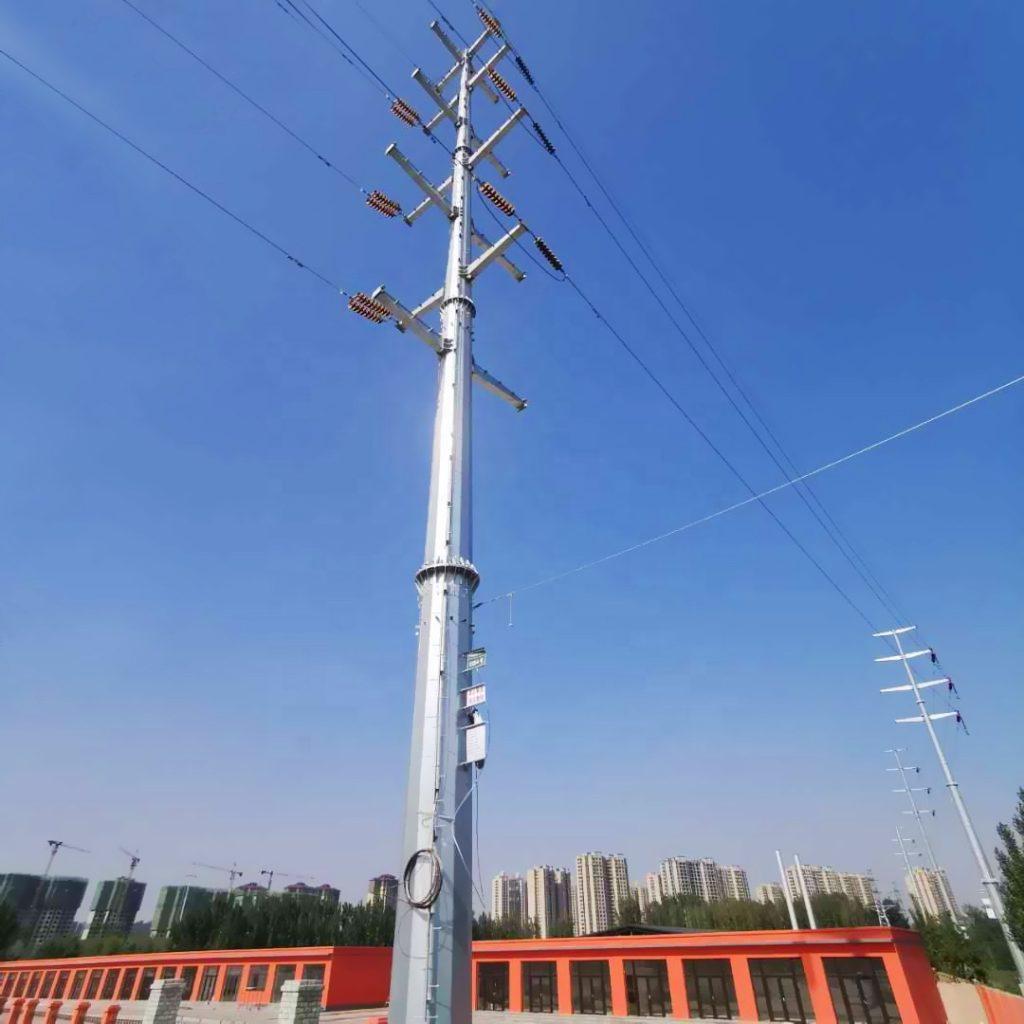
It starts with the raw materials. Instead of standard steel or timber, these poles use a specialized alloy infused with trace elements that dramatically slow corrosion. Even when salt-laden winds and relentless humidity gnaw at the surface, the material forms a tenacious oxide layer that seals out deeper damage. This isn't a passive coating—it's a living barrier that regenerates whenever scratched or abraded, giving the pole a surprising ability to heal itself while withstanding decades of exposure.
The shape is just as intentional as the substance. A carefully tapered profile distributes wind loads evenly, preventing the violent oscillations that tear ordinary structures apart during storms. Inside, a network of internal ribs flexes almost imperceptibly, absorbing the shock of sudden gusts and flying debris. And where the pole meets the ground, a flared base with a textured collar locks into the soil, turning what could be a weak point into a foundational anchor that resists pull-out even when floodwaters soften the earth around it.
But the real genius lies in the details that go unnoticed. Every weld is cryogenically treated to eliminate micro-fractures that would otherwise spread under temperature swings. A hydrophobic nano-coating on the upper sections sheds ice before it can accumulate, while a subtle copper braid woven into the core diverts lightning harmlessly into the ground. These aren't bullet points on a spec sheet—they're quiet engineering decisions that mean the pole isn't just standing, but thriving, in places where lesser structures wouldn't last a season.
From Design to Deployment: A Look at Customization Options
Every project starts with a vision, but translating that into a functional product often hinges on how much control you have over the finer details. From adjusting layout structures and typography to integrating proprietary algorithms, the design phase is where most customization decisions take shape. Rather than forcing teams into rigid templates, modern tools now offer granular controls that let developers and designers inject their own logic and aesthetic preferences without starting from scratch.
As you move toward deployment, the ability to tailor infrastructure, scaling rules, and environment variables becomes just as critical as the front-end tweaks. Customization here means choosing how and where your application runs—whether it's containerized for a specific cloud provider, configured with particular CI/CD pipelines, or set up to auto-scale based on unique traffic patterns. These options ensure the final product doesn't just look the part, but performs exactly the way your users expect.
Ultimately, the line between design and deployment is blurring thanks to platforms that treat the entire lifecycle as a continuous, customizable workflow. Having the freedom to define your own component libraries, data models, and delivery methods means you can iterate faster and respond to real-world feedback without being boxed in by preset conventions. This end-to-end flexibility is what separates a generic solution from one that genuinely reflects your team's vision and technical requirements.
Cost-Efficiency Over the Long Haul: A Lifecycle Analysis
Upfront price tags rarely tell the whole story. A lifecycle analysis peels back the layers, accounting for everything from maintenance and repairs to energy consumption and eventual disposal. It’s not uncommon to find that a product with a heftier initial cost ends up being the thriftiest choice once those hidden long-term expenses are tallied against a cheaper alternative that steadily drains resources over time.
Consider appliances, for instance. An energy‑efficient model might sit in a higher price bracket, yet the monthly utility savings alone can offset that premium within a few years. Factor in that well‑built equipment often demands fewer service calls and replacement parts stay available for longer, and the financial logic becomes hard to dispute. The real eye‑opener is how infrequently businesses and homeowners actually track these cumulative costs, letting short‑term thinking overshadow what a lifecycle perspective would plainly reveal.
Comparing Materials: When Tubular Steel Outperforms Traditional Options
In load-bearing scenarios where weight reduction is critical, tubular steel often leaves solid bars and beams in the dust. The hollow cross-section delivers an impressive strength-to-weight ratio, making it a go-to for structural frameworks, automotive roll cages, and even bicycle frames. By distributing material away from the central axis, it resists bending and torsion far more efficiently than a solid profile of equivalent mass. This means engineers can design lighter assemblies without compromising safety or durability—a balance that traditional options struggle to achieve.
Corrosion resistance is another arena where tubular steel shines, especially when alloyed or coated. Seamless tubes with galvanized or stainless finishes withstand harsh environments far better than angle iron or flat stock, which often trap moisture at overlapping joints. In outdoor structures, handrails, and marine applications, the smooth, continuous surface of tubing eliminates crevices where rust can take hold. Fewer maintenance cycles and longer service life tip the scales decisively in its favor when longevity matters.
Aesthetics and versatility further cement tubular steel's edge. Curved, bent, or welded into flowing forms, it opens design possibilities that rigid, angular alternatives simply can't match. Furniture makers, architects, and industrial designers lean on its clean lines and modern silhouette to create visually striking pieces that also perform. Whether it's an exposed frame in a minimalist office or a sculptural public installation, the material merges form and function without forcing compromises—something traditional options rarely pull off with such ease.
Global Use Cases: From Urban Grids to Remote Installations
In bustling urban centers, these systems slip into the background—tucked under a office tower or alongside a substation—soaking up excess solar during the day and feeding it back when evening demand spikes. They act like silent pressure valves, easing strain on aging transformers and preventing brownouts without anyone noticing. City planners are now weaving them into new developments as standard kit, not an afterthought, reshaping how neighborhoods weather heatwaves and grid faults.
Shift to a remote island or a mountaintop telecom outpost, and the script flips entirely. Here, reliability means surviving salt spray, dust storms, or weeks without maintenance. Paired with a handful of solar panels and a small wind turbine, the same technology runs a desalination pump, keeps vaccines cold, or lights a schoolhouse—no fuel trucks, no racket, just predictable power. In these far-flung corners, it’s less about trimming a utility bill and more about building a lifeline that wasn’t there before.
FAQ
Tubular steel poles offer exceptional strength-to-weight ratios, consistent material quality, and resistance to environmental stresses. Their hollow design reduces overall weight without compromising load-bearing capacity, making them easier to transport and install. Additionally, modern galvanization and coating techniques provide long-term corrosion protection, ensuring decades of service with minimal maintenance.
Compared to concrete, tubular steel poles are significantly lighter and less prone to cracking under dynamic loads like wind or seismic activity. Unlike wood, they resist rot, insect damage, and warping, and they maintain structural integrity over time without chemical treatments. Steel poles also have a smaller foundation footprint and can be recycled at end of life, making them a more sustainable option in many projects.
They are widely used in transmission and distribution lines for electricity, telecommunications towers, street lighting, traffic signal structures, and even in solar panel mounting systems. Their adaptability allows for various heights and custom configurations, so they appear in both urban and remote settings where dependability matters.
Absolutely. Manufacturers typically offer choices in diameter, wall thickness, steel grade, and length to match specific load requirements and environmental conditions. Additional features like base plates, handholes, davit arms, and specialized coatings can be integrated. Some providers also design poles with aesthetic elements to blend into architectural surroundings or reduce visual impact.
Installation is often faster and requires smaller equipment due to the lighter weight. Many poles are delivered as single-piece sections, reducing on-site assembly time. They can be direct-buried with concrete backfill or mounted on anchor bolts. The uniformity of steel also simplifies alignment and leveling during setup, lowering labor costs and potential errors.
Regular visual inspections for coating damage, especially near ground line and connections, are key. Touching up any scratches or abrasions in the galvanized layer prevents rust from advancing. Periodic cleaning to remove dirt and debris helps coatings perform better. In coastal or industrial areas with aggressive environments, maintenance cycles may need to be more frequent to catch early signs of corrosion.
Yes, they are engineered to handle high winds, ice loading, and even seismic events when properly designed. Their ductile properties allow them to flex under load without brittle failure, and advanced manufacturing ensures consistent performance. Field experience shows they reliably protect critical infrastructure during hurricanes, heavy snowstorms, and earthquakes when installed according to regional standards.
Start by defining the functional needs: the weight and type of equipment to be supported, the height required, and the environmental loads from wind, ice, or seismic activity. Consulting with a structural engineer or a manufacturer's technical team can help optimize the design. Factors like corrosion exposure, access for installation equipment, and future expansion plans should also influence the selection.
Conclusion
Tubular steel poles have become the go-to solution for modern power transmission and distribution, combining strength, adaptability, and long-term value in ways that traditional materials simply cannot match. Their engineered design handles everything from severe weather to seismic activity, making them a reliable backbone for grids in both urban centers and isolated regions. Custom manufacturing allows for precise height, thickness, and finish specifications, ensuring a perfect fit for any project—whether it’s a clean-lined city upgrade or a rugged rural installation. This flexibility doesn’t just simplify deployment; it also pares down maintenance demands, since the smooth, galvanized surfaces naturally resist corrosion and wear without constant intervention.
When you look beyond the upfront numbers, tubular steel poles reveal their true advantage through a full lifecycle lens: they demand fewer replacements, reduce outage risks, and often eliminate the need for frequent painting or repairs compared to wood or concrete alternatives. In side-by-side material assessments, their strength-to-weight ratio and dimensional consistency give them an edge, particularly in areas where compact footprints and visual appeal matter as much as electrical performance. From dense metropolitan networks to far-flung wind farms, the global track record speaks volumes—these poles adapt seamlessly to varied terrains and climates, quietly supporting reliable infrastructure without drawing attention to themselves.
Contact Us
Contact Person: antor khan
Email: [email protected]
Tel/WhatsApp: 8613863903569
Website: https://www.qdabtower.com/