

Ultrasonic Atomizing Nozzle Company Innovations for Precision Spraying
2026-08-22
Precision spraying has long battled clogged nozzles, uneven film thickness, and costly material waste. Siansonic is changing that equation with ultrasonic atomizing nozzle innovations that create ultra-fine, consistent droplets without the usual trade-offs. But what really separates their technology from conventional spray systems—and why are electronics, medical, and energy sectors suddenly paying close attention? In this post, we’ll unpack the engineering behind Siansonic and the real-world gains that could redefine your next coating or dispensing process.
Rethinking Spray Dynamics at the Micron Level
Once droplets shrink below a few tens of microns, the rules change. Surface tension stops behaving like a minor correction and starts dictating how a ligament thins, how a satellite droplet separates, and whether two colliding droplets merge or bounce. Evaporation becomes fast enough to alter droplet size mid-flight, and even small temperature differences across a spray plume can create local density gradients that nudge droplets off the path predicted by a simple ballistic model.
This has real consequences for anything that relies on fine mists. A coating that looks uniform at arm’s length may hide patchy deposition at the scale of individual droplets. Inhalable drug particles can end up in a different part of the airway if their initial size shifts by only a few microns. Rather than treating spray behaviour as a scaled-down version of larger flows, it makes more sense to treat the micron range as its own regime, with its own failure modes and its own measurement needs.
How Material Choices Shift Coating Uniformity
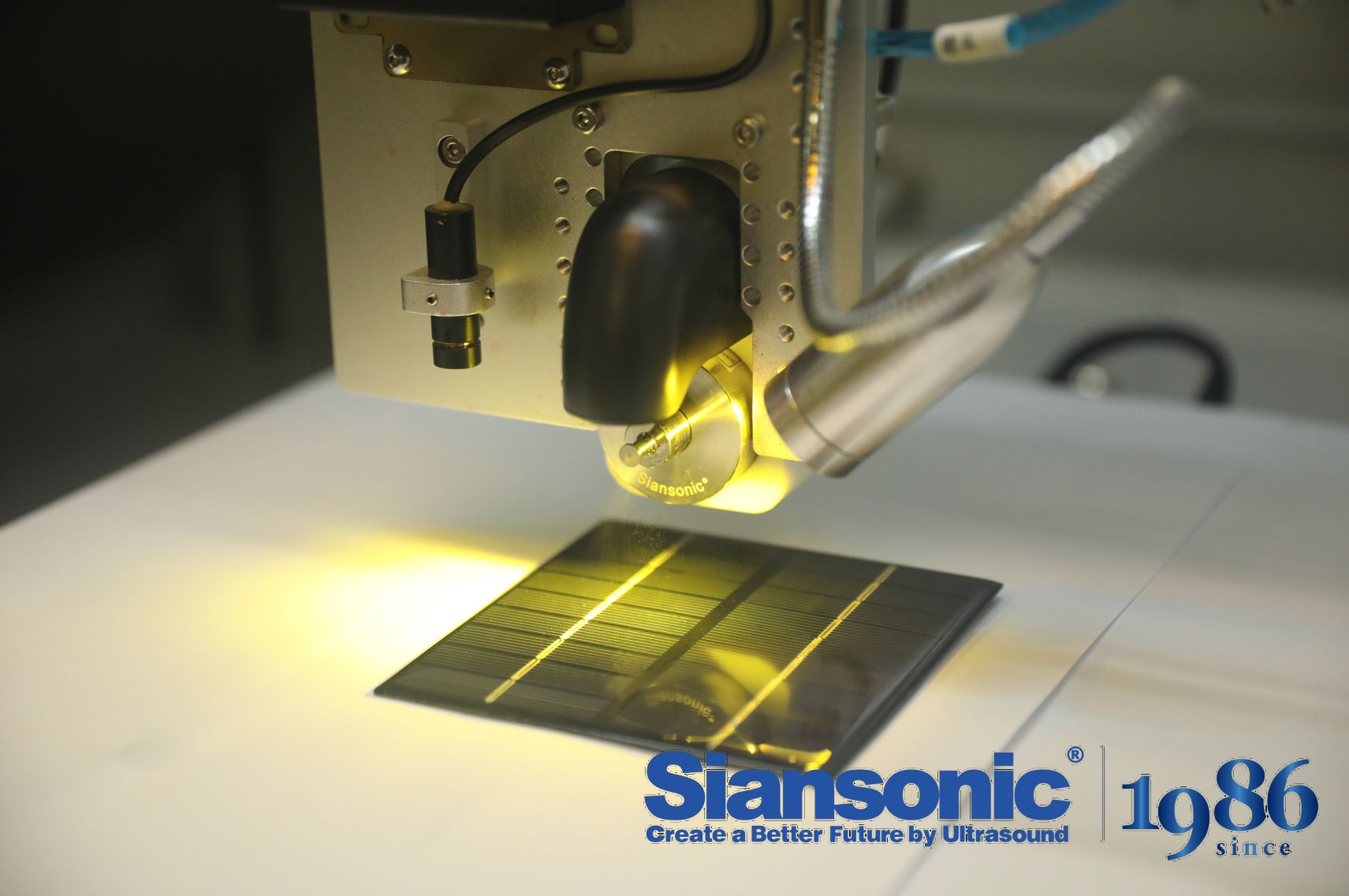
The base resin and solvent package dictate how a coating flows after application. A low-viscosity formulation may level out quickly but tends to sag on vertical surfaces or pull away from edges, leaving thinner regions. On the other hand, a high-viscosity system holds its shape better yet often preserves brush marks or spray mottling because it cannot relax its surface tension in time.
Particle size distribution in pigmented systems also plays a role. If the pigment or extender particles are not monodisperse, larger aggregates can settle or create local viscosity spikes during drying. These uneven pockets alter the film's shrinkage rate, producing a coating that looks uniform when wet but develops subtle waves or haze once cured.
Additives like surfactants and rheology modifiers further shift the balance. A poorly matched surfactant can lower surface tension unevenly across the wet film, triggering Benard cells or cratering. Choosing materials with compatible evaporation profiles and controlled surface tension gradients helps the liquid maintain a consistent thickness from center to edge.
The Quiet Push Toward Closed-Loop Flow Control
Closed-loop flow control rarely makes headlines, but its adoption has accelerated across facilities that need consistent throughput without constant manual intervention. Instead of relying on fixed valve positions or scheduled pump speeds, these systems measure actual flow with sensors, compare that reading to a setpoint, and adjust in near real time. The result is less drift, fewer rejects, and tighter process windows.
Part of the shift is simply economics. Raw materials and energy costs keep rising, so even a few percentage points of overshoot or leakage add up. Engineers are also discovering that modern controllers—compact, inexpensive, and capable of responding within milliseconds—remove many of the tuning headaches that once made closed-loop systems impractical for small lines. The challenge now is less about hardware and more about correctly mapping controller response to the quirks of each fluid path.
What makes this push quiet is the lack of a single flagship technology. It appears in the background: a dosing skid that holds blend ratios under load changes, a cooling loop that automatically trims valve opening as heat exchangers foul, a test bench that ramps flow profiles without operator input. Each installation is modest on its own, but collectively they indicate a shift toward treating flow as a dynamic variable rather than a static setting.
Designing Nozzles That Tolerate Viscous and Shear-Sensitive Fluids
The first hurdle with viscous fluids is pressure drop. A nozzle designed for thin inks will choke on a paste or gel unless the internal channel cross-section grows and the length shortens. We look for gradual tapers rather than abrupt steps; any sharp corner becomes a collection point where material stalls and cures or skins over. Maintaining a constant, gentle velocity profile through the orifice keeps the fluid moving without requiring excessive upstream pressure.
Shear-sensitive formulations demand a different set of constraints. Polymers, cell suspensions, and certain food products can unravel, lyse, or lose viscosity when forced through high-shear zones. Here the nozzle's interior must be polished to a near-mirror finish and shaped with wide approach angles. The goal is to let the fluid stretch instead of tear. A long, slowly converging cone works far better than a short, sharp restriction, even if the overall pressure requirement rises slightly.
Balancing both needs often leads to modular designs. Interchangeable tips made from low-surface-energy materials, such as PTFE or coated ceramics, reduce adhesion and make cleaning easier between batches. Thermal management also plays a role; warming a viscous fluid lowers its viscosity, but can also increase sensitivity to shear, so the nozzle geometry has to be tuned for the specific operating window. Running a quick computational shear map before cutting metal saves a lot of trial and error on the line.
Scaling Precision from Lab Benches to High-Mix Production Lines
Moving precision from a controlled lab setting into high-mix production is rarely a straight line. Lab benches offer isolation, stable temperatures, and a single operator who knows every quirk of the setup. Production floors, by contrast, juggle dozens of product variants, shift changes, and the constant pressure to keep lines moving. The real challenge isn't just hitting tight tolerances once—it's hitting them reliably across thousands of cycles, with different materials, fixtures, and human hands in the loop.
A practical approach starts with understanding which sources of variation actually matter. Instead of trying to lock down every variable, teams map the process from raw input to final inspection and identify the three or four factors that drive most of the drift. Then they build simple, visual controls around those factors: torque marks on fasteners, go/no-go gauges at each station, and quick daily checks that catch wear before it becomes scrap. This keeps precision from becoming a lab-only luxury and turns it into something the line itself can sustain.
Field Data That Redefines Maintenance Intervals
Maintenance schedules built on manufacturer averages rarely survive first contact with a real-world fleet. When oil analysis, vibration signatures, and thermal imaging feeds stream in from hundreds of operating units, the picture shifts quickly. A pump running light crude in a coastal refinery may show bearing wear patterns that demand inspection every 2,000 hours, while the identical model in a dusty inland terminal slips past 4,000 without a single alarm. These field logs don't just tweak the calendar—they tear it up and redraw it around actual stress cycles and failure precursors.
What makes field data transformative is its refusal to generalize. Corrosion rates from one pipeline segment, torque drift on a specific compressor skid, and the frequency of filter bypass events in a given climate all feed into a living maintenance model. One midstream operator found that replacing time-based seal swaps with condition triggers from historical leak-off readings added 18 months of service to critical assets without a single unplanned outage. That's not a theoretical gain; it's a direct consequence of letting equipment history override generic OEM guidelines.
The real shift happens when this data is continuously re-aggregated. A maintenance interval defined by field evidence gets tighter where failures cluster and relaxed where components consistently outlast predictions. Teams stop replacing parts on faith and start doing it on evidence. The result isn't just longer intervals—it's the end of the interval itself as a fixed number, replaced by a dynamic threshold that evolves with every shift and every logged anomaly.
FAQ
Unlike air-assisted nozzles that rely on high pressure to break liquid into droplets, our ultrasonic designs use high-frequency vibration at the nozzle tip. This creates a soft, low-velocity spray with droplets that are far more uniform in size. It also eliminates the need for compressed air, which cuts energy use and reduces overspray dramatically.
The new nozzle incorporates a multi-axis resonance control that adapts the spray pattern in real time based on surface geometry feedback. This means you get a consistent film thickness even on recessed areas or sharp edges, without having to manually adjust parameters between parts.
Electronics manufacturing, medical device coating, and solar cell production are some of the biggest beneficiaries. These sectors need extremely thin, repeatable coatings where a few microns of variation can scrap a batch. Our nozzles allow them to hit tight tolerances while running continuous lines.
Yes, our redesigned nozzle body uses a wider internal flow channel and a self-cleaning oscillation mode that prevents particle buildup at the tip. We have tested suspensions up to 30% solids and viscosities up to 150 cP without clogging, which traditional air-atomizing nozzles usually cannot handle.
We developed a modulated pulse-spray pattern that shortens the spray cycle and tightens the droplet velocity envelope. Combined with the naturally low forward velocity of ultrasonic atomization, this keeps nearly all droplets within the intended target area, even in open booths with modest exhaust airflow.
Each nozzle in our Pro series includes an integrated piezoelectric sensor that measures the resonance frequency shift during spraying. The system automatically adjusts the driving voltage to maintain a target median droplet size, so operators do not have to stop production to recalibrate when ambient temperature or fluid viscosity changes.
Typical operating life for the titanium horn tip is about 2,000 hours before replacement, but routine maintenance is mostly limited to a weekly flush with a mild solvent and a quick visual check of the O-ring seal. There are no moving parts aside from the vibrating horn, so mechanical wear is negligible compared to rotary atomizers.
Conclusion
Ultrasonic atomizing nozzle development has moved past simply generating fine droplets. Engineers now model droplet formation at the micron level, adjusting transducer frequency, amplitude, and orifice geometry to keep size distributions tight even as flow rates change. But droplet size alone doesn't guarantee coating quality. The nozzle body and tip materials—ranging from titanium alloys to fluoropolymer-coated stainless steel—alter surface energy and wear behavior, which directly affects how evenly a film deposits over complex geometries. For viscous or shear-sensitive fluids such as cell suspensions, protein solutions, or high-solid suspensions, the challenge shifts to preserving fluid integrity. New nozzle designs use wider internal channels and gentler acoustic coupling to prevent clogging and molecular damage while still delivering micron-level droplets.
The quiet rise of closed-loop flow control has turned these nozzles from passive components into active process instruments. Integrated sensors now track liquid flow, air pressure, and transducer load in real time, adjusting drive signals before drift can show up in the coating. This matters most when scaling from lab benchtop to high-mix production, where one nozzle may switch between aqueous reagents and solvent-based coatings within the same shift. Field data from semiconductor, medical device, and battery coating lines shows that maintenance intervals are being redefined: rather than replacing nozzles on fixed calendar schedules, operators now monitor resonance drift and tip erosion to schedule service only when needed. That change reduces downtime and prevents the gradual quality loss that fixed-interval replacement often misses. Together, these innovations point to precision spraying systems that are more adaptable, more tolerant of difficult fluids, and more accountable to real process data than previous generations.
Contact Us
Contact Person: Ivy Zhang
Email: [email protected]
Tel/WhatsApp: +86 1081502288
Website: https://www.siansonic.com/