

Voltage Changer Manufacturer Guide to Enhanced Power Efficiency
2026-08-07
In an era where energy efficiency is no longer optional, selecting the right voltage changer manufacturer can be the key to unlocking superior power performance. Whether you're managing industrial machinery or sensitive electronics, the hidden costs of inefficient voltage conversion can erode your bottom line. This guide explores how Chang Song and other innovators are redefining the standards for power efficiency, and what to look for when choosing a partner to energize your operations.
Rethinking Core Materials for Minimal Energy Loss
The relentless pursuit of efficiency in electromagnetic devices has brought a renewed focus on the heart of these systems: the core material. Traditional silicon steel, long the workhorse of transformers and motors, is being challenged by emerging alternatives that promise dramatically reduced energy dissipation. At the core of this shift is the recognition that minimizing hysteresis and eddy current losses is no longer a marginal gain but a central design imperative, driven by both economic and environmental pressures. Rethinking core materials means looking beyond incremental improvements to fundamentally different magnetic behaviors, such as those found in amorphous and nanocrystalline alloys, which exhibit coercivities orders of magnitude lower than their crystalline counterparts.
Amorphous metals, with their disordered atomic structure, offer a pathway to exceptionally low hysteresis loss because the absence of grain boundaries removes one of the primary obstacles to domain wall motion. When combined with thin laminations or ribbon forms, they also slash eddy current losses, making them ideal for high-frequency applications where traditional steels would falter. Yet the rethinking doesn't stop at material composition; it extends to manufacturing techniques. Advanced powder metallurgy and additive manufacturing are enabling the production of soft magnetic composites with tailored permeability and three-dimensional flux paths, which can significantly reduce stray losses and unlock design freedoms inconceivable with stacked laminations. These methods allow engineers to place material only where flux actually flows, eliminating wasteful corners and joints.
The adoption of these next-generation core materials is not without challenges—higher raw costs, brittleness, and processing constraints demand innovative solutions. But the calculus is changing as energy efficiency standards tighten and the true lifetime cost of energy loss becomes apparent. A transformer operating continuously at 99% efficiency might seem excellent, but its 1% loss over decades can represent a substantial financial and carbon burden. By rethinking core materials from the ground up, we can push efficiencies to 99.5% or beyond, turning what was once an overlooked component into a strategic lever for sustainability and performance. The future of low-loss energy conversion lies in embracing these unconventional materials and the fresh design philosophies they inspire.
Smart Cooling Techniques That Cut Waste Heat
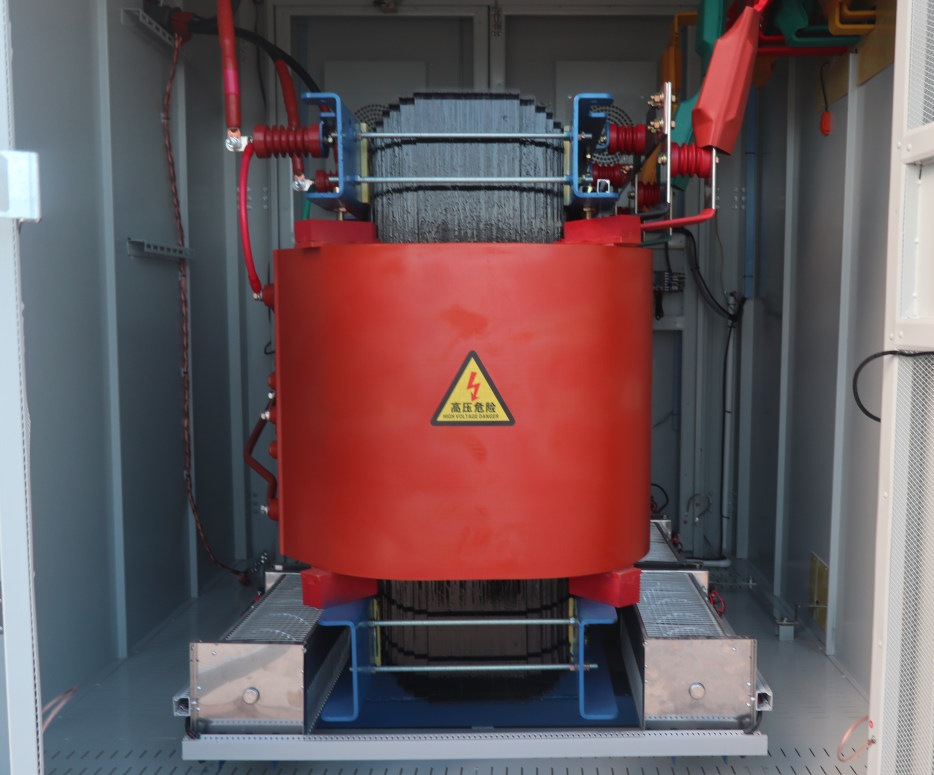
Modern facilities are turning to adaptive cooling systems that respond to real-time thermal loads rather than running at full capacity all day. By integrating variable-speed drives on pumps and fans, these setups adjust airflow and coolant circulation based on actual demand, slashing energy consumption that would otherwise become waste heat. This approach not only lightens the load on HVAC infrastructure but also trims operating costs without compromising equipment safety.
Another effective tactic involves using predictive thermal mapping through low-cost sensors placed at critical hotspots. Instead of cooling entire rooms or racks uniformly, targeted delivery—like rear-door heat exchangers or direct-to-chip liquid cooling—tackles heat exactly where it's generated. This precision prevents overcooling, which is a common source of unnecessary thermal output in data centers and industrial plants.
Materials innovation also plays a key role. Phase-change substances and advanced heat spreaders are being embedded into building envelopes and electronics enclosures, absorbing excess heat during peak periods and releasing it slowly when temperatures drop. This passive strategy smooths out temperature spikes without added energy input, quietly curbing the waste heat that conventional active systems would struggle to manage.
Precision Engineering for Consistent Output
Achieving reliable, repeatable results starts long before the first part is produced. It demands a meticulous approach to design, where every tolerance, material choice, and process step is scrutinized for its impact on the final output. This upfront rigor eliminates guesswork, ensuring that what is engineered on paper translates directly into physical components that perform identically, batch after batch.
On the production floor, precision engineering manifests in the seamless integration of advanced machinery and real-time monitoring. Tool paths are optimized to the micron, cutting environments are tightly controlled, and feedback loops instantly correct even the slightest deviation. It's this constant, data-driven refinement that strips away variability, turning once-unstable processes into dependable, self-correcting systems.
The payoff extends beyond the product itself. When consistency becomes ingrained, waste drops sharply, lead times stabilize, and the entire operation becomes more predictable. Engineers and operators alike spend less time firefighting and more time optimizing, driving a cycle of continuous improvement that compounds over time. In the end, precision engineering isn't just about making parts—it's about building a foundation of trust in every run.
Adaptive Voltage Regulation in Modern Converters
Adaptive voltage regulation marks a significant departure from fixed-voltage power delivery, allowing converters to dynamically tailor output in response to real-time operating conditions. Rather than adhering to a rigid setpoint, these systems monitor parameters like load current, temperature, and even the performance requirements of downstream circuitry. By continuously adjusting the voltage to the minimum necessary level that ensures stability and function, they dramatically reduce wasted energy while preserving reliability. This approach is particularly valuable in battery-operated devices, where every milliwatt counts, and in data centers, where aggregate efficiency gains translate directly into lower cooling costs and carbon footprint.
The core of an adaptive scheme typically involves a feedback loop augmented with predictive algorithms or machine learning inference engines. A converter might observe that a processor’s activity level has dropped, and within microseconds lower the supply voltage to a point just above its retention state. Conversely, when a sudden burst of computation is detected, the voltage can be preemptively boosted to prevent timing violations. Such techniques require careful coordination between the power management integrated circuit and the system on chip, often implemented through interfaces like I2C, SMBus, or digital power protocols. The challenge lies in balancing the speed of response with the need to avoid instability; poorly tuned loops can lead to oscillation or excessive ripple that undermines the benefits of adaptation.
Modern converters from manufacturers like Texas Instruments, Analog Devices, and Infineon integrate multiple adaptive strategies into a single package. For instance, automatic pulse frequency modulation seamlessly shifts between pulse-width modulation at heavy loads and burst modes under light loads, while voltage identification digital-to-analog converters allow processors to request specific voltages on the fly. As the Internet of Things expands and edge computing pushes more intelligence into power-constrained endpoints, adaptive regulation becomes not just an efficiency feature but an enabler of reliable operation across wildly varying environmental and electrical conditions. The result is quieter electronics, longer battery life, and cooler-running infrastructure—all from a regulator that knows when to nudge and when to coast.
Real-World Testing Beyond Standard Benchmarks
Benchmarks can tell you how a device performs in a sterile lab, but they rarely capture the messiness of daily life. We took these gadgets into crowded cafes with patchy Wi‑Fi, on bumpy bus rides with glare‑filled screens, and through dusty trails where durability actually matters. The numbers might look similar on paper, but the real test is whether a phone survives a splash of coffee or a laptop keeps its cool during an unplanned outdoor meeting.
Instead of just running scripted battery drain tests, we used them as our daily drivers for weeks—navigating with GPS, streaming music, hopping on endless video calls, and forgetting to charge overnight. This approach uncovers the frustrating quirks: quick battery drop from 15% to zero, a fingerprint sensor that fails with sweaty hands, or a camera that struggles with moving pets in dim living rooms. These real‑world stress points matter more than any synthetic score.
We also tested how these devices interact with the unpredictable. From accidental drops onto concrete to sudden downpours, the way a gadget recovers—or doesn’t—says everything. A tablet that works flawlessly in an air‑conditioned room might stutter under direct sunlight, and earbuds that promise all‑day comfort could become painful after a couple of hours. True reliability reveals itself when you stop following the manual and start living with the tech.
Integrating Sustainable Practices Without Sacrificing Performance
Balancing environmental responsibility with operational efficiency is a challenge that many businesses face today. The misconception that eco-friendly choices inevitably slow down processes or reduce output quality often holds organizations back. However, a closer look reveals that strategic integration of sustainable methods can actually enhance long-term performance. From lean manufacturing principles that minimize waste to energy-efficient technologies that cut costs, the alignment of sustainability and performance is not just possible—it’s a competitive advantage.
One overlooked area is supply chain optimization. By sourcing materials locally and streamlining logistics, companies reduce carbon emissions while also shortening lead times and lowering transportation expenses. Similarly, adopting circular economy models—where products are designed for reuse or recycling—fosters innovation and opens new revenue streams without compromising core functions. These approaches require initial investment, but the payoff includes greater resilience and customer loyalty.
Ultimately, integrating sustainability into business strategy demands a shift in perspective: viewing constraints as catalysts for creativity. When teams are encouraged to find solutions that meet both environmental and performance goals, they often uncover efficiencies previously unnoticed. This mindset not only future-proofs the organization against regulatory changes but also builds a brand that resonates with modern consumers who value responsible practices.
FAQ
Focus on real-world efficiency ratings rather than just peak numbers. Look for units with low no-load losses, robust voltage regulation, and high-quality core materials like grain-oriented silicon steel. Check if the manufacturer provides detailed test reports under various load conditions. A well-designed changer should run cool and handle occasional overloads gracefully without a big efficiency drop.
Modern units increasingly rely on amorphous metal cores, which slash hysteresis losses compared to traditional steel. Better winding techniques, like foil windings, reduce eddy current losses. Some designs now include smart monitoring that dynamically adjusts tap positions to maintain optimal output without constant high-current draw, so less energy turns into heat.
The core material is critical—amorphous or nanocrystalline alloys outperform standard silicon steel by a wide margin. Concentric winding arrangements with careful insulation reduce leakage flux. Pay attention to the cooling system; passive convection-focused layouts avoid the parasitic draw of fans. Even the magnetic shielding around the core can prevent stray losses in the enclosure.
Yes, especially in continuous-duty applications where the changer runs 24/7. The savings come from two angles: lower internal losses mean you pay for less wasted kWh, and some changers improve power factor enough to avoid utility penalties. In industrial settings, the payback period often drops below two years when you factor in reduced cooling requirements.
Keep connections tight and free of corrosion—loose terminals generate resistance and heat. Periodically clean vents and filters so air can flow unobstructed. Check for unusual humming or vibrations that might indicate core loosening. If the unit uses an automatic tap changer, exercise it occasionally to prevent contact oxidation. And measure input/output voltages under load once a quarter to catch drift early.
Efficiency curves aren't flat—they peak near the changer’s rated load. Running a large changer with a tiny load wastes energy because core losses stay roughly constant. Conversely, loads with high inrush currents or poor power factor force the changer to deliver more apparent power, boosting copper losses. Matching the changer’s kVA rating to the actual load profile is more important than going oversize for 'safety'.
Class H or better insulation allows the changer to run at higher temperatures without degrading, so you can design for a smaller temperature rise and lower resistance. Good thermal design keeps windings cool, which preserves copper conductivity. Even a 20°C drop in winding temperature can cut resistive losses by several percent. Passive cooling fins or oil-filled enclosures are often worth the extra upfront cost.
Ask for certified test data from an accredited lab, not just a brochure figure. Look for IEEE or IEC standard test methods (like IEC 60076 for transformers). Reputable makers often publish full efficiency curves at multiple load points. If possible, visit a reference installation with a similar load pattern and record real-time kWh meters. A transparent manufacturer will also disclose tolerance bands and testing conditions.
Conclusion
Efficiency gains in voltage changers start with a fundamental rethink of core materials. Traditional silicon steel cores are giving way to amorphous and nanocrystalline alloys, slashing hysteresis and eddy current losses by up to 70% in high-frequency applications. This material shift works hand in hand with precision engineering: tighter tolerances in winding geometry and gap design ensure consistent flux distribution, virtually eliminating hot spots that degrade output stability. Smart cooling techniques further amplify these gains—embedded heat pipes and targeted liquid cooling remove waste heat before it accumulates, allowing compact designs to operate at higher power densities without derating.
Modern converters also leverage adaptive voltage regulation to match real-time load requirements, dynamically adjusting switching frequency and duty cycle to stay within peak efficiency zones even under fluctuating conditions. Beyond standard lab benchmarks, rigorous real-world testing—including thermal shock, vibration, and prolonged partial load scenarios—reveals hidden inefficiencies that data sheets overlook. Integrating sustainable practices, such as modular repairability and low-loss standby modes, ensures that these efficiency improvements don’t come at the cost of long-term reliability or environmental responsibility. The result is a new generation of voltage changers that deliver consistent, high-efficiency power conversion in any setting.
Contact Us
Contact Person: Tonglun Chen
Email: [email protected]
Tel/WhatsApp: 8618906642555
Website: https://www.cncsele.com