

Walk-In Freezer Supplier Questions You Should Ask Before Buying
2026-11-26
Buying a walk-in freezer is one of those decisions that quietly punishes you for skipping the fine print. Ask a supplier the right questions, though, and weaknesses in construction, warranty, and temperature performance become hard to hide. Below, we break down the questions that matter before you sign anything—drawing on the standards ART applies to every project.
How Long Will Replacement Parts Actually Be Available?
The honest answer depends less on the warranty card and more on how the manufacturer handles its supply chain after a product stops rolling off the line. Some brands keep a quiet stock of critical modules for seven to ten years, while others clear the warehouse within months and leave owners to fend for themselves. That gap between promised support and actual shelf stock is where the real availability story begins.
For popular models, third-party suppliers, salvage yards, and refurbishing shops often fill the void long after the original maker bows out. The catch is that wear items like gaskets, belts, and control boards disappear first, so a machine with a healthy aftermarket for cosmetic parts may still be one failed sensor away from the scrap heap. Lesser-known brands and budget electronics tend to have the shortest tail because there was never much spare inventory to begin with.
The practical move is to check parts diagrams and stock status before you commit to a long-term repair, not after the product breaks. Buying a spare pump, seal kit, or display assembly while it is still cheap and available can add several years of realistic service life. Community repair forums and independent shops can also point you toward cross-compatible parts that never show up in official catalogs.
What Their Standard Warranty Leaves Out Until You Ask
Most standard warranties quietly narrow their coverage to defects in materials and workmanship, which leaves out ordinary fatigue items like seals, filters, hoses, hinges, and even battery clips. The manufacturer won't mention that some of these parts fall under unlisted wear-and-tear exclusions until you call about a recurrence. A short conversation can turn a declined claim into a one-time goodwill repair, but only if you ask whether the part is really excluded or just not covered by default.
Labor and shipping tend to disappear from the written promise, too. You might get a replacement component approved, only to find you are still paying for the bench time or two-way freight. Pushing for a local authorized service center—or asking if they can bill the brand directly—sometimes gets those hidden costs removed, especially when the failure is clearly not your fault.
The timing gap is just as common. A defect that starts before the warranty expires but becomes obvious a week later is often rejected based on the date alone. Having a photo, email, or service note from the earlier symptom can reopen the case. Ask them to log the issue before the deadline, and request a reconsideration tied to the original reporting date rather than the final breakdown date.
Why Refrigeration Sizing Should Come Before Any Price Talk
A refrigeration quote only means something when everyone is looking at the same load. Before talking dollars, you need to know the box dimensions, insulation thickness, ambient conditions, and how often the door actually gets opened. Those details change the required capacity far more than a rough square-foot estimate ever will.
Skipping that step leads to equipment that either runs constantly or short-cycles its way into early failure. Once the sizing is settled, price comparisons become honest because each vendor is quoting a unit that can actually hold the target temperature instead of guessing at a cheaper number.
Who Handles the Final Inspection After Installation Falls Behind
When an installation slips past its scheduled window, the final inspection is rarely a single person's call. The project manager usually steps in first to coordinate between the install crew and the quality lead, but the actual sign-off depends heavily on what the contract says. Some scopes, especially fire protection, electrical, or structural work, require an independent third-party inspector. If the crew is still finishing punch-list items, the inspection may be split into smaller hold points rather than one final walkthrough at the end.
On most job sites, the site superintendent or construction manager carries the practical responsibility. They decide which areas can be checked early and which must wait until the remaining work is closed out. A common sequence is for the installation foreman to do a self-check first, followed by a review from the general contractor's quality control person. When the owner or the architect has concerns about the delay, the owner's representative may bring in an outside inspection agency to avoid any conflict of interest.
Delays can also blur the line around who triggers the final inspection. Contracts often state that the owner or owner's representative arranges acceptance after installation is complete, but when the schedule has shifted, the meaning of complete gets fuzzy. In those cases, it helps to record in the change order or progress meeting notes exactly who is responsible for notifying the inspector and who pays for rework if a failed check adds more time. Without that clarity, the last phase of the project tends to become a back-and-forth over blame instead of a clean handoff.
The Panel Construction Detail That Separates Builders From Resellers
Real builders treat the back panel as part of the structure, not an afterthought. They cut a stopped groove into the top, bottom, and sides, then slide the panel into place before the case is assembled. The panel sits dry inside that channel, with just enough play to expand and contract without fighting the frame.
That approach takes longer and requires tight tolerances. A reseller will often skip the groove and staple a same-size panel straight onto the back edge. It is quicker to produce, cheaper to ship, and looks acceptable at first. The problem appears once the humidity swings: the panel moves, the staples lift, and the case starts to rack.
None of this is visible in a product photo, which is exactly why it works as a separator. The builders who take the extra step tend to also square their doors, level their reveals, and refuse to hide sloppy joinery behind trim. The reseller bets you will not notice until the guarantee has already run out.
What Delivery Day Looks Like When the Site Is Not Ready
On delivery day, when the site is not ready, the first warning sign is usually a demo link that will not open. Maybe the staging URL throws a 502, or an expired certificate makes the browser refuse the connection before the client even sees a page. The project lead ends up sharing a screen while searching Slack for server credentials, and the fifteen minutes set aside for a walkthrough are spent refreshing the tab and explaining that this is just an environment issue.
Once the link recovers, the focus shifts to content. The homepage banner still says Lorem ipsum, product photos were pulled from the old site, and the mobile menu covers half the screen when opened. The CMS account is either missing or lacks the right permissions, so the client cannot find a way to edit a single word. Nobody follows the agenda anymore; everyone is deciding what can be clicked, what has to be skipped, and which pages should stay hidden.
The second half of the day turns into trading lists. The client screenshots issues, the project manager logs them, and a developer patches whatever can be fixed quickly, until nobody in the room mentions launch again. The site may look passable by the end, but no one treats it as a successful handoff. A delivery day with an unready site does not disappear; it just pushes the cost into the first week after launch.
FAQ
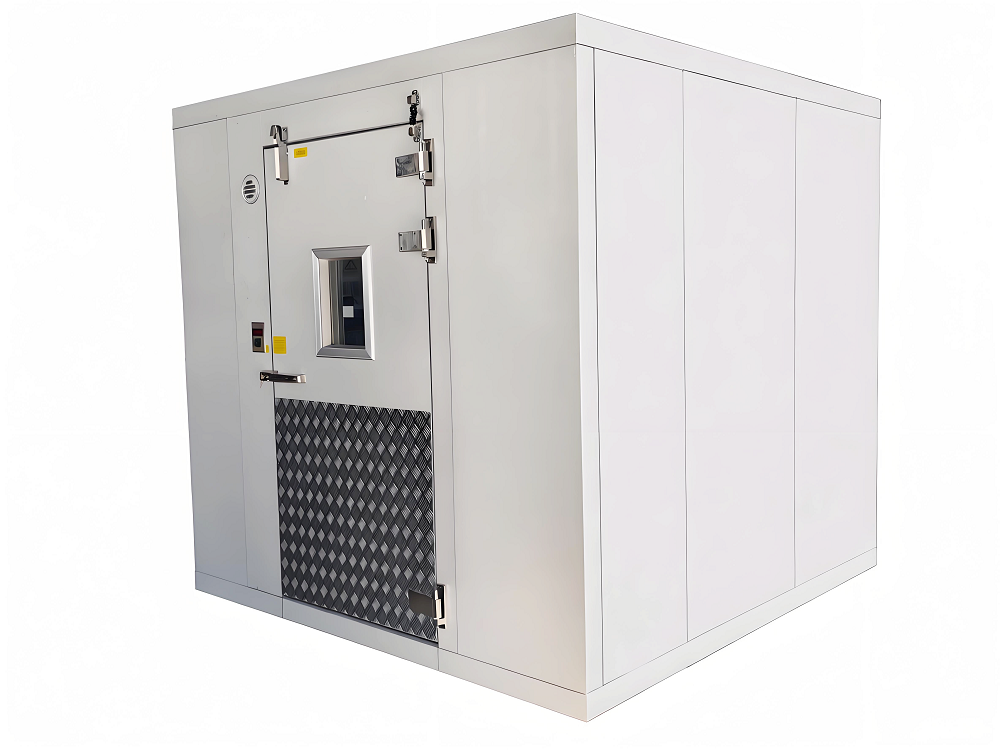
Panel thickness matters more than the number on a brochure. We typically use 4-inch foamed-in-place polyurethane panels rated around R-28, but we adjust the spec if the box will sit in direct sun or handle frequent door openings. Ask about thermal breaks too, because metal-to-metal joints will sweat and drive up runtime faster than a slight difference in panel R-value.
We can manage the whole install, but the division of labor should be spelled out before the deposit clears. Usually we handle panel assembly, door fit, flooring, and refrigeration piping. Your electrician runs the disconnect and power feed, and we do the final charge and controller setup. If you want a single crew responsible, ask for a turnkey quote.
A basic high/low temperature alarm with an audible buzzer is not enough if the box holds high-value stock. Ask for cloud-based monitoring with text or email alerts, door-ajar warnings, and a plan for after-hours response. We quote a cellular-based monitor as standard on new builds because it pays for itself after one avoided spoilage event.
Look at the split between panel warranty, door hardware, and refrigeration components. We offer five years on the panels, two years on the refrigeration system, and one year on labor for installation defects. If a compressor fails in month 20, the part may be covered but the service call and refrigerant generally are not, so we recommend a service agreement if you don't have your own HVAC tech.
The best reference is not a customer who installed one box five years ago and never called again. Ask for a place that runs multiple deliveries a day, has staff going in and out, and operates in your climate. We can connect you with a produce distributor and a meat processor, and you should ask them about floor wear, door seal life, and defrost cycles rather than just whether they like the brand.
Lead times have been uneven, especially for compressors and custom door sizes. We currently quote four to six weeks for standard panels, eight to ten weeks for a packaged refrigeration skid, and up to twelve weeks if you need a heavy-duty floor kit. Confirm whether the quoted delivery date starts after drawings are approved, because that is where projects usually lose two or three extra weeks.
It depends on slab insulation, drainage, and how heavy your pallet jacks will be. A floorless box can work if the slab is insulated and you don't mind a small step-over, but we often recommend an insulated floor kit for freezers, because a cold slab can heave or sweat and create a slipping hazard. For heavy loads, ask about reinforced aluminum floor panels and ramp options.
Delivery, lift gate or crane access, removing an old box, permits, and utility upgrades are the common surprises. Ask for a site survey before signing. We include a line item for rigging and a set allowance for permit fees, and we flag any electrical service gaps during the walkthrough so the first invoice doesn't balloon after the panels are already on order.
Conclusion
A walk-in freezer purchase usually looks straightforward until the equipment is already on site and the real questions surface. The first one to ask is how long replacement parts will realistically remain available, because a supplier can sell you a box today and quietly stop supporting its controls, hinges, or compressor components two years later. The standard warranty deserves the same scrutiny. Most agreements cover the compressor but leave out labor, refrigerant, door gaskets, and the cost of sending a technician, so those gaps should be named before you pay rather than after a failure. Refrigeration sizing belongs at the front of the conversation; if price leads the discussion, you may end up with a unit that short-cycles or runs without stopping.
Installation accountability matters just as much as the hardware. Ask who will perform the final inspection if the schedule slips and whether that person is directly employed by the supplier or merely a contractor finishing someone else's job. Panel construction is another place where builders and resellers separate themselves: look for details like cam-lock alignment, consistent insulation thickness, and clean tongue-and-groove seams instead of polished catalog images. Finally, find out what delivery looks like when your site is not ready. A supplier that can store the panels safely, coordinate a second date, and protect the floor from a rushed drop-off is signaling that they actually handle difficult jobs rather than just processing orders.
Contact Us
Contact Person: Ellen
Email: [email protected]
Tel/WhatsApp: +86-535-2229725
Website: https://www.artrefrigeration.com/