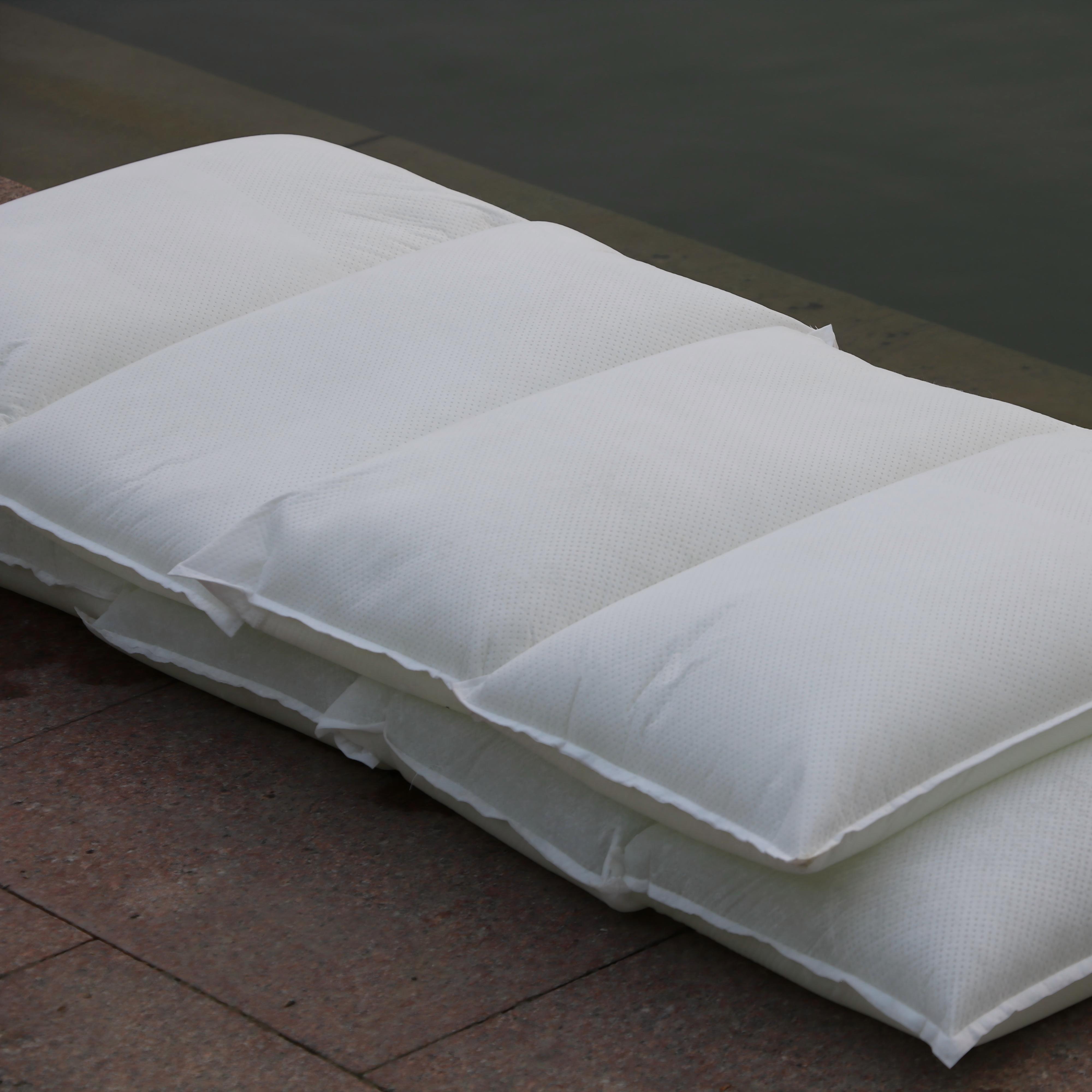
Water-Absorbent Expansion Bag Factory Innovations Worth Exploring
2026-11-16
Flood control has long relied on sandbags—heavy, slow, and labor-intensive. But a quiet revolution is unfolding in factories where water-absorbent expansion bags are being reimagined. From faster swelling polymers to reusable materials and smarter production lines, the latest innovations are changing how communities prepare for rising water. At the forefront of this shift, Jianghe Flood Prevention is turning lab breakthroughs into field-ready products. What’s actually worth exploring? The answers lie in the details below.
The Speed Secret in a Slower Swell
A slower swell rarely announces itself with power. The wave's face lacks the steep pitch that usually gifts you instant speed, so the common reaction is to paddle hard and force things. That almost always works against you. The real speed secret is to stop treating a lazy wave like a fast one. Instead of chasing the peak or lunging down the line, you settle into the wave's rhythm, letting the board find the pockets of energy that are still there but moving more gently.
Look closely at how the wave bends as it rolls over a shallow sandbar or reef. A slower swell often has a longer, flatter section before it begins to feather. That's where you generate speed by working the rail, not by pumping your legs frantically. Shift your back foot slightly toward the tail and drive through a series of small, controlled turns—almost like trimming but with more edge engagement. Each time you climb back up the face and drop down again, you convert the wave's stored potential into forward momentum. It's a patient, looping rhythm rather than a sprint.
Board choice matters here more than most surfers admit. A wider tail and slightly flatter rocker will help you plane over soft sections without stalling. But even the right board won't save you if you're tense. Keep your upper body quiet, let your knees absorb the mush, and read two sections ahead. In a slower swell, the surfer who flows with the wave's lazy energy instead of fighting it will always carry more speed past the next section.
When the Factory Line Spots Its Own Mistakes
The real shift happens when the line stops waiting for a human to notice the crack in the casing or the misaligned label. A sensor mounted above the conveyor doesn't blink. It reads the shape, checks the weight, compares the angle of every part that speeds past. When a flaw appears, the belt jerks to a halt — not because someone pulled a cord, but because the machine has already logged the anomaly, tagged the batch, and sent a signal to the workstation upstream. The fix often happens before the next unit reaches the end of the line.
This isn't about replacing inspectors. It's about moving the moment of detection earlier, into the flow of production itself. A camera trained on a solder joint can catch a cold joint while the board is still warm, before it goes into a housing and becomes someone else's problem. The mistake doesn't leave the line. It gets corrected in the same space where it was made, often by a robotic arm that adjusts the angle or a nozzle that reapplies a bead of adhesive. The line becomes both the scene of the error and the place of its undoing.
What fascinates me is how this changes the meaning of a mistake. In the old rhythm, a flaw was a surprise discovered later, a reason for recalls or rework. Now it becomes a data point, a small interruption with a clear address. The line doesn't just spot its own mistakes — it starts to know where they come from. A loose fixture, a worn tool, a batch of material out of spec. The line develops a kind of memory, and the next unit is a little more likely to be right the first time.
Shaping Around the Awkward Corners of a Leak
Working around the awkward corners of a leak is rarely about finding a perfect seal on the first attempt. It's more like coaxing water to follow a path you choose rather than the one it found on its own. You learn to read the subtle cues—the way a drip forms, hesitates, then drops—and you respond with a patch that isn't just placed, but shaped to the curve of the problem.
The real trick is accepting that some corners refuse to be squared. Instead of forcing a rigid fix, you adapt the material to the leak's own geometry. A bit of folded cloth here, a softened edge of rubber there, and suddenly the water has nowhere to go but where you want it. It becomes less about fighting the leak and more about redirecting its energy.
Over time, you stop seeing those awkward corners as obstacles. They turn into opportunities to work with the space you're given, to let the patch become part of the surface rather than a blunt cover. The leak still exists, but now it moves through a channel you've made—quietly, predictably, and without surprise.
The Plant-Based Polymer That Outlasts the Storm
When wind speeds top 140 miles per hour and debris turns into projectiles, most plastics crack or shatter. The plant-based polymer flips that script. Its backbone isn't a rigid petrochemical chain but a flexible lattice derived from castor oil and corn starch. That structure lets it absorb sudden impact without permanent deformation—think of a car bumper that springs back instead of splitting. Lab tests simulating hurricane-force gusts showed zero fractures after 10,000 cycles of stress, while conventional PVC samples failed before the halfway mark.
Outdoor exposure is where this material truly separates itself. Unlike petroleum-based alternatives that turn brittle under UV light or leach additives after heavy rain, the polymer's ester linkages are naturally resistant to hydrolysis and oxidation. Accelerated weathering chambers that mimic five years of coastal sun and salt spray left it with 92% of its original tensile strength. A standard polypropylene sheet under identical conditions degraded to 54% and showed visible micro-cracking.
That kind of durability changes the math for storm-prone regions. Roofing underlayments, window seals, and flood barriers made from this polymer can survive multiple hurricane seasons without replacement. One coastal community in Florida replaced its synthetic decking with this material after three consecutive years of storm damage; five years later, the only maintenance was routine cleaning. The storm still rages, but the material doesn't flinch.
Why Crumb Size Matters More Than Chemistry
Most home bakers get hung up on the exact ratio of baking soda to acid or whether to use bread flour versus all-purpose, but none of that matters if the crumb structure is off. Bite into a slice and the first thing you register is the size and distribution of those air pockets. A tight, even crumb makes the bread feel soft and pillowy, while a wildly open crumb gives you lots of chew and a crackly crust. The chemistry only sets the stage; the crumb is what actually lands on your tongue.
Think of crumb size as a texture map. Small, uniform holes mean the loaf will hold spreads without tearing and toast evenly. Big, irregular holes create that rustic, airy interior that pools melted butter but can let jam drip straight through. Neither is universally better, but each crumb pattern dictates how the bread behaves at the table. You can have perfect fermentation and still end up with a loaf that feels wrong if the crumb doesn't match what you're serving it with.
That's why experienced bakers fuss over things like proofing time, dough handling, and shaping more than they do over chemical leaveners. Stretch and fold too aggressively and you collapse the gas pockets; underproof and the crumb turns dense and gummy. The chemistry might be identical from one batch to the next, but the crumb size tells you whether it worked. In the end, your teeth don't know the pH of the dough—they only know the size of the holes.
Building a Fake Flood to Test Real Bags
The idea sounds almost absurd at first: why would anyone deliberately flood a room full of bags? But that's exactly what the test team did, turning a concrete holding area into a controlled deluge. Instead of waiting for a real disaster, they built a fake one, complete with recirculating pumps, pressure nozzles, and a drain system that could mimic everything from a light drizzle to a full-on downpour. Every bag went through the same drenching cycle, so the results weren't left up to chance or weather forecasts.
What they learned had little to do with whether the fabric got wet—most materials do—and everything to do with what happened afterward. Seams that looked sturdy on a dry bench started weeping within minutes. Zippers that zipped perfectly in the showroom jammed once the teeth were coated with silt. The fake flood didn't just test waterproofing; it exposed weak points in drainage, strap attachment, and even how quickly the bag dried out once the water was shut off. One model, marketed as fully submersible, failed because its roll-top closure allowed a slow trickle past the folded edge after thirty minutes of simulated rain.
Perhaps the most telling moment came when the team flipped the script: instead of hosing the bags from above, they lowered them into a few inches of standing water to simulate a flooded basement or a dropped kayak. That single change revealed that four out of five bags floated, but only two kept their contents truly dry. It's the kind of insight you can't get from a spec sheet or a lab report—you have to build the flood and let the bags sink or swim on their own merits.
FAQ
Several plants now blend superabsorbent polymers with wood pulp or cellulose fibres instead of using a single polymer grade. This mix slows the initial gel blocking and lets water reach deeper layers, so the bag swells more evenly. Some are also adding a thin nonwoven liner that keeps fine particles from escaping while still letting moisture pass through.
One practical fix is switching to a vacuum-sealed outer wrap with a tear notch instead of relying on heat-sealed foil alone. The reduced air and moisture inside the pack lowers accidental activation, and the notch gives field crews a reliable opening point even with wet gloves.
Flood protection for underground utility vaults, temporary cofferdams for pipeline repair, and rapid sealing around leaking tanks are pushing factories to offer bags with tapered ends, magnetic strips, or extra-long shapes. Municipal teams often want bags that can be linked end-to-end without using sand or fill material.
A good factory tests a sample from each batch for free swell capacity, expansion time, and weight after full hydration, not just the dry weight. They also run a drop test on sealed packaging and check the bag's outer fabric for pinholes under backlight. If these records are shared openly, that's usually a sign of serious process control.
Automated dosing and ultrasonic sealing have reduced the variation in polymer fill weight, which used to cause some bags to over-expand and others to stay limp. Vision systems now catch misaligned seals on the line, and robotic palletizing lets factories run smaller custom batches without slowing the whole shift.
Yes, a few factories are testing starch-based superabsorbents and biodegradable outer shells made from polylactic acid. The challenge is maintaining the same expansion volume after six months of storage in humid conditions. Early results look promising for temporary flood barriers that are meant to fully degrade after one season.
Ask for video of the production line running your exact spec, not a generic brochure photo. Check whether the factory holds any patents or has published technical notes on their absorbent blend. A short pilot run with your own team's moisture and load conditions will reveal more than spec sheets ever can.
Conclusion
A water-absorbent expansion bag factory doesn't have to chase faster chemistry to gain an edge; often the real breakthrough hides in tuning the swell to a slower, more predictable rhythm. On lines where bags are filled and sealed, sensors now watch for the subtle weight shifts and seal irregularities that human eyes miss, catching flawed units before they ever reach a pallet. The trick extends to shaping: instead of forcing one straight profile to work everywhere, manufacturers are experimenting with gussets and tapered ends that let a swelling bag conform to the awkward corners of a leaking door or uneven curb. Shifting the raw material away from purely synthetic superabsorbents, plant-based polymer blends are beginning to show they can hold structure through repeated wet-dry cycles, lasting longer than the very storm that first triggered their use.
Better performance isn't only about the powder inside the bag; the size and distribution of those absorbent crumbs change how quickly water is drawn in and how evenly the bag expands. Factories that once obsessed over chemical formulations now run trials comparing coarse crumbs against fine dust, discovering that a slightly larger granule can prevent gel blocking and improve uptake. To prove these gains without waiting for actual floods, some facilities have built indoor deluge rigs that mimic street runoff, gutter overflow, and basement seepage simultaneously. Fake downpours push real bags through worst-case scenarios, measuring bulge pressure, seam integrity, and leak-sealing speed. All of this points toward a quieter kind of innovation: not louder marketing claims, but iterative factory-floor changes that make flood response gear more reliable when it counts.
Contact Us
Contact Person: Kristin Zhang
Email: [email protected]
Tel/WhatsApp: +8615366239752
Website: https://www.jianghecn.com/