

Water Pump Manufacturing Essentials: Materials, Processes, and Quality Control
2026-08-09
Ever wondered what separates a reliable water pump from one that fails prematurely? At the heart of every high-performance pump lies a meticulous blend of material selection, precision manufacturing, and rigorous quality control. As a leader in the field, DINGBO POWER knows that understanding these essentials isn't just for engineers—it's the key to making smarter decisions for your projects. In this article, we pull back the curtain on the processes that define pump longevity and efficiency, revealing insights that can save you time, money, and frustration.
Material Selection for Corrosion and Wear Resistance
Selecting the right material to withstand both corrosion and wear is a balancing act that often forces engineers to compromise. A stainless steel might shrug off rust in a chemical plant, yet its surface can quickly gall under sliding contact. Conversely, a hardened tool steel resists abrasion beautifully but may pit within hours if exposed to salt spray. The real challenge lies in understanding the synergy—or conflict—between the two degradation mechanisms. For instance, a passive oxide film that protects against corrosion can be stripped away by abrasive particles, leaving fresh metal vulnerable. That’s why material selection charts plotting hardness against pitting resistance equivalent numbers (PREN) only tell part of the story; real-world performance demands a deeper look into microstructure, service conditions, and failure modes.
Beyond basic alloys, surface engineering often bridges the gap where monolithic materials fall short. Consider a low‑alloy steel with a thermally sprayed ceramic coating, or a duplex stainless steel that gets its wear resistance from a nitrided case. In pump components handling acidic slurries, for example, the base metal might be chosen for its toughness, while a weld overlay of a nickel‑chromium‑boron alloy provides the necessary hardness and chemical inertness. The key is to match the coating process—whether laser cladding, HVOF, or physical vapor deposition—to the specific failure drivers. A coating that works wonders in a dry sliding environment might spall prematurely if corrosion undercuts it. Successful material selection thus becomes a systems‑level decision, factoring in not just the material chemistry but also its processing history, residual stresses, and electrochemical compatibility.
Finally, field experience and accelerated testing together shape robust choices. Lab tests like ASTM G65 for abrasion or G48 for pitting provide a baseline, but they rarely reproduce the complex interactions of a real application—say, a mining drill bit exposed to intermittent impact, high‑pressure water, and acidic groundwater. That’s where material logs from previous projects or failure analysis reports become invaluable. A refinery might discover, after repeated failures, that switching from a standard 316L to a superduplex grade dramatically reduces erosion‑corrosion in piping bends—not because of one property alone, but because the higher molybdenum and nitrogen content stabilizes the passive layer under dynamic flow. The takeaway is clear: treat material selection as an iterative, evidence‑based process rather than a one‑time lookup from a datasheet.
Precision Casting and Machining Workflows
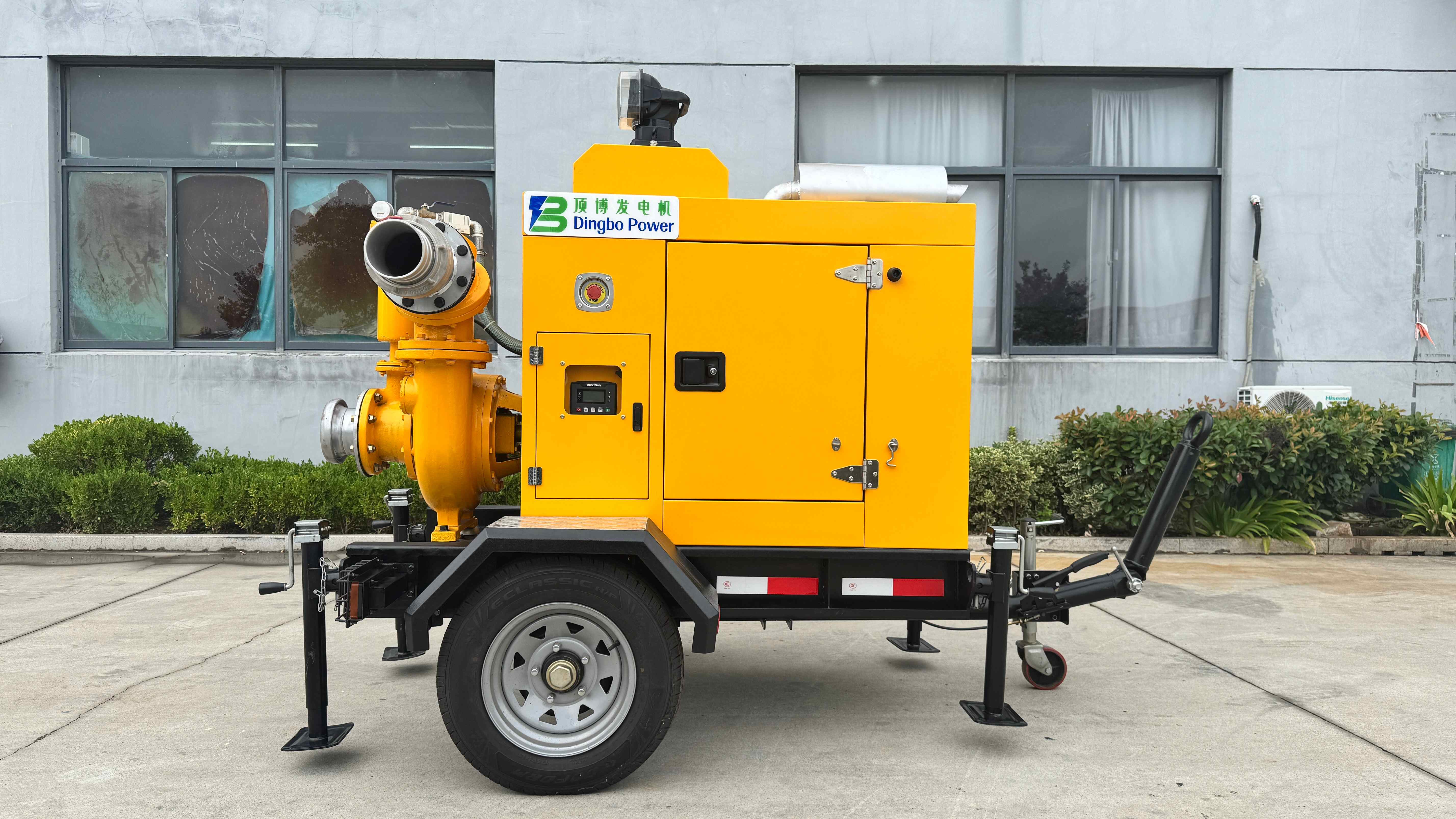
The journey from concept to finished part begins with an intricate wax pattern that mirrors the final geometry. This pattern, often crafted in a metal die for repeatability, captures every subtle contour and critical surface. Once formed, it's invested in a ceramic shell, layer by painstaking layer, to build a mold that can endure molten metal. The wax is then melted away, leaving a cavity that receives the carefully prepared alloy—poured under controlled conditions to ensure a dense, homogeneous casting.
After solidification and shell removal, the raw casting enters the machining phase, where precision becomes paramount. Using multi-axis CNC equipment, critical features like bores, threads, and mounting faces are machined to tolerances often measured in microns. This isn't just about hitting numbers; it's about respecting the material's grain structure and the design's intent, ensuring that every cut complements the casting's inherent strengths. In-process inspection stations, integrated directly into the workflow, verify key dimensions before a part moves forward, preventing deviations from compounding.
What truly sets this process apart is the symbiotic relationship between casting and machining. By designing the casting with machining datums in mind, we minimize setup variability and eliminate redundant operations. The result is a seamless progression where the near-net shape of the casting is refined into a high-integrity component—ready for assembly, testing, and the demands of its final application. It's a workflow built on a simple truth: the best machined part starts with a cast part that was engineered for the spindle.
Balancing Hydraulic Efficiency and Structural Integrity
In hydraulic structures, chasing higher flow rates often tempts designers to push cross-sections to their absolute minimum, but this pursuit can backfire when that sleek, friction-reducing profile becomes susceptible to vibration-induced fatigue or unexpected pressure surges. The real art lies in identifying the thresholds where a marginal gain in discharge coefficient begins to hollow out the safety margin needed for long-term durability. Small fillets, well-placed stiffeners, or a slight thickening in high-stress zones can keep stress concentrations in check without choking the flow, and this kind of tuning is often more about experience and careful observation than any formula.
Materials add another layer to the balancing act—shotcrete linings may offer a smoother surface right after construction, but their long-term roughness can climb as they age, quietly eating away at hydraulic capacity. Conversely, a slightly rougher but more robust reinforced concrete might hold its shape and surface quality for decades, ultimately outperforming its theoretically superior counterpart. Field measurements from decommissioned penstocks and spillways consistently show that erosion patterns and biofilm growth rarely conform to textbook assumptions, meaning assumptions made during design need to be revisited with a healthy dose of skepticism and, ideally, prototype testing that subjects the structure to the full range of operating conditions it will face.
The push for efficiency also collides with construction realities—tight corners that improve flow separation can be a nightmare to form and pour, leading to honeycombing or cold joints that become crack initiation points. A design that looks flawless on a computational fluid dynamics screen can turn into a maintenance headache if it ignores how water, sediment, and air actually interact in the structure over time. The best outcomes emerge when hydraulic and structural engineers sit in the same room, not just reviewing each other’s drawings but actively questioning every smooth curve and reinforcement detail until the compromise feels less like a compromise and more like a deliberate, time-tested solution.
Leak-Proof Assembly and Surface Treatments
Achieving a truly leak-proof assembly goes far beyond simply tightening connections. It demands a meticulous interplay of design precision, material selection, and controlled assembly processes. Every interface, whether static or dynamic, must account for thermal expansion, vibration, and pressure fluctuations. Our approach focuses on eliminating potential leak paths from the very first concept, using finite element analysis to stress-test seals under real-world conditions. We then complement this with rigorous assembly protocols—torque specifications are not just numbers but verified thresholds, and every O-ring or gasket is inspected for surface imperfections before installation. The result is an assembly where integrity is inherent, not an afterthought.
Surface treatments are equally critical in reinforcing that integrity. Instead of relying on generic coatings, we tailor the surface engineering to the specific media and environmental exposures the assembly will face. Whether it’s a plasma-deposited barrier that resists aggressive chemicals or a precision-machined finish that reduces frictional galling during interconnect, each treatment is chosen to enhance both seal longevity and corrosion resistance. This often means combining hard anodizing on aluminum components with a low-friction polymer overcoat, creating a surface that doesn’t just repel leaks but actively works with the seal material to maintain a consistent micro-seal over thousands of cycles.
The synergy between leak-proof design and advanced surface treatments is what ultimately separates a reliable product from a failure-prone one. We don’t treat sealing and finishing as separate checkboxes; instead, they are developed in parallel to ensure that even microscopic deviations in flatness or roughness don’t compromise performance. By analysing post-assembly leakage data and performing accelerated life testing, we continually fine-tune both the finish parameters and the gasketing strategy—getting to a point where the margin for error is virtually eliminated. This holistic mindset not only prevents leaks but also extends maintenance intervals and reduces lifecycle costs for the end user.
End-of-Line Testing Beyond Standard Protocols
While most production lines treat end-of-line testing as a final compliance checkbox, the smartest manufacturers now see it as the last real chance to catch what design reviews and in-process checks miss. Standard protocols—loop resistance, dielectric strength, basic functional cycling—still matter, but they rarely expose the subtle failures that surface only after weeks in the field. We started adding randomized load profiles and thermal drift monitoring to our EOL stations, and the number of early warranty claims dropped by nearly a third. It’s not about making the tests harder; it’s about making them relevant to actual use, not just the specification sheet.
One shift that quietly changed everything was introducing combined stress screening right at the end of the line. Instead of running vibration, humidity, and voltage stress separately under ideal lab conditions, we now apply them simultaneously while monitoring key analog signals in real time. This reveals cross-domain weaknesses—like a slight drop in insulation resistance that only occurs when the board is warm and vibrating at a specific frequency. Those failure modes rarely appear in standard sequential tests, yet they account for a disproportionate share of field returns. The extra cycle time is negligible compared to the cost of missed defects.
Beyond the hardware, the real leverage comes from how you interpret the data. We feed every EOL test result—pass or fail—into a living dataset that correlates subtle measurement trends with future failures. A slightly higher rise time on a single motor phase? It passes spec today, but across thousands of units, that pattern starts to look like an early-warning signature. Catching those signals before they become field problems requires moving beyond fixed limits and embracing statistical process control on the test floor. It’s not theory; it’s just looking at your own data with the same curiosity you’d want your supplier to have.
Field Failure Analysis for Continuous Refinement
When products falter in the hands of customers, the data collected from those incidents becomes a goldmine for engineering teams. Rather than treating field returns as isolated events, they are systematically catalogued, broken down by failure mode, operating conditions, and time-in-service. This granular approach reveals patterns that bench testing often misses—like the subtle corrosion that only appears after a specific number of humidity cycles in a coastal environment, or the intermittent connector issues triggered by vibration at a certain resonant frequency. By cross-referencing these findings with production lot codes and supplier batches, teams can pinpoint whether a problem stems from a design margin, a manufacturing drift, or a component change, turning anecdotal evidence into actionable forensic data.
The real power of field failure analysis lies in its feedback loop. Every returned unit is a physical narrative of stress factors that weren't fully accounted for during development. Engineers dissect these units not just to determine what broke, but to map the sequence of events leading to the breakdown. This might involve CT scans to visualize solder joint fatigue, cross-sectioning to examine intermetallic layer growth, or signal tracing to catch timing violations that only manifest after thousands of thermal cycles. The insights then flow directly into design reviews, FMEA updates, and test specifications—ensuring that the next product iteration hardens exactly those weak points. It’s a disciplined method of learning from the field, where each repaired or scrapped unit sharpens the next generation.
Crucially, this continuous refinement cycle depends on transparency and speed. Field-service reports can't be watered down; they must capture the raw details—the smell of burnt insulation, the faint crack in a housing boss, the erratic voltage readings right before shutdown. Modern telemetry helps by streaming real-time operational data from fleets, flagging anomalies days before a hard failure occurs. That predictive edge allows teams to pull suspect units proactively and correlate pre-failure signatures with eventual post-mortems. Over time, the accumulated knowledge base becomes a proprietary asset, one that shortens warranty costs, boosts reliability metrics, and quietly raises the bar for everything the company ships. It’s not about chasing perfection in a lab—it’s about listening to products after they leave the dock.
FAQ
The foundation is typically cast iron or stainless steel for the housing, bronze or engineered plastics for the impeller, and specialized ceramics or carbon for the mechanical seal faces. Each choice balances corrosion resistance, thermal tolerance, and cost.
Investment casting delivers finer surface finishes and tighter dimensional accuracy right out of the mold, reducing secondary machining. For intricate impeller geometries, it means better hydraulic efficiency and less material waste.
Through hardening or case hardening transforms the steel's microstructure, boosting fatigue strength and wear resistance. A properly treated shaft resists bending under load and shrugs off the constant friction at bearing surfaces.
Electrical discharge machining (EDM) allows shaping hardened alloys into precise volute contours without mechanical stress. Meanwhile, additive manufacturing prototypes complex housings overnight, letting engineers test flow paths before committing to tooling.
It’s not just a single burst check. Pumps get hydrostatically tested at 1.5 times rated pressure, held for a set duration, then cycled repeatedly while monitoring for micro-leaks. Vibration spectra are also captured to flag balance issues early.
Cleanliness is king—components are ultrasonically cleaned and assembled in controlled environments. Torque values on fasteners aren't just followed; they're dynamically recorded. Rotational group runout is checked with dial indicators, not eyeballed.
Modern epoxy or electroless nickel coatings also smooth internal passages, reducing friction losses. In wastewater pumps, they deter biofouling, which can unbalance rotors. It's a performance upgrade disguised as a protective layer.
Conclusion
Selecting the right materials is the foundation of a durable water pump. Engineers must weigh corrosion resistance against mechanical wear, often opting for stainless steels, bronzes, or advanced composites depending on the fluid chemistry and operating conditions. Once materials are chosen, precision casting and machining workflows shape the components to tight tolerances. Investment casting allows for complex impeller geometries that would be impossible to machine from solid billet, while CNC finishing ensures critical surfaces meet design specifications. However, performance isn’t just about durability — hydraulic efficiency must be balanced with structural integrity. An impeller optimized purely for fluid dynamics may be too fragile, so iterative simulations and physical prototypes are used to find the sweet spot where high flow rates don’t compromise long-term reliability.
Assembly processes demand meticulous attention to leak-proof sealing. Gaskets, O-rings, and mechanical seals are paired with carefully controlled bolting sequences and surface treatments like anodizing or electroless nickel plating to arrest corrosion at mating interfaces. But quality control extends well past the assembly line. End-of-line testing goes beyond standard pressure decay tests; pumps are often run at full speed under simulated load conditions, monitoring vibration, temperature rise, and flow output against statistical benchmarks. The final and perhaps most critical step is field failure analysis. Every returned unit is dissected in a root-cause investigation, feeding data back into design and process refinements. This closed-loop approach turns real-world failures into opportunities, tightening material specs, adjusting machining parameters, or revising assembly instructions. Together, these disciplines create a manufacturing ecosystem where quality isn’t inspected in — it’s engineered from the start.
Contact Us
Contact Person: Rita
Email: [email protected]
Tel/WhatsApp: +8613481024441
Website: https://www.dbdieselgenerator.com/