

Which White Masterbatch Is Best for Your Application?
2026-11-23
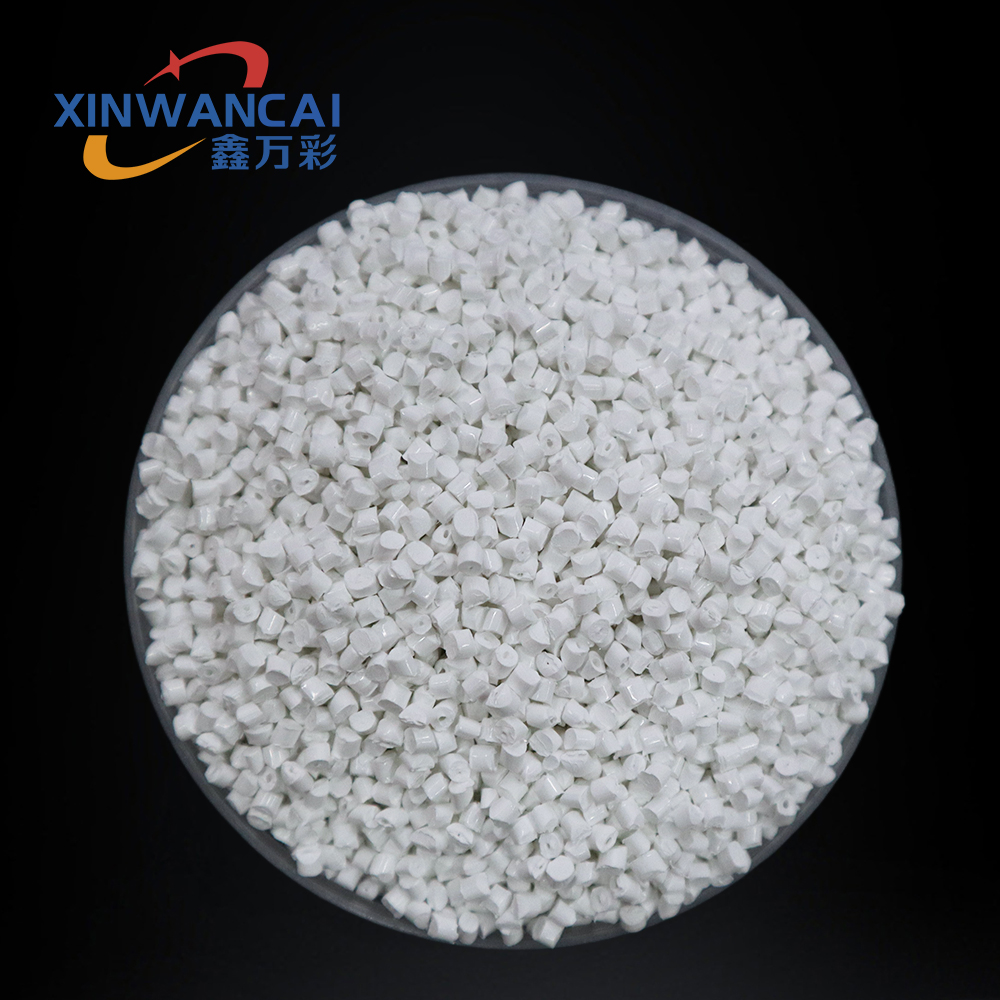
Choosing the right white masterbatch can make or break the visual quality, processing stability, and final cost of your plastic products. Whether you are working with blown film, injection molding, or extrusion, factors like resin compatibility, dispersion quality, and opacity requirements all shape the outcome. In this guide, we compare common white masterbatch formulations and highlight how Xinwancai approaches these challenges so you can narrow down the best option for your specific application.
Start With the Carrier Resin, Not the Loading Percentage
People tend to compare masterbatches by the number on the data sheet first, almost like judging a concentrate by how much material is packed into it. That instinct skips a more important question: what is carrying that load? A carrier resin that does not match the host polymer can create problems that no loading percentage will fix.
A polyolefin-based carrier in a polypropylene stream may process easily, but the same carrier in an engineering resin can become a stress concentrator or leave visible flow marks. Matching the carrier to the base resin, or choosing one with enough interfacial compatibility, keeps additives dispersed and lets the final part behave more like the unfilled polymer. Melt flow differences matter just as much as chemistry here.
Once the carrier is right, the percentage becomes a tuning step rather than the main event. You can push loading up or down to balance cost and performance without fighting dispersion defects, plate-out, or processing instability. Starting with the resin system itself often saves more time than squeezing out another few percent.
Opacity Specs That Push Loading Up or Down
Opacity rarely gets treated as a loading variable, yet the way an alpha channel is stored and composited can shift request weight and first paint timing more than many assume. An 8-bit straight alpha PNG may carry redundant color data in fully transparent regions, while premultiplied alpha in a WebP or AVIF file can strip some of that payload away. Those differences show up as smaller or larger transfers for what looks like the same image, so the opacity format itself becomes part of the loading budget.
The exact value of an element's opacity also changes how a browser schedules rendering. Values below 1 often force a new compositing layer, especially when combined with transforms or filters. That layer may avoid repainting during animation, but it adds GPU memory and texture upload work before the first frame appears. In some cases a nearly invisible overlay that costs nothing visually adds a measurable delay because the compositor still has to allocate, blend, and present it.
When tuning a page, it is worth treating semi-transparent assets and CSS opacity as part of the same performance question. Flattening static translucency into a precomposited image, using a smaller alpha depth where banding is not visible, or replacing large soft opacity layers with a mask can keep loading from drifting upward. The effect is device-dependent, so a quick check on a mid-range phone often reveals push or drop that a desktop test never registers.
What Cast Film and Injection Molding Don’t Share
Cast film pulls a molten ribbon through a narrow die gap and immediately quenches it on a chilled roll, locking in a relatively thin, uniform gauge before the polymer fully relaxes. Injection molding, by contrast, drives melt into a closed cavity under high pressure and holds it there until the part skins over and cools enough to eject. The thermal paths, pressure profiles, and even the orientation patterns diverge so early that comparing the two as if they were cousins often hides more than it reveals.
One of the quieter differences is how each process handles shrinkage and internal stress. In cast film, thickness variation and edge bead can be adjusted through die bolts, air knives, or roll speed, and the material rarely sees the kind of dense, frozen-in stress found in a molded part. Injection molding pays for that sharp geometry with knit lines, sink marks, and anisotropic shrinkage that have no real counterpart in a flat web.
Even material selection leans in different directions. A resin that runs beautifully in film may lack the flow length, impact package, or mold release behavior needed for injection work, and the additives that help film avoid blocking can plate out on a mold or interfere with surface finish. Treating the two processes as interchangeable tends to flatten those distinctions, usually at the cost of productivity or part quality.
Outdoor Aging Depends on More Than Titanium Dioxide
Titanium dioxide often takes the credit or blame for outdoor weathering, but it is rarely the deciding factor on its own. A rutile grade can block a portion of UV light and protect the underlying resin, yet the same particle can also accelerate surface breakdown if its photocatalytic activity is not properly controlled. In real exterior exposure, the resin chemistry, stabilizer package, and the way the pigment is dispersed tend to influence gloss retention and chalk resistance just as much as the TiO2 content.
Weathering is not only about sunlight. Rain, dew, freeze-thaw cycles, and pollutants like sulfur oxides or roadside salts create a more aggressive environment than UV alone. Water seeps into microcracks, carries oxygen and ions deeper into the film, and stresses the polymer during drying and temperature swings. Formulations that lean heavily on titanium dioxide while ignoring the resin’s hydrolysis resistance or the coating’s moisture permeability often fail earlier in the field, even when accelerated UV testing looks promising.
Dispersion quality and surface treatment of the pigment also shape outdoor performance. Poorly dispersed TiO2 leaves voids and uneven interfaces that invite moisture and reduce film integrity. An incompatible surface coating can weaken adhesion or interfere with curing. The most durable exterior systems balance the pigment choice with the right dispersants, free-radical scavengers, and acid acceptors. Titanium dioxide supports that balance, but it cannot replace it.
Food-Contact Claims Worth Checking Twice
A label that says “food-safe” or “FDA compliant” can mean far less than it appears. Some suppliers use those phrases to describe a single component, not the finished item, or they rely on a raw material certificate that never made it through the actual molding, coating, or packaging process. If the claim does not name a specific regulation, temperature range, or food type, treat it as a starting point for questions rather than a guarantee.
Migration testing is where vague claims tend to fall apart. A container might pass with water at room temperature but not with hot oil, acidic tomato sauce, or repeated microwave cycles. Ask for the test report and look at the simulants, durations, and temperatures that were actually used. A “microwave safe” label is especially worth double-checking because it sometimes reflects only short reheating tests, not the long, high-heat contact that happens in real kitchens.
Colorants, recycled content, and adhesives add another layer of risk. A base polymer may be compliant while a bright pigment or a recycled stream introduces substances that are not covered by the original certificate. If a supplier cannot show that the whole article was tested under conditions similar to yours, the most honest answer is usually “not yet confirmed.”
Cheap by the Kilo, Expensive by the Meter
A material can look inexpensive when it is weighed and surprisingly costly when it is measured by length. The reason is rarely the material itself. Loose fill, raw fiber, offcuts, or bundled scrap often carry a low kilo price because they are unprocessed, irregular, or awkward to store. Once that same substance is cleaned, spun, cut, or wound into a consistent run, the price shifts to reflect labor, waste, and finish rather than raw weight.
This gap becomes clear with rope, fabric, cable, or garden netting. A heavy coil sold by weight may contain knots, joins, or uneven thickness that make part of it unusable. A coil sold by the meter is usually graded and ready to install, so the higher unit price sometimes buys fewer surprises. Before choosing, it is worth estimating how many usable meters you actually need. A cheap kilo can turn expensive if half of it ends up on the workshop floor.
FAQ
Not usually. Thin film needs finer dispersion and often a lower-viscosity carrier resin, while sheet can tolerate a slightly coarser particle size if it buys better opacity per pound.
Specks are often undispersed pigment or an incompatible carrier resin. Try a grade designed for your base resin, keep barrel temperatures within the supplier's range, and check whether the screw has enough mixing section.
Melt flow usually comes first. A masterbatch that drags down flow will show gauge variation and die lines before you can benefit from extra opacity, so choose the highest TiO2 loading that still runs cleanly.
Not necessarily. Higher loading reduces dosage, but if dispersion worsens and you get more scrap or lower mechanical properties, a lower-loading grade with better distribution can be cheaper overall.
Only if the grade is explicitly formulated and documented for the food-contact conditions you need, including temperature and food type. General-purpose does not automatically mean compliant.
The carrier resin changes how the pigment wets out and distributes, and the base resin itself affects surface gloss and crystallinity. A masterbatch built for PP may not wet out well in PE, and vice versa.
For bottles, look at sidewall opacity after blow molding rather than pellet color alone. Low-dosage grades can work if they disperse well and survive the blow ratio, but check for thin spots near the pinch-off and handle areas.
Overheating, long residence time, or an antioxidant package that is not matched to the processing temperature. Lower the melt temperature, shorten cycle time, or switch to a grade with more robust thermal stabilizers.
Conclusion
Selecting a white masterbatch usually starts with the carrier resin rather than a headline loading level, because the same titanium dioxide percentage can behave very differently in polyethylene, polypropylene, or a specialty copolymer. Melt flow, shrinkage, and dispersion all shift with the carrier, so a grade that looks economical on a data sheet may create streaks or plate-out in your process. Opacity targets then adjust the loading up or down: thin cast films often need a higher concentration to hit hiding power without adding gauge, while injection molded parts with thicker walls may reach sufficient coverage at lower loadings. The processing method matters just as much, since cast film demands fast wet-out and low volatiles, whereas injection molding is more sensitive to screw recovery, color consistency, and gate blush.
Long-term performance adds another layer. Outdoor whiteness is not just a matter of adding extra titanium dioxide; the resin package, UV stabilizers, and surface exposure all influence chalking, gloss loss, and yellowing. If a food-contact claim is required, verify the specific regulatory letter and not just a generic marketing phrase, because migration limits and end-use conditions can rule out otherwise suitable grades. Finally, compare cost per finished meter or per molded part instead of price per kilo. A cheaper masterbatch that forces you to raise letdown ratios, slow down the line, or increase rejects can quickly become the more expensive option once the real yield and scrap rates are counted.
Contact Us
Contact Person: JACK
Email: [email protected]
Tel/WhatsApp: 86 18650130917
Website: https://www.xinwancai.com/