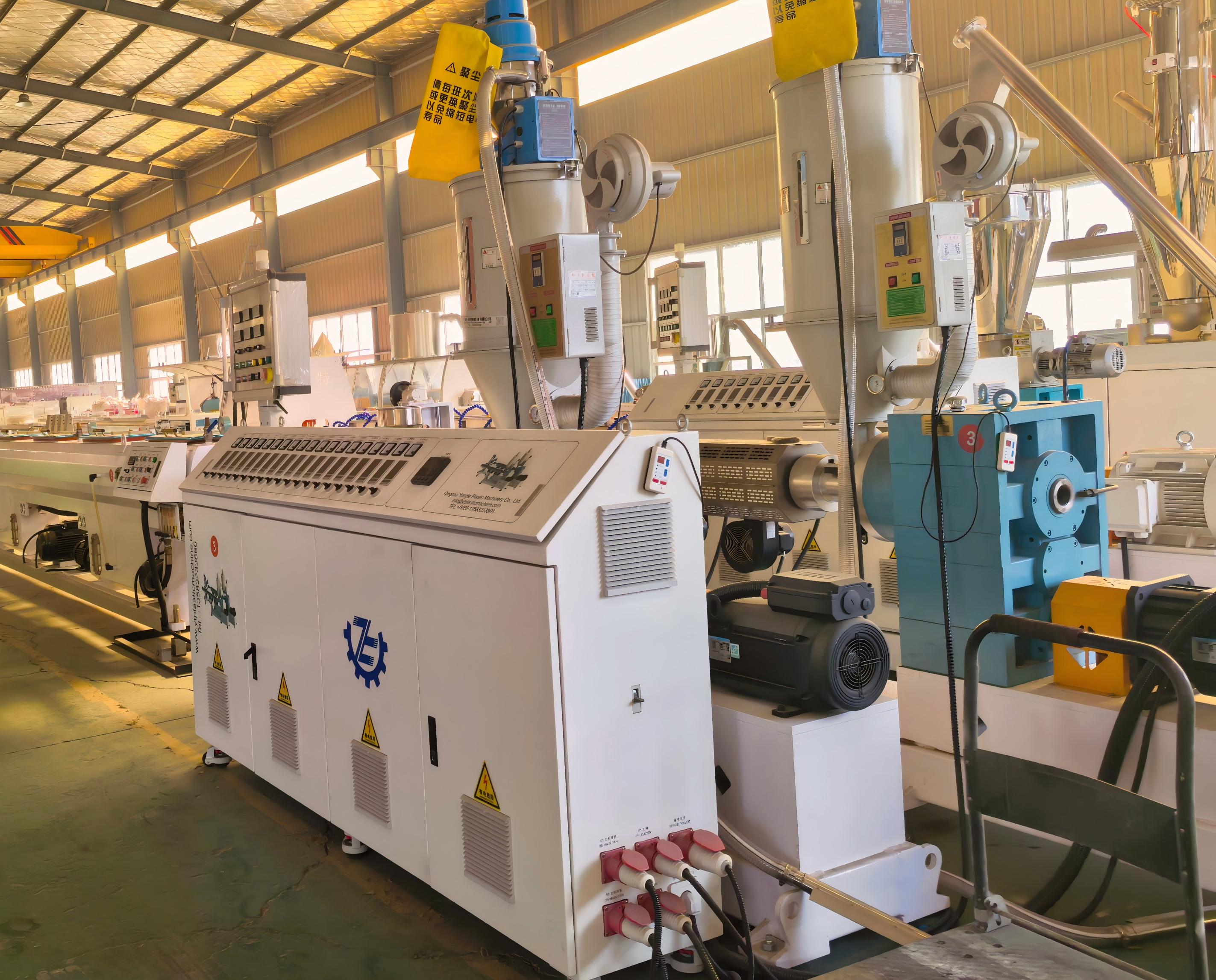

WPC Decking Machine Solutions: Advanced Extrusion Technology for Durable Outdoor Flooring
2026-11-16
What separates a deck that lasts 20 years from one that fails in five? Often, it's the extrusion technology behind the WPC boards. At Yongte, advanced machinery isn't just about speed—it's about engineering every screw, barrel, and die to deliver durable outdoor flooring that resists moisture, fading, and heavy use. In this article, we'll uncover the key innovations driving today's WPC decking machine solutions and how they can transform your production line.
Extrusion Lines Built for Sun, Salt, and Heavy Foot Traffic
Coastal boardwalks and busy commercial decks don’t forgive average materials. These extrusion profiles are formulated with high-density polymer blends that won’t chalk, craze, or fade after years of direct UV exposure. Salt spray and pool chemicals roll off the surface rather than eating into it, so you won’t find the pitting and white corrosion blooms common to lesser metal or composite lines.
The wear surface is engineered for constant foot traffic. We’ve moved the grip texture into the die itself, not painted on or embossed after the fact. That means it stays slip-resistant even after thousands of sandal soles, rolling carts, and wheelchairs have passed over it. There’s no coating to wear away, and the color runs through the entire profile, so scratches and scuffs blend in instead of screaming for repair.
Installation teams appreciate that the same profile handles both full-sun plazas and salt-front boardwalks without swapping systems. Tight dimensional tolerances keep gaps consistent as temperatures swing, and the material won’t expand enough to buckle or pull fasteners loose. It’s a quiet, long-term answer for sites where the only maintenance crew is the one that shows up after storm season.
Where Screw Geometry Meets Recycled Board Cores
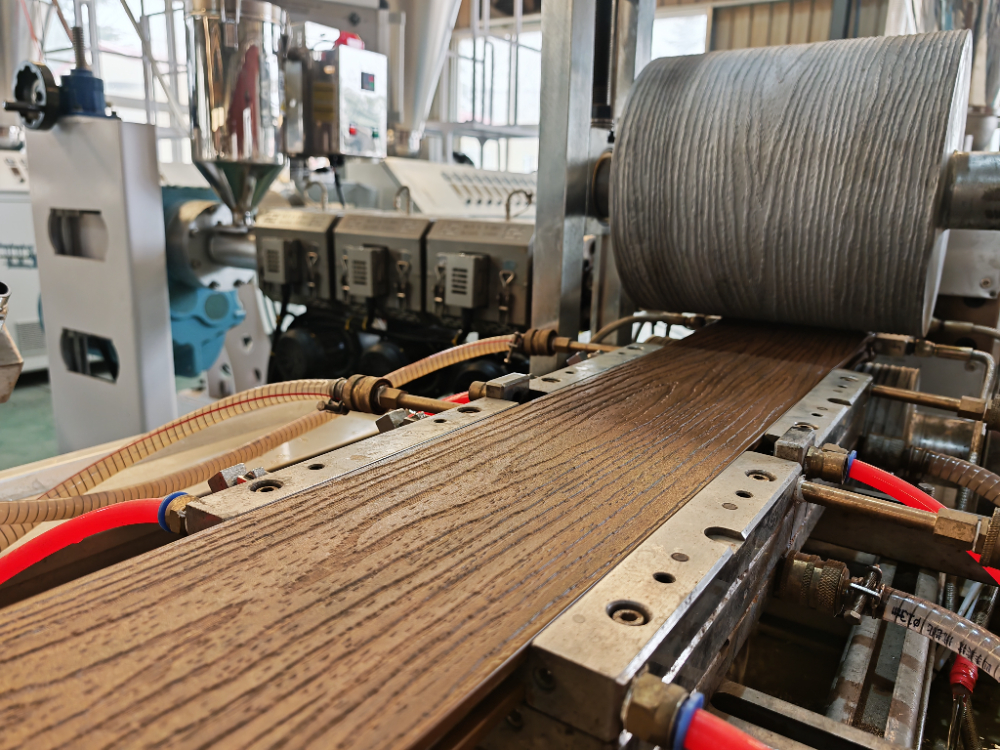
The match between screw geometry and recycled board cores isn’t just a matter of threading harder. Recycled cores have inconsistent density pockets where old fibers and resin clump together. A standard coarse thread might grab well in one spot and split the laminate in the next. That’s why screw makers now play with asymmetrical thread spacing and blunt tips that compress the core instead of cutting through it.
Board producers rarely mention how much their recycled content varies from batch to batch. Offcuts, post-consumer waste, and reject panels all feed the same mill, which means a screw that worked yesterday can spin out today. Shortening the engagement zone and increasing the minor diameter often helps, but the real difference comes from how the thread root is radiused. Sharp transitions create stress risers in low-density recycled filler.
The practical test isn’t in a spec sheet. It’s whether a countersunk head stalls flush before the core strips. On many recycled boards, you can feel the screw reach that point—a sudden loss of resistance, then the head keeps turning. Tweaking the helix angle even two degrees changes that failure mode from sudden to progressive, which matters when the board is holding a hinge or a rail.
Cooling Tunnels That Prevent the Dreaded Mid-Summer Bow
When the temperature climbs past 30°C, even a well-tuned extrusion line can start producing profiles with a subtle but costly curve. The problem rarely shows up at the die — it develops along the cooling path. One side of the part cools faster than the other, and by the time it reaches the haul-off, the leftover heat has already locked in a permanent bend. That's the mid-summer bow, and it tends to strike right when production demand is highest.
Cooling tunnels designed to fight this don't just blow more air or add longer water baths. They break the cooling zone into independently controlled segments, so operators can adjust temperature gradients along the entire length. Some systems alternate between chilled air and fine mist to pull heat from both sides evenly. Others use adjustable slot nozzles that target the thicker sections of the profile — the areas that would otherwise retain heat and drive the bow. The goal is always the same: bring every cross-section down to a stable temperature at the same rate, so the part leaves the tunnel straight and stays straight.
In practice, a well-tuned cooling tunnel keeps production speed high during July and August without forcing the operator to dial back output or manually shim the die. It also cuts down on regrind from warped parts, which can eat into an entire season's margin. For plants that regularly deal with summer heat, the upgrade isn't a luxury — it's a straightforward way to keep profiles within tolerance when the weather is working against you.
How Small Calibration Tweaks Add Years to Decking Life
Most installers treat calibration as a one-time setup step, but tiny adjustments before each fastening run can shift how load transfers across the deck. When the driver depth is off by even a fraction of a millimeter, fasteners either bury too deep and crush fibers or sit proud enough to create a snag point that holds moisture. A quick test block before starting a new row lets you dial in the torque to match the batch density, so the board stays flush without over-compressing the grain.
Gapping gets overlooked because it is measured in millimetres, yet those small spaces are doing the real work when humidity swings. Boards that are butted tight against a house ledger or fascia have nowhere to release swelling pressure, which leads to end checking and popped fasteners within a season or two. Rechecking the side-to-side gaps after the first weather change, and nudging any board that has shifted, prevents that silent stress from compounding into visible damage.
The most useful calibration happens after the deck has settled for a few weeks. Walk the surface with a feeler gauge and retorque any fastener that has backed out just enough to let water pool around the head. Sealing freshly cut ends with a matching treatment during that same pass adds years because it stops capillary uptake before it starts. These habits take minutes per visit but keep the deck from aging prematurely at its weakest points.
Co-Extrusion Cap Layers: The Scratch-Resistant Secret
Multi-layer extrusion often gets credit for strength and flexibility, but the real unsung hero sits on the outside: the co-extruded cap layer. This thin, tightly bonded skin is engineered to take the daily abuse that would otherwise leave visible marks on the core material. By pairing a softer, tougher base with a harder, more resilient surface, manufacturers create a single profile that shrugs off scuffs, scrapes, and minor impacts without compromising overall performance.
The trick isn't simply adding a hard coating after extrusion. Co-extrusion fuses the cap layer to the substrate while both materials are still molten, so there's no weak adhesive line or risk of delamination under stress. This molecular-level marriage allows the cap to flex and recover with the core, absorbing stress without cracking. A well-chosen cap polymer—often an acrylic blend, a modified polyolefin, or a specialty TPU—can boost scratch resistance by several orders of magnitude compared to the same profile made from a single material.
What makes this approach genuinely clever is the freedom to mix properties that would normally fight each other. The core can be optimized for cost, density, or impact strength, while the cap is tuned purely for surface durability and gloss retention. The result is a product that looks newer longer, resists marring from sliding contact, and survives harsh cleaning chemicals without fogging or hazing. For applications like window profiles, automotive trim, or furniture edging, that thin outer layer is the difference between a product that shows its age and one that quietly earns a reputation for toughness.
Getting Consistent Board Weight Without Overdrying the Mix
Board weight is one of those quiet details that only becomes obvious when it's wrong. You cut a stack, run a quick density check, and suddenly the numbers are all over the place. The temptation is often to leave the mix in the dryer a little longer, but that's a trap. Overdrying doesn't just drop the moisture below spec — it changes how the fibers bond, makes the board brittle, and throws off the caliper even when the weight looks close. The trick is to stop chasing the dryer and start controlling what goes into it.
A more reliable approach is to focus on furnish consistency before the forming section. Small shifts in fiber blend, refining energy, or even the broke ratio can swing board weight by more than any dryer adjustment. Run a tight furnish recipe, verify the headbox consistency every shift, and watch the retention aid dosage like a hawk. If the first-pass retention drifts, you'll see the weight drift with it — no amount of drying will fix that. Once the wet end is stable, the dryer can do its actual job: removing water at a steady rate without cooking the board.
Finally, get comfortable with the idea that a steady dryer is better than an aggressive one. Many operators push the temperature up hoping to hit a weight target faster, but that almost always overshoots on the low-moisture side. Instead, lock the dryer profile to match the production rate and let the weight settle naturally. If you need to adjust, tweak the stock valve or slice opening slightly — not the dryer temperature. That way the board leaves the line with consistent weight, proper moisture, and no hidden damage from overbaking.
FAQ
The extrusion system controls melt temperature and pressure with tight precision, which prevents internal voids and weak spots in the board profile. By keeping the wood-plastic composite uniformly blended during extrusion, the final decking resists warping, cracking, and moisture ingress even after years of freeze-thaw cycles or heavy rain exposure.
They use a twin-screw extruder with carefully designed shear zones. The screws are configured to plasticize the polymer at lower temperatures while gently dispersing the wood fiber, avoiding burning the natural filler or breaking the polymer chains. Some lines also add a side feeder so the wood flour enters after the polymer is already molten, which preserves fiber length and improves board strength.
Daily checks should focus on the vacuum vents and die lips, since wood flour can build up and block the degassing path. Operators should also monitor screw torque trends rather than waiting for alarms; a gradual rise often means filler accumulation in the compression zone. Cleaning the calibration sleeves and cooling tank nozzles every shift prevents surface defects that are difficult to correct later.
Co-extrusion places a thin protective polymer layer over the WPC core, so the surface gets superior scratch and stain resistance without increasing the overall cost too much. The machines support this by adding a small secondary extruder that feeds the cap layer into a specialized die, allowing the core and cap to bond at the melt stage. This avoids the delamination problems seen with older laminated products.
A dedicated WPC extruder has a longer L/D ratio, often above 40:1, to provide enough residence time for homogenizing wood filler and polymer. It also uses wear-resistant barrel liners and screw coatings because wood flour is abrasive. The die design is different too, with wider land lengths and more uniform flow channels to handle the high viscosity and prevent melt fracture at the board surface.
Most modern lines are built around a modular downstream system. You can swap calibration dies, cooling tank inserts, and haul-off pads to switch from a solid square-edge board to a hollow grooved board within a few hours. The main extruder and die head stay the same, so the investment in profile change parts is far lower than buying a separate machine for each design.
Precise barrel zoning prevents the polymer from overheating near the feed throat while still reaching full melt at the metering section. If the wood flour gets too hot, it releases moisture and acetic acid that create micro-cracks in the board. By keeping each zone within a narrow window, the machine produces a denser, more consistent profile that holds up better against UV exposure and foot traffic.
Conclusion
WPC decking lines have to do more than push molten material through a die. The best systems pair screw geometry that handles recycled board cores without burning off the wood fraction with cooling tunnels sized to pull heat out evenly, so a board doesn't develop that mid-summer bow after it leaves the plant. Small calibration adjustments at the forming plates and vacuum blocks often matter more than headline output numbers; a few tenths of a millimeter here can add years to how flat and tight a deck stays under full sun, salt air, and constant foot traffic.
Durability also comes from the outside in. Co-extrusion cap layers give the board a scratch-resistant skin without loading the entire profile with expensive additives, while gravimetric feeding and low-shear mixing keep board weight consistent without overdrying the blend and making it brittle. The result is a line that runs stable on recycled feedstock and still produces decking that holds its dimensions, color, and surface hardness season after season.
Contact Us
Contact Person: Ms Qin
Email: [email protected]
Tel/WhatsApp: 8613583233866
Website: https://www.yongteplast.com